Page loaded successfully. Showing biography for Richard Evett Bishop.
Richard Evett Bishop BIOGRAPHY
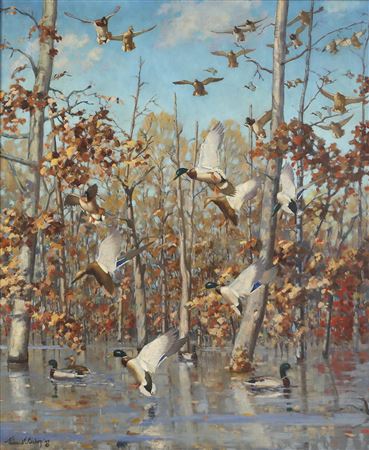
1887 Syracuse, New York - 1975 Plymouth Meeting, Pennsylvania. Known for: Etchings, bird paintings, writing.
Richard Evett Bishop was an etcher and painter of wildlife subjects, particularly ducks and geese. He also etched a number of Christmas cards which are now in the collection of the National Gallery... Read full biography
Richard Evett Bishop was an etcher and painter of wildlife subjects, particularly ducks and geese. He also etched a number of Christmas cards which are now in the collection of the National Gallery of Art, Washington, D.C., along with four other wildlife prints. He lived in Philadelphia where he... Read full biography
Richard Evett Bishop was an etcher and painter of wildlife subjects, particularly ducks and geese. He also etched a number of Christmas cards which are now in the collection of the National Gallery of Art, Washington, D.C., along with four other wildlife prints. He lived in Philadelphia where he was a member of the Philadelphia Print Club and the Philadelphia Watercolor Society. He was the author of a book titled "Bishop's Birds", published in 1936 by J.B. Lippincott. Sources include:.... Read full biography
Richard Evett Bishop was an etcher and painter of wildlife subjects, particularly ducks and geese. He also etched a number of Christmas cards which are now in the collection of the National Gallery of Art, Washington, D.C., along with four other wildlife prints. He lived in Philadelphia where he was a member of the Philadelphia Print Club and the Philadelphia Watercolor Society. He was the author of a book titled "Bishop's Birds", published in 1936 by J.B. Lippincott. Sources include:. http://www.nga.gov/cgi-bin/psearch?Request=A&Person=212140. Peter Falk, "Who Was Who in American Art"... Read full biography
Richard Evett Bishop was an etcher and painter of wildlife subjects, particularly ducks and geese. He also etched a number of Christmas cards which are now in the collection of the National Gallery of Art, Washington, D.C., along with four other wildlife prints. He lived in Philadelphia where he was a member of the Philadelphia Print Club and the Philadelphia Watercolor Society. He was the author of a book titled "Bishop's Birds", published in 1936 by J.B. Lippincott. Sources include:. http://www.nga.gov/cgi-bin/psearch?Request=A&Person=212140. Peter Falk, "Who Was Who in American Art"... Read full biography
Artist Biography
Biography page for Richard Evett Bishop ((1887 - 1975)), known for Etchings, bird paintings, writing. Showing 3 biographical entries and 0 sample artworks.
Richard Evett Bishop - Artist Info
About Richard Evett Bishop
Biography from the Archives of askART
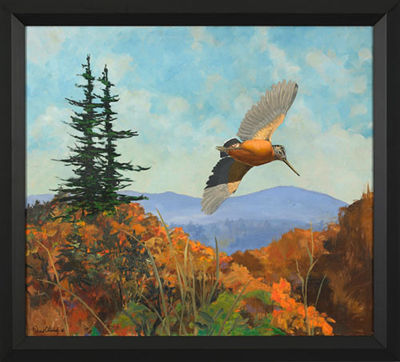 Richard Evett Bishop was an etcher and painter of wildlife subjects, particularly ducks and geese. He also etched a number of Christmas cards which are now in the collection of the National Gallery of Art, Washington, D.C., along with four other wildlife prints.
He lived in Philadelphia where he was a member of the Philadelphia Print Club and the Philadelphia Watercolor Society. He was the author of a book titled "Bishop's Birds", published in 1936 by J.B. Lippincott.
Sources include:
http://www.nga.gov/cgi-bin/psearch?Request=A&Person=212140
Peter Falk, "Who Was Who in American Art"Biography from The Johnson Collection
RICHARD EVETT BISHOP (1887–1975)
Etching is perhaps the most mechanical of artistic processes. Given Richard Bishop’s formal study of engineering at Cornell University, the highly technical medium was a logical platform for his aesthetic expression—especially when that expression coincided with his lifelong passion for bird hunting and his exceptional marksmanship. Following military service in World War I, the New York native settled in Philadelphia and launched a successful career at a local manufacturing plant; he retired in 1933 in order to give his full attention to art.
Game birds were Bishop’s subject of choice, and he faithfully recorded their motions and migrations in various habitats up and down the Eastern Seaboard—on land and water, and on the wing. In order to capture the physics and poetry of flight patterns, the artist used both single lens photography and high-speed motion picture cameras to document the flocks’ airborne acrobatics, later using the films as references for his studio sketches and paintings in both oil and watercolor. Dick Bishop first visited the Santee Club in the Lowcountry of South Carolina in the mid-1920s. As one of the club's few honorary members, he hunted there regularly through the late 1960s, and his art attests to his love for the place and its people.
Best known for his prints which were published in two book collections, Bishop's Birds and Bishop's Wildfowl, the artist was a member of several prestigious etching societies. In 1936, the artist was selected to execute the Federal Migratory Bird Hunting stamp. His work can be found in the collections of the Georgia Museum of Art, the Philadelphia Museum of Art, and the Stark Museum of Art.
The Johnson Collection, Spartanburg, South Carolina
thejohnsoncollection.orgBiography from Newman Galleries
Born in Syracuse, New York in 1887, Richard E. Bishop was a noted painter, etcher, and writer. He graduated from Cornell University and continued his studies at the Graphic Sketch Club in New York City, and with Ernest D. Roth. He resided in Mt. Airy on the outskirts of Philadelphia, PA for many years.
Bishop was a member of the Philadelphia Print Club, the Chicago Society of Etchers, the Philadelphia Society of Etchers, the Society of American Etchers, Philadelphia Sketch Club, Philadelphia Watercolor Club, Philadelphia Art Alliance, and California Printmakers.
In 1924, his Canada Geese was awarded the Charles Lea Prize from the Philadelphia Print Club.
Bishop's paintings and prints may be found in the Honolulu Art Museum, the Syracuse Museum of Fine Arts, and the Philadelphia Museum of Art.
An artist internationally known for his wildlife prints, Bishop illustrated the book Prairie Wings by Edgar Queeney and, in 1936, published Bishop's Birds (J. B. Lippincott).
He was the original artist for the prestigious Federal Duck Stamp program at its inaugural in 1936.
The artist died in 1975 at the age of 87.