Page loaded successfully. Showing biography for Robert Riggs.
Robert Riggs BIOGRAPHY
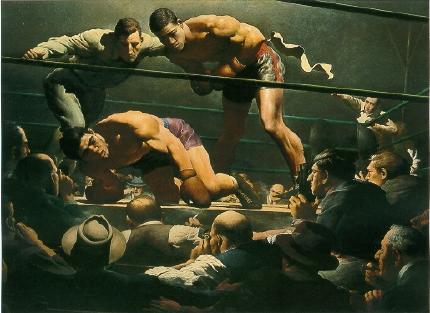
1896 Decatur, Illinois - 1970 Philadelphia, Pennsylvania. Known for: Circus, street and sport scenes-lithography and painting.
Known for his paintings of prize-fighting and circus-genre scenes and lithography of gigantic size compositions, Robert Riggs had a highly successful career as an artist, especially in the 1930s and... Read full biography
Known for his paintings of prize-fighting and circus-genre scenes and lithography of gigantic size compositions, Robert Riggs had a highly successful career as an artist, especially in the 1930s and 40s. His painting, The Brown Bomber, showed the boxing victory of Joe Louis over Max Schmeling. This... Read full biography
Known for his paintings of prize-fighting and circus-genre scenes and lithography of gigantic size compositions, Robert Riggs had a highly successful career as an artist, especially in the 1930s and 40s. His painting, The Brown Bomber, showed the boxing victory of Joe Louis over Max Schmeling. This is one of the paintings that earned Riggs election to the National Academy of Design in 1946. He was born in Decatur, Illinois and as a young man ran away from home and joined the circus. He studied... Read full biography
Known for his paintings of prize-fighting and circus-genre scenes and lithography of gigantic size compositions, Robert Riggs had a highly successful career as an artist, especially in the 1930s and 40s. His painting, The Brown Bomber, showed the boxing victory of Joe Louis over Max Schmeling. This is one of the paintings that earned Riggs election to the National Academy of Design in 1946. He was born in Decatur, Illinois and as a young man ran away from home and joined the circus. He studied at the James Milliken University in Illinois and then trained at the Art Students League in New York, but his study was interrupted by Army service in World War I. He stayed overseas and attended the Academie Julian in Paris and then returned to the... Read full biography
Known for his paintings of prize-fighting and circus-genre scenes and lithography of gigantic size compositions, Robert Riggs had a highly successful career as an artist, especially in the 1930s and 40s. His painting, The Brown Bomber, showed the boxing victory of Joe Louis over Max Schmeling. This is one of the paintings that earned Riggs election to the National Academy of Design in 1946. He was born in Decatur, Illinois and as a young man ran away from home and joined the circus. He studied at the James Milliken University in Illinois and then trained at the Art Students League in New York, but his study was interrupted by Army service in World War I. He stayed overseas and attended the Academie Julian in Paris and then returned to the United States where he settled in Philadelphia and worked for N.W. Ayer & Sons, an advertising agen... Read full biography
Artist Biography
Biography page for Robert Riggs ((1896 - 1970)), known for Circus, street and sport scenes-lithography and painting. Showing 1 biographical entries and 0 sample artworks.
Robert Riggs - Artist Info
About Robert Riggs
Biography from the Archives of askART
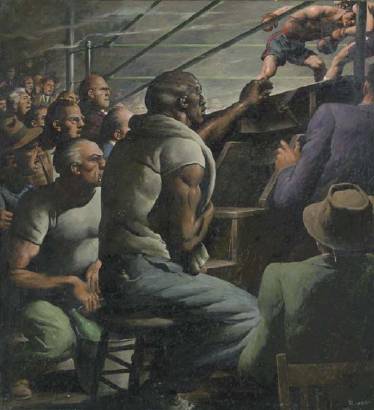 Known for his paintings of prize-fighting and circus-genre scenes and lithography of gigantic size compositions, Robert Riggs had a highly successful career as an artist, especially in the 1930s and 40s. His painting, The Brown Bomber, showed the boxing victory of Joe Louis over Max Schmeling. This is one of the paintings that earned Riggs election to the National Academy of Design in 1946
He was born in Decatur, Illinois and as a young man ran away from home and joined the circus. He studied at the James Milliken University in Illinois and then trained at the Art Students League in New York, but his study was interrupted by Army service in World War I.
He stayed overseas and attended the Academie Julian in Paris and then returned to the United States where he settled in Philadelphia and worked for N.W. Ayer & Sons, an advertising agency for whom he did numerous illustrations. He was active in the Germantown Boys Club, where he worked with an Indian lore group.
He was a collector of European, Asian and African artifacts, and his studio was like a museum.
Sources:
Editor, "Robert Riggs Likes Snakes & Boys", LIFE magazine, September 13, 1937, pp. 48-49
Walter Reed, The Illustrator in America