Page loaded successfully. Showing biography for Robert Spear Dunning.
Robert Spear Dunning BIOGRAPHY
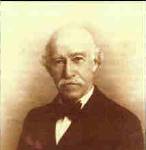
1829 Brunswick, Maine - 1905 Westport Harbor, Massachusetts. Known for: Lush still life, portrait and landscape painting.
Robert Spear Dunning was a founder in Massachusetts of the Fall River School*, which emphasized still life paintings. He painted portraits and landscapes, but in 1865, his interest turned to... Read full biography
Robert Spear Dunning was a founder in Massachusetts of the Fall River School*, which emphasized still life paintings. He painted portraits and landscapes, but in 1865, his interest turned to still-life painting, which brought him notice and critical acclaim. His highly realistic or "trompe l'oeil"*... Read full biography
Robert Spear Dunning was a founder in Massachusetts of the Fall River School*, which emphasized still life paintings. He painted portraits and landscapes, but in 1865, his interest turned to still-life painting, which brought him notice and critical acclaim. His highly realistic or "trompe l'oeil"* paintings usually had one or more prominent large objects such as a silver pitcher with luscious looking fruit on a highly polished table. His early work was dark in color and tone, and later ones... Read full biography
Robert Spear Dunning was a founder in Massachusetts of the Fall River School*, which emphasized still life paintings. He painted portraits and landscapes, but in 1865, his interest turned to still-life painting, which brought him notice and critical acclaim. His highly realistic or "trompe l'oeil"* paintings usually had one or more prominent large objects such as a silver pitcher with luscious looking fruit on a highly polished table. His early work was dark in color and tone, and later ones were luminous*. Born in 1829 in Brunswick, Maine, Dunning was brought to Fall River, a wealthy mill town, at age five and educated in the public schools. He became an art student of James Roberts, and then followed a well-trodden path to the National... Read full biography
Robert Spear Dunning was a founder in Massachusetts of the Fall River School*, which emphasized still life paintings. He painted portraits and landscapes, but in 1865, his interest turned to still-life painting, which brought him notice and critical acclaim. His highly realistic or "trompe l'oeil"* paintings usually had one or more prominent large objects such as a silver pitcher with luscious looking fruit on a highly polished table. His early work was dark in color and tone, and later ones were luminous*. Born in 1829 in Brunswick, Maine, Dunning was brought to Fall River, a wealthy mill town, at age five and educated in the public schools. He became an art student of James Roberts, and then followed a well-trodden path to the National Academy of Design* in New York City. At the Academy, he studied under Daniel Huntington, focusing on... Read full biography
Artist Biography
Biography page for Robert Spear Dunning ((1829 - 1905)), known for Lush still life, portrait and landscape painting. Showing 4 biographical entries and 0 sample artworks.
Robert Spear Dunning - Artist Info
About Robert Spear Dunning
Biography from the Archives of askART
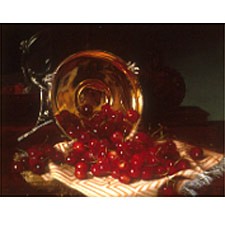 Robert Spear Dunning was a founder in Massachusetts of the Fall River School*, which emphasized still life paintings. He painted portraits and landscapes, but in 1865, his interest turned to still-life painting, which brought him notice and critical acclaim.
His highly realistic or "trompe l'oeil"* paintings usually had one or more prominent large objects such as a silver pitcher with luscious looking fruit on a highly polished table. His early work was dark in color and tone, and later ones were luminous*.
Born in 1829 in Brunswick, Maine, Dunning was brought to Fall River, a wealthy mill town, at age five and educated in the public schools. He became an art student of James Roberts, and then followed a well-trodden path to the National Academy of Design* in New York City. At the Academy, he studied under Daniel Huntington, focusing on figure and portrait painting.
Dunning's pictures were exhibited at the National Academy of Design from 1850 to 1880, and at the American Art Union* in 1850, as well as the Boston Art Club* and in local exhibitions.
In 1870, Dunning and friend John E. Grouard founded The Fall River Evening Drawing School, which was quite remarkable in a town that had little formal cultural life. No other town in the late 19th century is so associated with still life painting. All of his students are painters of still lifes and include Bryant Chapin, Franklin H. Miller, Albert F. Monroe, Abbie Luella Zuill, and Herbert Cash.
In his teaching, Dunning emphasized the use of quality materials and urged his student to focus on their own creativity, to be unique and not copy his work.
Source:
Michael David Zellman, 300 Years of American Art, Vol 1
* For more in-depth information about these terms and others, see AskART.com Glossary http://www.askart.com/AskART/lists/Art_Definition.aspxBiography from Roger King Fine Art
 Born in Brunswick, Maine, Robert S. Dunning spent most of his career in Fall River, Massachusetts, where he worked in the city's textile mills as a boy. He studied art with James Roberts in Maine, and with Daniel Huntington in New York, where he became a member of the National Academy. In 1859, he and artist John Grouard founded the firm of Grouard and Dunning and the Fall River Evening Drawing School.
Dunning taught alongside his former students, including Bryant Chapin, Herbert Fish, and Franklin Miller. While little is known of Grouard and few of his paintings survive, Dunning became almost synonymous with the Fall River School style, which flourished from 1865 to about 1925. That style was conservative, even in its day, and was closely allied to mid-century tastes;
Dunning's works embody the opulent spirit of the mid-Victorian era. In his works, fruits and flowers are often combined with a various textural element like patterned napkins, table coverings, or reflective table tops. He sometimes incorporated unusual elements, such as a honeycomb or a box of figs, and his work is detailed, elegant, and bright.
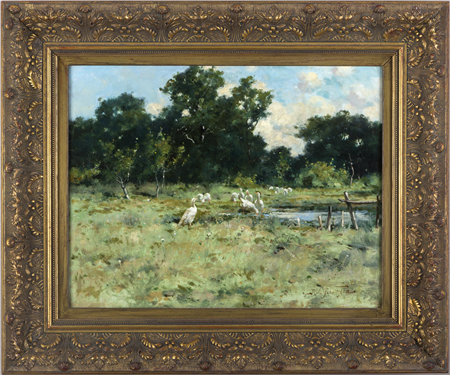
Best known for his still life paintings, Dunning also painted landscapes, especially in New Hampshire. Generally smaller sized, these gem-like works are garnering increasing interest among collectors.Biography from Caldwell Gallery Hudson
Robert Dunning was born in 1829. He studied with two artists in Maine before attending the National Academy of Design, where he focused on figure and portraiture painting. Dunning was employed at a mill and in costal shipping to support his studies. In 1859 he formed an artist's firm "Grouard & Dunning" but six years later, 1865, Dunning found himself more attracted to still life painting than landscapes.
Dunning is noted as a co-founder and leader of the Fall River School of still-life. His palette consisted of bright colors and his need for perfection in detail forced Dunning to spend extensive amounts of time on one painting. He exhibited his work at the NAD from 1850-80. Dunning also opened the Fall River Evening Drawing School, whose students were predecessors of the Fall River School.
Dunning died in 1905.Biography from Karen L. North, Private Art Dealer
Robert Spear Dunning studied at the National Academy of Design in New York, as well as exhibited his work there between the years 1850 and 1880. The artist was a member of the American Art Union and Boston Art Club and was a founder of the Fall River School of Art in Maine, which focused on still-life painting.
Dunning is best known for his colorful, lush still-lifes of fruit and flowers arranged on highly polished tabletops, but he also completed some finely painted landscapes throughout his career.
Several of his landscapes depict the White Mountain region of New Hampshire. One such painting is entitled: Thornton,New Hampshire, which showcases the artist's mastery of subtle color, detail and composition. As a finishing touch, on the reverse of the canvas, Dunning both signed the painting and inscribed the location.
A similar landscape in composition to Thornton, New Hampshire is one entitled: Moonrise at Mount Washington, which is signed and dated 1897.