Page loaded successfully. Showing biography for Roger Bissiere.
Roger Bissiere BIOGRAPHY
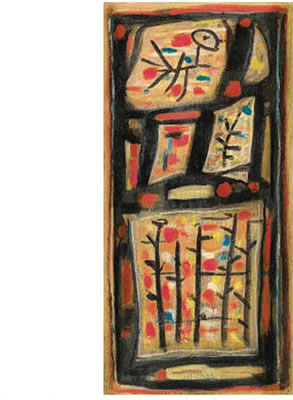
1886 Villereal, Lot-et-Garonne, France - 1964 Boissierettes, Lot, France. Known for: Modernist portrait and nude painting.
Roger Bissière. French, 1886-1964. By 1920, the artistic battles that had marked the first decades of the twentieth century and the swift rise to prominence of modernity had abated. The cultural... Read full biography
Roger Bissière. French, 1886-1964. By 1920, the artistic battles that had marked the first decades of the twentieth century and the swift rise to prominence of modernity had abated. The cultural shock left by the First World War left artists, critics and writers looking for means to reconnect with... Read full biography
Roger Bissière. French, 1886-1964. By 1920, the artistic battles that had marked the first decades of the twentieth century and the swift rise to prominence of modernity had abated. The cultural shock left by the First World War left artists, critics and writers looking for means to reconnect with a more simple past and with longstanding traditions. Artistic currents once recognized for their departure from the "juste milieu' now sought to look back to a more coherent mode of representation:... Read full biography
Roger Bissière. French, 1886-1964. By 1920, the artistic battles that had marked the first decades of the twentieth century and the swift rise to prominence of modernity had abated. The cultural shock left by the First World War left artists, critics and writers looking for means to reconnect with a more simple past and with longstanding traditions. Artistic currents once recognized for their departure from the "juste milieu' now sought to look back to a more coherent mode of representation: this was the period of Picasso's bathers and the abstracted nude allegorical figures of Aristide Maillol. It is in this atmosphere that Roger Bissière developed his particular approach to Cubism. Abandoning the cubist approach that sought to break and... Read full biography
Roger Bissière. French, 1886-1964. By 1920, the artistic battles that had marked the first decades of the twentieth century and the swift rise to prominence of modernity had abated. The cultural shock left by the First World War left artists, critics and writers looking for means to reconnect with a more simple past and with longstanding traditions. Artistic currents once recognized for their departure from the "juste milieu' now sought to look back to a more coherent mode of representation: this was the period of Picasso's bathers and the abstracted nude allegorical figures of Aristide Maillol. It is in this atmosphere that Roger Bissière developed his particular approach to Cubism. Abandoning the cubist approach that sought to break and dissolve form, the new Cubism sought formal simplicity and harmony based on a logical, classical order.... Read full biography
Artist Biography
Biography page for Roger Bissiere ((1886 - 1964)), known for Modernist portrait and nude painting. Showing 2 biographical entries and 0 sample artworks.
Roger Bissiere - Artist Info
About Roger Bissiere
Biography from Papillon Gallery
Roger Bissière was born on September 22, 1886 in Villeréal, Lot-et-Garonne, France. He is best known as a painter of nudes and portraits.
Bissière's artistic talents were evident as a child, but his father did not approve and wanted him to pursue a law career. At nineteen Bissière rebelled, traveling in Algiers. He eventually studied at L'École des Beaux-Arts, Bordeaux and then at L'École Nationale Supérieure des Beaux-Arts, Paris. As part of his artistic practice, Bissière wrote reviews of contemporary art for Parisian newspapers. In 1919, Léonce Rosenberg commissioned him to write the first monograph on Georges Braque's work.
Around 1910 or 1911, Bissière began showing in the Parisian Salons. His first Salon exhibition was the Salon des Artistes Français. Other Salon exhibitions include the Salon d'Automne, Salon des Tuileries, and Salon des Artistes Indépendants. In addition to these exhibitions, Bissière exhibited work at the Société des Amateurs d'Art, Exposition Universelle, Petit -Palais des Maîtres d'Art Indépendant 1895-1937, Salon de Mai, Biennale de Venise, Biennale de Sao Paulo, and Documenta de Kassel.
Solo exhibitions include the Galerie Berthe Weil, Galerie Druet, and Galerie Drouin. The Musée National d'Art Moderne de Paris exhibited a retrospective of Bissière's work. The exhibition traveled to museums in Germany, The Netherlands, and Switzerland. Subsequent exhibitions include Musée d'Art Moderne de la Ville de Paris and Musée de l'Abbaye Sainte-Croix des Sables-d'Olonne.
Bissière's work is part of the permanent collections of numerous museums including, Agen, Amsterdam, Bordeaux, La Chaux-de-Fonds, Saint-Étienne, and Zurich. Paris art museums that own his work include the Musée Nationale d'Art Moderne and Musée d'Art Moderne de la Ville.
Bissière died on December 2, 1964 in Boissiérettes, Lot, France.Biography from Schiller & Bodo European Paintings
Roger Bissière
French, 1886-1964
By 1920, the artistic battles that had marked the first decades of the twentieth century and the swift rise to prominence of modernity had abated. The cultural shock left by the First World War left artists, critics and writers looking for means to reconnect with a more simple past and with longstanding traditions. Artistic currents once recognized for their departure from the "juste milieu' now sought to look back to a more coherent mode of representation: this was the period of Picasso's bathers and the abstracted nude allegorical figures of Aristide Maillol. It is in this atmosphere that Roger Bissière developed his particular approach to Cubism. Abandoning the cubist approach that sought to break and dissolve form, the new Cubism sought formal simplicity and harmony based on a logical, classical order.
Bissiére was a regular participant in the Parisian exhibitions that catered to modern trends. He exhibited at the Salon d'Automne from 1919 to 1923. Although he began painting at a young age, Bissiére himself considered 1919 the year of his true artistic debut. It was around this time that he befriended André Lhote and Georges Braque and, perhaps under their influence, embraced a Cubist aesthetic. In 1920, Bissiére participated in the Salon de la Jeune Peinture. This exhibition marked the new direction of the Cubist movement. Highly interested in the intellectual and theoretical aspects of Cubist painting and its ties to the French tradition, Bissiére also published articles on Seurat, on Ingres, and on Corot in the journal L'Esprit Nouveau.
Museums:
Bordeaux, Musée des Beaux-Arts; Musée de Grenoble; The Hague, Gemeentemuseum; Israel Museum, Jerusalem; London, Tate Gallery; New York, Museum of Modern Art; Paris, Musée Nationale de l'Art Moderne, Centre Georges Pompidou; Zurich, Kunsthaus;