Page loaded successfully. Showing biography for Ronald Senungetuk.
Ronald Senungetuk BIOGRAPHY
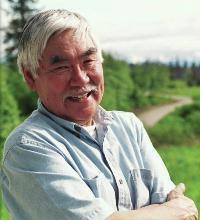
1933 Wales, Alaska - 2020 Homer, Alaska. Known for: Native Inuit figure animal imagery.
Lots Sold: 0%.
Hailed as one of the finest Alaska artists of his generation, Ron Senungetuk, 86, died last week on Jan. 21 at his Homer home with family present. His wife, Turid Senungetuk, said he died of... Read full biography
Hailed as one of the finest Alaska artists of his generation, Ron Senungetuk, 86, died last week on Jan. 21 at his Homer home with family present. His wife, Turid Senungetuk, said he died of Progressive Supranuclear Palsy, a rare neurological disorder. Artists, professors and leaders of art... Read full biography
Hailed as one of the finest Alaska artists of his generation, Ron Senungetuk, 86, died last week on Jan. 21 at his Homer home with family present. His wife, Turid Senungetuk, said he died of Progressive Supranuclear Palsy, a rare neurological disorder. Artists, professors and leaders of art organizations praised Senungetuk not only for his work in wood and metal, but for his advocacy of treating indigenous art as fine art. “Ron shaped the way we support and celebrate Alaska’s culture in a... Read full biography
Hailed as one of the finest Alaska artists of his generation, Ron Senungetuk, 86, died last week on Jan. 21 at his Homer home with family present. His wife, Turid Senungetuk, said he died of Progressive Supranuclear Palsy, a rare neurological disorder. Artists, professors and leaders of art organizations praised Senungetuk not only for his work in wood and metal, but for his advocacy of treating indigenous art as fine art. “Ron shaped the way we support and celebrate Alaska’s culture in a complex, nuanced way that has been game changing,” wrote Bunnell Street Arts Center Artistic Director Asia Freeman in an email. Da-ka-xeen Mehner, associate professor of Native art and the current director of the Native Art Center that Senungetuk founded... Read full biography
Hailed as one of the finest Alaska artists of his generation, Ron Senungetuk, 86, died last week on Jan. 21 at his Homer home with family present. His wife, Turid Senungetuk, said he died of Progressive Supranuclear Palsy, a rare neurological disorder. Artists, professors and leaders of art organizations praised Senungetuk not only for his work in wood and metal, but for his advocacy of treating indigenous art as fine art. “Ron shaped the way we support and celebrate Alaska’s culture in a complex, nuanced way that has been game changing,” wrote Bunnell Street Arts Center Artistic Director Asia Freeman in an email. Da-ka-xeen Mehner, associate professor of Native art and the current director of the Native Art Center that Senungetuk founded at the University of Alaska Fairbanks, called him “the grandfather of contemporary Native art in Alaska.”. In a video... Read full biography
Artist Biography
Biography page for Ronald Senungetuk ((1933 - 2020)), known for Native Inuit figure animal imagery. Showing 2 biographical entries and 0 sample artworks.
Ronald Senungetuk - Artist Info
About Ronald Senungetuk
Biography from the Archives of askART
Hailed as one of the finest Alaska artists of his generation, Ron Senungetuk, 86, died last week on Jan. 21 at his Homer home with family present.
His wife, Turid Senungetuk, said he died of Progressive Supranuclear Palsy, a rare neurological disorder.
Artists, professors and leaders of art organizations praised Senungetuk not only for his work in wood and metal, but for his advocacy of treating indigenous art as fine art.
“Ron shaped the way we support and celebrate Alaska’s culture in a complex, nuanced way that has been game changing,” wrote Bunnell Street Arts Center Artistic Director Asia Freeman in an email.
Da-ka-xeen Mehner, associate professor of Native art and the current director of the Native Art Center that Senungetuk founded at the University of Alaska Fairbanks, called him “the grandfather of contemporary Native art in Alaska.”
In a video filmmaker Michael Walsh made about Senungetuk on the occasion of his 2014 Governor’s Award for Lifetime Achievement in the Arts & Humanities, Fairbanks artist Kesler Woodward said of Senungetuk, “It is almost impossible to overstate his importance. He is almost certainly the most widely exhibited Alaskan artist — really, the dean of all Alaska artists.”
Born in 1933, in Wales, Alaska, Senungetuk grew up in a traditional Inupiat culture. In testimony before the passage of the Alaska Native Claims Settlement Act in 1969, he said that at age 15 when he went to boarding school at Mt. Edgecumbe in Sitka, he spoke little English.
“I really went through cultural torment,” Senungetuk said then. “… It was a social shock but it probably taught me to be quite observant.”
In a 2008 interview with the Homer News, Senungetuk said in Wales he had learned to carve ivory as part of his tradition.
“At Edgecumbe I kind of continued this kind of thing, a little bit of ivory and wood as a new material,” he said.
There he caught the attention of George Fedoroff, an artist and teacher of wood and ivory carving. Fedoroff encouraged Senungetuk to attend the School for American Crafts at the Rochester Institute of Technology, New York. After his studies were interrupted when he was drafted to serve in the U.S. Army, Senungetuk returned to RIT, graduating in 1960 with a bachelor of fine arts. He had started in wood working but after his return to RIT turned to metalsmithing.
“He really flowered in metalsmithing, silversmithing,” said Homer artist Rika Mouw, a jeweler and longtime friend of Senungetuk. “He did these incredible hollow ware sets and jewelry.”
After RIT, Senungetuk got a Fullbright Scholarship to study at the Statens Handverks of Kunstindustri Skole in Oslo, Norway. At the school he met his wife, Turid Grotthing, also an artist and jewelry maker. She followed him back to Alaska and they married in 1962.
That personal marriage of a couple from Scandinavian and Inupiat cultures also is reflected in Senungetuk’s aesthetic. His art uses traditional Inupiat imagery like caribou, whales, fish and birds, but with the elegance and simplicity of the design of Norway, Denmark, Sweden and Finland.
“He took traditional themes and topics and just completely did them his own way — I mean, completely,” Mouw said.
Though his work used Native ideas, Senungetuk advocated for himself and other indigenous artists an identity as artists first.
“I’d rather be an artist who happened to be Inupiat,” he told the Homer News in 2008.
Mouw said Senungetuk was the impetus for “Decolonizing Alaska,” a Bunnell show that challenged the concept of colonization.
“It irked him that he was always known as a Native artist,” Mouw said. “He wanted to be an artist first, Native second.”
In 1961, Senungetuk started his career as an art professor at the University of Alaska Fairbanks. In 1965 he founded and directed the UAF Native Arts Center. Through the center, he guided generations of Native artists. Turid Senungetuk said many of his former students have told her how much Ron Senungetuk affected them.
“He influenced a lot of people,” she said in a phone interview on Tuesday. “… A lot of his people have called me, (saying) ‘how he saved me.’ Some of those students had a hard time adjusting to campus life. He herded them along. Some of them are famous artists.”
Through his direction of the Native Arts Center and as an artist and teacher, Senungetuk fiercely advocated the idea of art by Alaska Natives as being more than tourist art.
“The view that indigenous people need to be on that same playing field,” Mehner said. “It was his (Senungetuk’s) mission to bring indigenous arts into, really, bring it into the place we are now. … His vision of art occupying that same space as other arts was really vital for what’s happening now.”
In 2010, Senungetuk curated “Inspirations: An Alaska Native Art Exhibition” at the Pratt Museum that showed the best of artists who happened to be Native.
“I wanted to Native art to become better,” Senungetuk told the Homer News in an August 2010, article about the exhibit. “…We are equals but never recognized. I want to say to anybody, ‘We’re as good as you.’”
Senungetuk’s work “honored living cultures and looked extremely contemporary,” Freeman wrote. “… He challenged and expanded ideas of ‘traditional Native art’ and in the process he kept culture alive and poured new life into it, and inspired many others to do that too.”
Woodward said Senungetuk was “a mentor to generations of Alaska Native artists and non-Native artists, and an example for all of us of how you can be a great teacher and a great mentor, a great spokesperson for the arts, but also be a great artist, who can be recognized not just on the local, regional, and statewide level, but on the national and international level as he has been.”
Senungetuk also helped found the Alaska State Council on the Arts. He designed its simple logo of two caribou, one standing and one sitting down.
“Ron’s influence as a highly esteemed artist and respected cultural leader, friend and founding member of the Alaska State Council on the Arts is a legacy that we feel every day in our work throughout the state,” Andrea Noble, executive director of the Alaska State Council on the Arts, Anchorage, wrote in an email. “The continuation of ASCA through tough times is a testament to Ron’s vision, knowledge and his lifetime commitment to cultural infrastructure based on strength of relationships, networks and collaboration. Leaders like Ron and his family who have labored with love to pave the way for others are the true champions of Alaska’s art and culture.”
Exhibited widely, Senungetuk’s work is part of the permanent collection at the Pratt Museum, the Anchorage Museum of Art, the Museum of the North in Fairbanks, and numerous 1%-for-art installations — creative works in state facilities where 1% of the construction cost goes to art. He received the Governor’s Award for the Arts in 1979 and the Governor’s Award for Lifetime Achievement in the Arts and Humanities in 2014. The Rasumuson Foundation gave him a Distinguished Artist grant in 2008.
When he heard the news about Senungetuk dying last week, Mehner said he told his students at the Alaska Native Art Center, “Everybody in this class is part of his legacy by taking the class. Without his vision to create the center, none of us would be here. You are all part of his legacy now.”
Senungetuk is survived by wife, Turid; his daughter, Heidi, of Anchorage; his son, Chris, of San Diego, California; and his grandsons, Harley of Eagle River and Xander of San Diego. Turid Senungetuk said there will be a memorial gathering to be held at a later date.
Source: Homer News Website (article written by Michael Armstrong)
Submitted by: Deborah Tear Haynes, 2021Biography from the Archives of askART
Ronald Senungetuk is one of Alaska's best-known native artists, noted for his work primarily in wood and metal. Senungetuk is Inupiaq, born in the village of Wales, on the Seward Peninsula, and he has spent most of his life in Alaska.
Senungetuk attended the School for American Craftsmen at the Rochester Institute of Technology and received more art training in Oslo, Norway, under a Fulbright Fellowship.
His work has been widely exhibited both nationally and internationally. He founded the Native Art Center at the University of Alaska Fairbanks, where he also taught art until his retirement in 1988. He now lives in Homer, where he continues to make and exhibit artwork.
The following are portions of Ronald Senungetuk's own writings for public statements he provided for hearings held in Fairbanks and Anchorage in October 1969.
"My name is Ronald Senungetuk. I have spent most of my life in Alaska, once as a member of village of Wales at Seward Peninsula and more recently as a member of the faculty of the University of Alaska.
I left Alaska in 1953 to study art at Rochester, New York. My studies were interrupted by two years in the United States Army which took me to places such as South Carolina and Western Germany. After the military service, I returned to Rochester to resume my studies. I graduated in 1960. I earned a BFA degree. After that I applied for and received a one year Fulbright Scholarship for graduate study at Oslo, Norway. I then returned to Alaska in 1961 to join the University of Alaska as a Visiting Carnegie Professor of Design. I organized the art department's metalcrafts program and have since been involved in variety of art programs and activities. I presently direct the Native Arts and Crafts Center, which attempts to develop valid traditional and contemporary artists in today's society. As a resident of the State of Alaska, I served as member of the Alaska State Council on the Arts. Only about three weeks ago, I served as consultant and guest speaker at the National Endowment on the Arts Conference in Washington D.C.
I grew up in a very typical Eskimo village. Wales in the 1940's had about 150 people. Today, Wales still exists even though many people moved to Nome. The village way of life at that time was about 99% Eskimo, culturally, and 1% Euro-American as compared to today's more or less 50 - 50 situation. At the time I left Wales, I was 15 years old. I spoke almost no English and I really went through cultural torment. For example I had to copy people eating in the airplane. I really did not know how to use forks and spoons. The plane that took me to the boarding school in Sitka left lasting impressions. It was a social shock but it probably taught me to be quite observant.
The Eskimo language was spoken In Wales. It was a highly developed way of communication. It was just right for dealing with everyday activities. It made fairly complex organization possible such as development of teamwork for successful whale hunting. Today, the aboriginal language and the culture are rapidly losing to a form of situation, which is not terribly desirable. The situation leads to feeling of discontent or lethargic attitudes. People neither speak good Eskimo language nor good English. For some, the extent of communication is yes or no or no words at all. The communication very often is confined and reduced to members of the family or buddies in an offbeat section of a town. There would be little or no way to effectively communicate regionally, nationally or internationally if there were no learned individuals or representatives of outside interests. Some of us broke the tradition of hunting as a way of life and left the villages in order to get higher education.
As a person who has experienced two cultures, I am not very different from others. I am somewhat bicultural, that is, I do know and appreciate Eskimo way of life. At the same time, I am able to live in an urban community. If there were no choice and if there were no opportunities, I would probably feel very much at home in a village. Yet, I am not practicing the Eskimo way of life. To do so, I think would be an attempt to stop time. Even though hunting rights are valid, the Eskimo way of life, I feel, must not be preserved for the sake of tourists and the industry that relates to tourists. On the other hand, one can't really divorce or remove oneself from his identity. There are certain values that happen to be valid and they are valid even for non-natives."
Credit for parts of the above information is given to Kes Woodward, author of Painting in the North: Alaskan Art in the Anchorage Museum of History and Art. .