Page loaded successfully. Showing biography for Rudolf Weisse.
Rudolf Weisse BIOGRAPHY
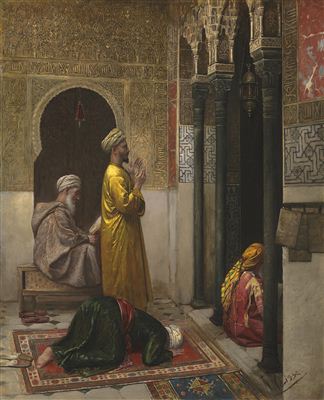
c. 1869 Usti, Bohemia - c.1927. Known for: Female portrait, Orientalist painting.
Rudolph Weisse was born in Usti, Bohemia. While he is often confused with the Swiss Orientalist painter, Johann Rudolf Weiss (1846-1933), both men have their own distinct styles. According to... Read full biography
Rudolph Weisse was born in Usti, Bohemia. While he is often confused with the Swiss Orientalist painter, Johann Rudolf Weiss (1846-1933), both men have their own distinct styles. According to Bénézit’s Dictionary of French Artists, Weisse specialized in portraits of Parisian beauties and... Read full biography
Rudolph Weisse was born in Usti, Bohemia. While he is often confused with the Swiss Orientalist painter, Johann Rudolf Weiss (1846-1933), both men have their own distinct styles. According to Bénézit’s Dictionary of French Artists, Weisse specialized in portraits of Parisian beauties and Orientalist street scenes of Cairo. Weisse studied at the Viennese Akademie der Bildenden Künste and exhibited at the Paris Salon from 1889-1927. His paintings were also shown in Vienna, London, Bordeaux, and... Read full biography
Rudolph Weisse was born in Usti, Bohemia. While he is often confused with the Swiss Orientalist painter, Johann Rudolf Weiss (1846-1933), both men have their own distinct styles. According to Bénézit’s Dictionary of French Artists, Weisse specialized in portraits of Parisian beauties and Orientalist street scenes of Cairo. Weisse studied at the Viennese Akademie der Bildenden Künste and exhibited at the Paris Salon from 1889-1927. His paintings were also shown in Vienna, London, Bordeaux, and Toulon. He was awarded a Médaille d’Honneur for his “Scène Orientale” and “Portrait de Femme” at the Paris Exposition Universelle in 1889 and a gold medal in Vienna in 1920. A contemporary reviewer of the Paris Exposition Universelle described... Read full biography
Rudolph Weisse was born in Usti, Bohemia. While he is often confused with the Swiss Orientalist painter, Johann Rudolf Weiss (1846-1933), both men have their own distinct styles. According to Bénézit’s Dictionary of French Artists, Weisse specialized in portraits of Parisian beauties and Orientalist street scenes of Cairo. Weisse studied at the Viennese Akademie der Bildenden Künste and exhibited at the Paris Salon from 1889-1927. His paintings were also shown in Vienna, London, Bordeaux, and Toulon. He was awarded a Médaille d’Honneur for his “Scène Orientale” and “Portrait de Femme” at the Paris Exposition Universelle in 1889 and a gold medal in Vienna in 1920. A contemporary reviewer of the Paris Exposition Universelle described Weisse’s street scene as “delightful” and his portraits of women as characterized by “frühlingischen Graz... Read full biography
Artist Biography
Biography page for Rudolf Weisse ((c. 1869 - c.1927)), known for Female portrait, Orientalist painting. Showing 2 biographical entries and 0 sample artworks.
Rudolf Weisse - Artist Info
About Rudolf Weisse
Name variants
R Weisse, Rudolph (Rudolphe) Weisse
Biography from Papillon Gallery
Rudolph (Rudolphe) Weisse
1869-1927
Born in Bohemia, Czechoslovakia, Rudolph Weisse studied in Vienna at the Academy Bildenden Kunste and l'Ecole des Beaux Art in Vienna.
He was known as an Orientalist and painter of portraits, figures and nudes. He exhibited at Paris salons including Salon des Artistes Français every year in the 1920's and in Bordeaux and Toulon.
He also exhibited in London and Vienna and won a silver metal in 1920.
His name is sometimes spelled Rudolphe Weisse.Biography from Quinn's Auction Galleries, Falls Church
Rudolph Weisse was born in Usti, Bohemia. While he is often confused with the Swiss Orientalist painter, Johann Rudolf Weiss (1846-1933), both men have their own distinct styles.
According to Bénézit’s Dictionary of French Artists, Weisse specialized in portraits of Parisian beauties and Orientalist street scenes of Cairo. Weisse studied at the Viennese Akademie der Bildenden Künste and exhibited at the Paris Salon from 1889-1927. His paintings were also shown in Vienna, London, Bordeaux, and Toulon.
He was awarded a Médaille d’Honneur for his “Scène Orientale” and “Portrait de Femme” at the Paris Exposition Universelle in 1889 and a gold medal in Vienna in 1920.
A contemporary reviewer of the Paris Exposition Universelle described Weisse’s street scene as “delightful” and his portraits of women as characterized by “frühlingischen Grazie,” or “spring-like grace” (Deutsche Zeitung, Wien, 19(1889) #6304, Morgen-Ausgabe, 1-2).