Page loaded successfully. Showing biography for Rudolph Belarski.
Rudolph Belarski BIOGRAPHY
1900 Dupont, Pennsylvania - 1983. Known for: Action illustrator, pulp fiction, educator.
Rudolph Belarski (1900-1983), noted for "pulp fiction" and paperback detective images, was said to be "the perfect paperback artist" in the mid 1950s by art editor Ken Stuart, of The Saturday Evening... Read full biography
Rudolph Belarski (1900-1983), noted for "pulp fiction" and paperback detective images, was said to be "the perfect paperback artist" in the mid 1950s by art editor Ken Stuart, of The Saturday Evening Post. Belarski was fast, could produce a cover overnight, did 'idea pictures', which had symbols in... Read full biography
Rudolph Belarski (1900-1983), noted for "pulp fiction" and paperback detective images, was said to be "the perfect paperback artist" in the mid 1950s by art editor Ken Stuart, of The Saturday Evening Post. Belarski was fast, could produce a cover overnight, did 'idea pictures', which had symbols in the background such as angels when a plane crash was shown, and numerous action-packed black and white interior illustrations with gouache. Belarski's illustration career began in the 1920s, with the... Read full biography
Rudolph Belarski (1900-1983), noted for "pulp fiction" and paperback detective images, was said to be "the perfect paperback artist" in the mid 1950s by art editor Ken Stuart, of The Saturday Evening Post. Belarski was fast, could produce a cover overnight, did 'idea pictures', which had symbols in the background such as angels when a plane crash was shown, and numerous action-packed black and white interior illustrations with gouache. Belarski's illustration career began in the 1920s, with the pioneering days of American aviation and work he did for the publication called Wings. His best-remembered subjects, however, came along with the crime story fascination in the 1930s as portrayed in the detective magazine Black Mask: voluptuous... Read full biography
Rudolph Belarski (1900-1983), noted for "pulp fiction" and paperback detective images, was said to be "the perfect paperback artist" in the mid 1950s by art editor Ken Stuart, of The Saturday Evening Post. Belarski was fast, could produce a cover overnight, did 'idea pictures', which had symbols in the background such as angels when a plane crash was shown, and numerous action-packed black and white interior illustrations with gouache. Belarski's illustration career began in the 1920s, with the pioneering days of American aviation and work he did for the publication called Wings. His best-remembered subjects, however, came along with the crime story fascination in the 1930s as portrayed in the detective magazine Black Mask: voluptuous dames in distress mixing it up with square-jawed detectives and thugs. His science... Read full biography
Artist Biography
Biography page for Rudolph Belarski ((1900 - 1983)), known for Action illustrator, pulp fiction, educator. Showing 1 biographical entries and 0 sample artworks.
Rudolph Belarski - Artist Info
About Rudolph Belarski
Biography from the Archives of askART
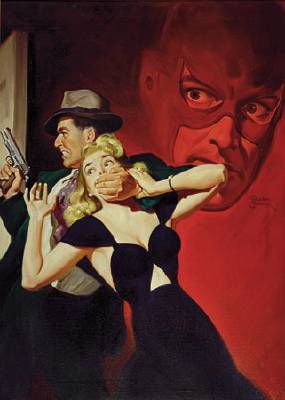 Rudolph Belarski (1900-1983), noted for "pulp fiction" and paperback detective images, was said to be "the perfect paperback artist" in the mid 1950s by art editor Ken Stuart, of The Saturday Evening Post. Belarski was fast, could produce a cover overnight, did 'idea pictures', which had symbols in the background such as angels when a plane crash was shown, and numerous action-packed black and white interior illustrations with gouache.
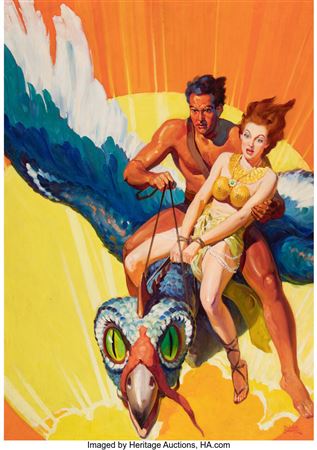
Belarski's illustration career began in the 1920s, with the pioneering days of American aviation and work he did for the publication called Wings. His best-remembered subjects, however, came along with the crime story fascination in the 1930s as portrayed in the detective magazine Black Mask: voluptuous dames in distress mixing it up with square-jawed detectives and thugs. His science-fiction subjects of this same time were perceived as astonishingly convincing with titles such as Minions of the Moon and Escape on Venus. His futurist constructions of the 25th century adapted microphones, lawn mowers and hubcaps as elements. A great lover of camping and fishing, Belarski also painted a number of covers for Outdoor Life.
A master at building suspense through figure, perspective and color, Belarski dazzled the newsstand browser with pictorial headlines of vital action scenes pertaining to the inside story. In doing so, he sold magazines and books to a drama-craving audience, and propelled publishing's mass markets, thus infiltrating American minds with the trends and fashions of pop culture. When the demand for pulp fiction subsided after World War II, he transitioned to paperbacks, creating over fifty covers for Popular Library. He also adjusted his working methods over the years, first doing large canvases in the 1920s, tighter compositions in the 1930s, and then flexible paperback covers with methods to fit the assignment---something he felt limited his creativity.
Belarski was born in Dupont, Pennsylvania into a large family of Polish immigrants. At age twelve, he began working in coal mines as a slate picker and mule driver. He would draw on walls, and noticing his talent, the foreman put him to work making safety posters to warn the miners. When he was nineteen, he went to New York City and studied art at Pratt Institute but returned to his hometown in the summers to finish his grade school education. After graduating from Pratt, he stayed on as a teacher. Years later, in 1957, he joined the faculty of the Famous Artists School in Westport and remained there until his retirement in 1973.
He died at age eighty three on Christmas Eve, 1983.
Sources include:
Walt Reed, The Illustrator in America, p. 261
Robert Lesser, Pulp Art, p. 170