Page loaded successfully. Showing biography for Sylvain Vigny.
Sylvain Vigny BIOGRAPHY
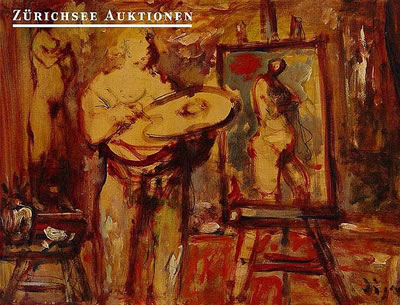
1903 Austria - 1970 Nice. Known for: Landscape, figure, portrait painting.
Sylvain Vigny was a painter of figures, nudes, genre scenes, landscapes, seascapes and flowers, with no formal training in drawing or painting. Vigny arrived in France in 1929 and after a life of... Read full biography
Sylvain Vigny was a painter of figures, nudes, genre scenes, landscapes, seascapes and flowers, with no formal training in drawing or painting. Vigny arrived in France in 1929 and after a life of adventure in Vienna and Paris he discovered Nice in 1934, where he made his home. In 1928 he... Read full biography
Sylvain Vigny was a painter of figures, nudes, genre scenes, landscapes, seascapes and flowers, with no formal training in drawing or painting. Vigny arrived in France in 1929 and after a life of adventure in Vienna and Paris he discovered Nice in 1934, where he made his home. In 1928 he illustrated La Danse Macabre, by Fagus. His painting is stark but warm, anxious and chaotic, while the setting of figures with their nostalgic noble or middle-class hairstyles in reminiscent of Spain, Venetian... Read full biography
Sylvain Vigny was a painter of figures, nudes, genre scenes, landscapes, seascapes and flowers, with no formal training in drawing or painting. Vigny arrived in France in 1929 and after a life of adventure in Vienna and Paris he discovered Nice in 1934, where he made his home. In 1928 he illustrated La Danse Macabre, by Fagus. His painting is stark but warm, anxious and chaotic, while the setting of figures with their nostalgic noble or middle-class hairstyles in reminiscent of Spain, Venetian festivals and the Belle Epoque. Vigny saw the world as a fantastic tragic show. He painted sorrowful figures, women with ungainly forms, beach scenes and compositions imbued with mysticism.www.odonwagnergallery.com... Read full biography
Sylvain Vigny was a painter of figures, nudes, genre scenes, landscapes, seascapes and flowers, with no formal training in drawing or painting. Vigny arrived in France in 1929 and after a life of adventure in Vienna and Paris he discovered Nice in 1934, where he made his home. In 1928 he illustrated La Danse Macabre, by Fagus. His painting is stark but warm, anxious and chaotic, while the setting of figures with their nostalgic noble or middle-class hairstyles in reminiscent of Spain, Venetian festivals and the Belle Epoque. Vigny saw the world as a fantastic tragic show. He painted sorrowful figures, women with ungainly forms, beach scenes and compositions imbued with mysticism.www.odonwagnergallery.com... Read full biography
Artist Biography
Biography page for Sylvain Vigny ((1903 - 1970)), known for Landscape, figure, portrait painting. Showing 2 biographical entries and 0 sample artworks.
Sylvain Vigny - Artist Info
About Sylvain Vigny
Biography from Odon Wagner Gallery
Sylvain Vigny was a painter of figures, nudes, genre scenes, landscapes, seascapes and flowers, with no formal training in drawing or painting. Vigny arrived in France in 1929 and after a life of adventure in Vienna and Paris he discovered Nice in 1934, where he made his home.
In 1928 he illustrated La Danse Macabre, by Fagus. His painting is stark but warm, anxious and chaotic, while the setting of figures with their nostalgic noble or middle-class hairstyles in reminiscent of Spain, Venetian festivals and the Belle Epoque. Vigny saw the world as a fantastic tragic show. He painted sorrowful figures, women with ungainly forms, beach scenes and compositions imbued with mysticism.Biography from Accademia Fine Art
The artist's name is Sylvain Vigny. He was born in Vienna and arrived in France in 1929. He settled permanently in Nice in 1934 after having an adventurous life in Vienna and Paris. He was a regular at the Galerie d'art Romanin in Nice, along with Jean Moulin, Pierre and Jacques Prévert, Nikos Papatakis, Django Reinhardt, and Jean Cassarini. From 1955, he became a recognized figure in Nice art, along with his friends Ben (Benjamin Vautier), Claude Morini, and Bernard Damiano.