Page loaded successfully. Showing biography for Theaster Gates.
Theaster Gates BIOGRAPHY
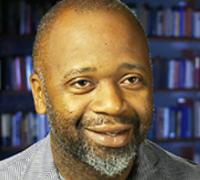
Born 1973 Chicago, Illinois. Known for: Urban planning themes, installations, performance art, sculpture.
Theaster Gates (born August 28, 1973) is an American Social Practice installation artist. He was born in Chicago, Illinois, where he still lives and works. Gates' work has been shown at major museums... Read full biography
Theaster Gates (born August 28, 1973) is an American Social Practice installation artist. He was born in Chicago, Illinois, where he still lives and works. Gates' work has been shown at major museums and galleries internationally and deals with issues of urban planning, religious space, and craft.... Read full biography
Theaster Gates (born August 28, 1973) is an American Social Practice installation artist. He was born in Chicago, Illinois, where he still lives and works. Gates' work has been shown at major museums and galleries internationally and deals with issues of urban planning, religious space, and craft. He is committed to the revitalization of poor neighborhoods through combining urban planning and art practices. Theaster Gates was born and raised in East Garfield Park on the West Side of Chicago. He... Read full biography
Theaster Gates (born August 28, 1973) is an American Social Practice installation artist. He was born in Chicago, Illinois, where he still lives and works. Gates' work has been shown at major museums and galleries internationally and deals with issues of urban planning, religious space, and craft. He is committed to the revitalization of poor neighborhoods through combining urban planning and art practices. Theaster Gates was born and raised in East Garfield Park on the West Side of Chicago. He was the youngest of nine children and the only son. His father was a roofer and his mother, a school teacher. His sisters passed on their interest in civil rights activism and the family attended a Baptist church where Gates, a choir member, became... Read full biography
Theaster Gates (born August 28, 1973) is an American Social Practice installation artist. He was born in Chicago, Illinois, where he still lives and works. Gates' work has been shown at major museums and galleries internationally and deals with issues of urban planning, religious space, and craft. He is committed to the revitalization of poor neighborhoods through combining urban planning and art practices. Theaster Gates was born and raised in East Garfield Park on the West Side of Chicago. He was the youngest of nine children and the only son. His father was a roofer and his mother, a school teacher. His sisters passed on their interest in civil rights activism and the family attended a Baptist church where Gates, a choir member, became interested in performance. A good student, Gates attended Lane Technical High School. In 1996, he graduated from Iowa State University, with a B... Read full biography
Artist Biography
Biography page for Theaster Gates ((Born 1973)), known for Urban planning themes, installations, performance art, sculpture. Showing 2 biographical entries and 0 sample artworks.
Theaster Gates - Artist Info
About Theaster Gates
Biography from the Archives of askART
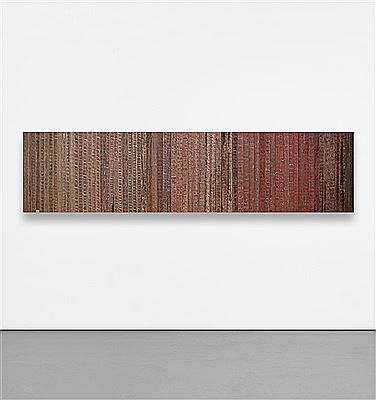 Theaster Gates (born August 28, 1973) is an American Social Practice installation artist. He was born in Chicago, Illinois, where he still lives and works. Gates' work has been shown at major museums and galleries internationally and deals with issues of urban planning, religious space, and craft. He is committed to the revitalization of poor neighborhoods through combining urban planning and art practices.
Theaster Gates was born and raised in East Garfield Park on the West Side of Chicago. He was the youngest of nine children and the only son. His father was a roofer and his mother, a school teacher. His sisters passed on their interest in civil rights activism and the family attended a Baptist church where Gates, a choir member, became interested in performance. A good student, Gates attended Lane Technical High School. In 1996, he graduated from Iowa State University, with a B.S. in Urban Planning and Ceramics. His early art was in pottery, and he spent time studying the art in Japan. He decided he wanted to explore religion in South Africa, and in 1998 he received a M.A. at the University of Cape Town in Fine Arts, and Religious Studies.
He returned to Chicago and was hired by the Chicago Transit Authority to organize and obtain public art for its public transportation system. In 2006 he was awarded an M.S. in Urban Planning, again from Iowa State, with additional studies in Ceramics, and Religious Studies. In 2006, he was hired by the University of Chicago as an arts programmer, and later director of arts outreach. In addition to creating fine arts pottery, he became interested in presenting performance art.
Gate is the founder and Artist Director of the Rebuild Foundation, a nonprofit focused on cultural-driven redevelopment and affordable space initiatives in under-resourced communities. Under Gates' leadership, the Rebuild Foundation currently manages projects in the Greater Grand Crossing neighborhood of Chicago. Rebuild received official 501(c)3 status in December 2010. Program sites include the Stony Island Arts Bank, the Black Cinema House, the Dorchester Art + Housing Collaborative, Archive House, and Listening House.
For the Dorchester Projects, one of Rebuild's Foundation's most celebrated works, he restored vacant buildings and turned them into cultural institutions with artifacts from the South Side. Gates's Rebuild Foundation has renovated two houses on Dorchester Avenue, now called the Archive House and the Listening House. In 2013, he purchased the Stony Island State Savings Bank from the city of Chicago. The Archive House holds 14,000 architecture books from a closed bookshop. The Listening House holds 8,000 records purchased at the closing of Dr. Wax Records. The Stony Island Savings Bank now known as the Stony Island Arts Bank contains the book collection of John H. Johnson, founder of Ebony and Jet magazines; the record collection of Frankie Knuckles, the godfather of house music; and slides of the University of Chicago's and Art Institute of Chicago's collections. In 2015, his Stony Island work was included in the inaugural Chicago Architecture Biennial.
Since 2011, Gates has been the director of Arts and Public Life at the University of Chicago. In this role, he oversees staff at the Arts Incubator in Washington Park and the Reva and David Logan Center for the Arts, a wide network of resident and visiting artists (including current and former participants in our residency program), community participants, programmatic partners, and friends. Gates is also the leader of the Place Lab, a partnership between Arts + Public Life and the Harris School of Public Policy, which is working to design and implement new approaches to urban development. The Place Lab partners with the demonstration cities of Gary, Akron, Detroit, and other Knight Foundation communities.
In January 2014 he designed a million-dollar installation for the South Side's Ninety-Fifth Street subway terminal. It is the largest public art project in the history of the Chicago Transit Authority. He was participant at the 2012 dOCUMENTA art show in Kassel, Germany, the 2010 Whitney Biennial in New York, the Milwaukee Art Museum in 2010, the 2010 Art Chicago fair. He was included in "Hand+Made: The Performative Impulse in Art and Craft", at the Contemporary Arts Museum Houston, and in 2013 had a solo show, 13th Ballad, at the Museum of Contemporary Art, Chicago. Gates is represented by Regen Projects of Los Angeles and White Cube, London. On May 30, 2014, Gates and jazz pianist Jason Moran led a one-time performance at the entitled Looks of a Lot as part of the "Symphony Center Presents Jazz" series and the Chicago Symphony Orchestra's "Truth to Power Festival."
In October 2015, he created an installation at Temple Church, Bristol, England. Built in co-operation with its owner English Heritage, "Sanctum" will provide a venue with 24 hours of music and performance over 24 days, in a performance event funded by Arts Council England and developed as part of Bristol 2015 Green Capital.
Recognition
• 2012 – Fellow of United States Artists
• 2012 – "Innovator of the Year" by the Wall Street Journal
• 2012 – #56 in ArtReview list of the hundred most powerful people in the art world
• 2013 – Inaugural Award of The Vera List Center for Art and Politics
• 2013 – #40 in ArtReview list of the hundred most powerful people in the art world
• 2014 – #44 on Art Review's Power 100
• 2015 – £40,000 Artes Mundi award in Cardiff, Wales
• 2015 – Honorary Doctorate of Fine Arts from San Francisco Arts Institute
• 2016 – Kurt Schwitter Prize
Source:
"Theaster Gates," Wikipedia, April 2016Biography from the Archives of askART
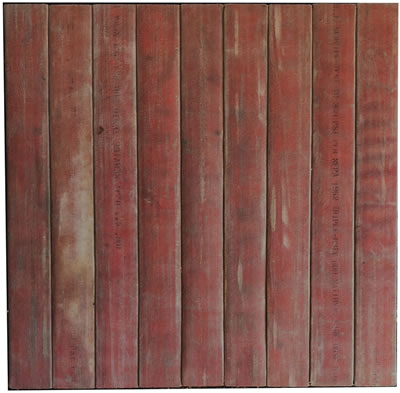 Theaster Gates' practice includes sculpture, installation, performance and urban interventions that aim to bridge the gap between art and life. Gates works as an artist, curator, urbanist and facilitator and his projects attempt to instigate the creation of cultural communities by acting as catalysts for social engagement that leads to political and spatial change.
Gates has described his working method as “critique through collaboration” – often with architects, researchers and performers – to create works that stretch the idea of what we usually understand visual-based practices to be. For his exhibition at Milwaukee Art Museum exhibition in 2010, for example, Gates invited a 250 strong gospel choir into the galleries to sing songs adapted from the inscriptions on pots by the famous 19th century slave and potter 'Dave Drake'. For the 2010 Whitney Biennial, Gates transformed the Whitney’s Sculpture Court with a spare, architectural installation that functioned as a communal gathering space for performances, social engagement, and contemplation. For the duration of the exhibition Gates collaborated with various creative practitioners on a series of 'monastic residencies', holding live events such as the session by Gates' musical ensemble, the Black Monks of Mississippi. In another recent exhibition at Seattle Art Museum, Gates transformed the gallery into an audio archive entitled 'The Listening Room', incorporating a hand-built DJ booth and a DJ who spinned selections from the now foreclosed Dr Wax record store in Chicago, formerly an influential hub for 60s, 70s and 80s music, in particular jazz, blues and R&B.
Gates trained as both a sculptor and an urban planner and his works are rooted in a social responsibility as well as underpinned by a deep belief system. His installations and sculptures mostly incorporate found materials – often from the neighborhoods where he is engaged and have historical and iconic significance. In his series “In Event of a Race Riot” (2011 onward) for example, lengths of decommissioned fire hoses are carefully folded, rolled or stacked and emphatically presented inside gilt box frames. Tactile and sensuous objects in themselves, the hoses have special iconic significance in relation to the civil rights struggles, in particular with regard to the hosing of peaceful demonstrators in Birmingham, Albama in 1963. The frames act as a device for transformation but also a way to ask the viewer to think again about the still ongoing struggle for civil rights. Other sculptures derive from the stage set for performances, such as the series of shoe-shine sculptures. Made from recycled planks of wood, these over-sized, throne-like chairs emphasise the role of server and served and appear as both scaffold and monument.
Perhaps Gates most ambitious project, however, is the ongoing real estate development, simply known as 'The Dorchester Project'. In late 2006, Gates purchased an abandoned building on 69th and Dorchester Avenue on Chicago's South Side, collaborating with a team of architects and designers to gut and refurbish the buildings using various kinds of found materials. The building and, subsequently, several more in its vicinity, have become a hub for cultural activity housing a book and record library and becoming a venue for dinners (choreographed occasions entitled 'Plate Convergences'), concerts and performances. Gates describes this project as “real-estate art”, part of a “circular ecological system” since the renovations of the buildings are financed entirely by the sale of sculptures and artworks that were created from the materials salvaged from their interiors.??
Theaster Gates was born in 1973 in Chicago, where he lives and works. He has exhibited widely, including group shows such as the Whitney Biennial, New York (2010), dOCUMENTA (13), Kassel (2012), ’The Spirit of Utopia’ at Whitechapel, London (2013) and Studio Museum’s ‘When Stars Collide’ in New York (2014). Solo exhibitions include ‘To Speculate Darkly: Theaster Gates and Dave, the Slave Potter’ at Milwaukee Art Museum (2010), Seattle Art Museum (2011), MCA Chicago (2013) and ‘The Black Monastic’ residency at Museu Serralves, Porto (2014). In 2013, Gates was awarded the inaugural Vera List Center Prize for Art and Politics, and he has since won the Artes Mundi 6 prize (2015). Gates is also the founder of the non-profit Rebuild Foundation and currently Professor in the Department of Visual Arts, University of Chicago.
Source:
"Theaster Gates," White Cube, Web, April 2016