Page loaded successfully. Showing biography for Toshiko Takaezu.
Toshiko Takaezu BIOGRAPHY
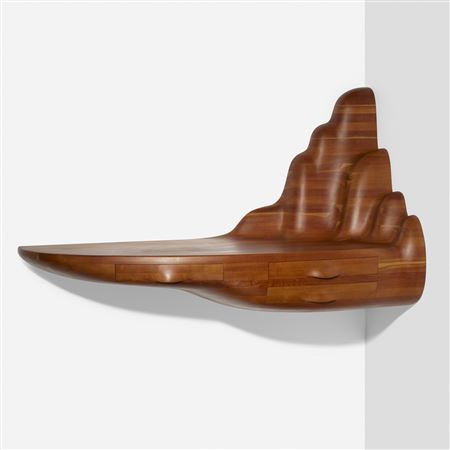
1922 Pepeekeo, Hawaii - 2011 Honolulu, Hawaii. Known for: Sculpture, earthenware, ceramic vessels-"moon pots".
Toshiko Takaezu . 1922 Birth Pekeekeo, Hawaii . 1948-1951 Education Honolulu Academy of Arts, Honolulu, HI, University of Hawaii, Honolulu, HI . 1951-1954 Education, Cranbrook Academy of Arts,... Read full biography
Toshiko Takaezu . 1922 Birth Pekeekeo, Hawaii . 1948-1951 Education Honolulu Academy of Arts, Honolulu, HI, University of Hawaii, Honolulu, HI . 1951-1954 Education, Cranbrook Academy of Arts, Bloomfield Hills, MI . 1966-1992 Teacher, Princeton University, Princeton, NJ . 1986 First Individual... Read full biography
Toshiko Takaezu . 1922 Birth Pekeekeo, Hawaii . 1948-1951 Education Honolulu Academy of Arts, Honolulu, HI, University of Hawaii, Honolulu, HI . 1951-1954 Education, Cranbrook Academy of Arts, Bloomfield Hills, MI . 1966-1992 Teacher, Princeton University, Princeton, NJ . 1986 First Individual Governor's Award New Jersey State Council on the Arts . 1987 "Living Treasure," Award Honolulu, HI. 1994 Gold Medal Award American Craft Council . 1995 Honorary Doctorate Degree University of Princeton,... Read full biography
Toshiko Takaezu . 1922 Birth Pekeekeo, Hawaii . 1948-1951 Education Honolulu Academy of Arts, Honolulu, HI, University of Hawaii, Honolulu, HI . 1951-1954 Education, Cranbrook Academy of Arts, Bloomfield Hills, MI . 1966-1992 Teacher, Princeton University, Princeton, NJ . 1986 First Individual Governor's Award New Jersey State Council on the Arts . 1987 "Living Treasure," Award Honolulu, HI. 1994 Gold Medal Award American Craft Council . 1995 Honorary Doctorate Degree University of Princeton, Princeton, NJ. Exhibitions: . 2000, Perimeter Gallery Chicago, IL . 1998 Toshiko Takaezu: At Home, Hunterdon Museum of Art Clifton, NJ . 1997 Charles Cowles Gallery New York, NY. 1995-1998 Toshiko Takaezu: Retrospective, The National Museum of Modern.... Read full biography
Toshiko Takaezu . 1922 Birth Pekeekeo, Hawaii . 1948-1951 Education Honolulu Academy of Arts, Honolulu, HI, University of Hawaii, Honolulu, HI . 1951-1954 Education, Cranbrook Academy of Arts, Bloomfield Hills, MI . 1966-1992 Teacher, Princeton University, Princeton, NJ . 1986 First Individual Governor's Award New Jersey State Council on the Arts . 1987 "Living Treasure," Award Honolulu, HI. 1994 Gold Medal Award American Craft Council . 1995 Honorary Doctorate Degree University of Princeton, Princeton, NJ. Exhibitions: . 2000, Perimeter Gallery Chicago, IL . 1998 Toshiko Takaezu: At Home, Hunterdon Museum of Art Clifton, NJ . 1997 Charles Cowles Gallery New York, NY. 1995-1998 Toshiko Takaezu: Retrospective, The National Museum of Modern. Art and travel Kyoto, Japan . 1995: Retrospective, The National... Read full biography
Artist Biography
Biography page for Toshiko Takaezu ((1922 - 2011)), known for Sculpture, earthenware, ceramic vessels-"moon pots". Showing 3 biographical entries and 0 sample artworks.
Toshiko Takaezu - Artist Info
About Toshiko Takaezu
Name variants
Toshiko Takeazu
Biography from the Archives of askART
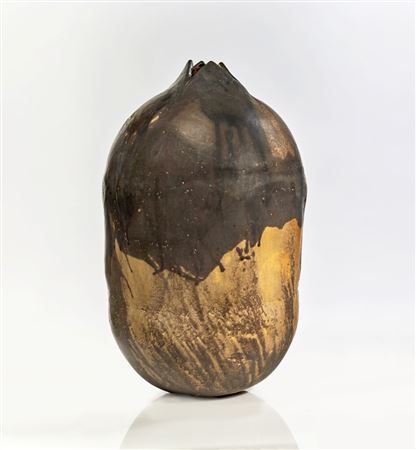 Toshiko Takaezu
1922 Birth Pekeekeo, Hawaii
1948-1951 Education Honolulu Academy of Arts, Honolulu, HI, University of Hawaii, Honolulu, HI
1951-1954 Education, Cranbrook Academy of Arts, Bloomfield Hills, MI
1966-1992 Teacher, Princeton University, Princeton, NJ
1986 First Individual Governor's Award New Jersey State Council on the Arts
1987 "Living Treasure," Award Honolulu, HI
1994 Gold Medal Award American Craft Council
1995 Honorary Doctorate Degree University of Princeton, Princeton, NJ
Exhibitions:
2000, Perimeter Gallery Chicago, IL
1998 Toshiko Takaezu: At Home, Hunterdon Museum of Art Clifton, NJ
1997 Charles Cowles Gallery New York, NY
1995-1998 Toshiko Takaezu: Retrospective, The National Museum of Modern
Art and travel Kyoto, Japan
1995: Retrospective, The National Museum of Modern Art Kyoto, Japan
1994 40 Year Survey Perimeter Gallery Chicago, IL
1994 "The Cranbrook Years" Habatat/Shaw Gallery Farmington Hills, MI
1994 Longhouse Foundation East Hampton, NY
1994 Outdoor Sculpture, Longhouse Foundation East Hampton, NY
1994, Forum for Contemporary Art St. Louis, MO
1994 Toshiko Takaezu: 1954-1994, Perimeter Gallery Chicago, IL
1994 Grounds for Sculpture Hamilton, NJ
1993 Charles Cowles Gallery NYC
1993 Honolulu Museum of Modern Art Honolulu, HI
1992 "Toshiko Takaezu" Recent Work, Morris Gallery, Pennsylvania Academy of Fine Art, Philadelphia, PA
1992 "Toshiko Takaezu: Recent Work" Pennsylvania Academy of the Fine Art Philadelphia, PA
1992 Charles Cowles Gallery NYC
1990-1991 "Toshiko Takaezu: Four Decades" Montclair Art Museum & traveling Montclair, NJ & others
1990 "Toshiko Takaezu - 1989-1990" The Gallery at Bristol-Myers Squibb Princeton, NJ
1990 Perimeter Gallery Chicago, IL
1989 Eloquent Objects Exhibit, National Museum of Kyoto Kyoto, Japan
1989 Fort Wayne Museum of Art Fort Wayne, IN
1989 Arkansas Art Center Little Rock, AR
1989 Port of History Museum Philadelphia, PA
1989 University of Bridgeport Bridgeport, CT
1989 Volcano Art Center, Kamehameha School, Honolulu, HI
1988 Ohio Designer Craftsman 25th Anniversary Invitational Show, OH Designer Craftsman 25th Anniv. Invit. Show Columbus, OH
1988 University of Southern Illinois Edwardsville, IL
1988 Punahou School Honolulu, HI
1988 Tampa Museum of Art Tampa, FL
1988 Montclair Art Museum Montclair, NJ
1987 Philbrook Museum Tulsa, OK
1987 Twining Gallery New York, NY
1987 Perimeter Gallery Chicago, IL
1987 Hau-Pulamamau, Kuakini Hospital Honolulu, HI
1985 The Art Museum of Princeton Princeton, NJ
1985 Gallery North Setauket, NY
1985 Summit Art Center Summit, NJ
1984 Historic Bethlehem, Inc. Bethlehem, PA
1983 Campbell Museum Camden, NJ
1983 Community College of Lancaster Lancaster, PA
1983 Trout Gallery, Dickinson College Carlisle, PA
1982 Merideth Contemporary Art Baltimore, MD
1982 Reading Museum Reading, PA
1981 Belks Art Gallery, Western Carolina University Cullowhee, NC
1980 University of Wisconsin Eau Claire, WI
1980 Contemporary Craft Center Portland, OR
1980 Keystone Junior College La Plume, PA
1979 New Jersey State Museum Trenton, NJ
1979 Haae Gallery of Art Bloomsburg, PA
1979 Cleveland Institute of Art Cleveland, OH
1977 American Craft Council Exhibition, American Craft Council Exhibition Winston-Salem, NC
1975-1985 Florida Junior College Jacksonville, FL
1975 Visual Arts Faculty Show, Princeton Museum Princeton, NJ
1975 Skidmore College Saratoga Springs, NY
1974 Lafayette College Easton, PA
1973 Hunterdon Art Center Clinton, NJ
1971 Cedar Crest College Allentown, PA
1971 Boise Art Association Boise, ID
1971 Lewis & Clark College Portland, OR
1968 Swarthmore College Swarthmore, PA
1966 Benson Gallery Bridgehampton, NY
1966 Contemporary Art Center of Hawaii Honolulu, HI
1965 Edinboro State College Edinboro, PA
1965 Gallery 100 Princeton, NJ
1965 Indiana State University Terra Haute, IN
1965 Society of Arts & Crafts Boston, MA
1962 First National Invitational Ceramic Exhibition, San Jose State College San Jose, CA
1962 Denver Art Museum Denver, CO
1962 International Exhibition of Contemporary Ceramics, International Exhibition of Contemporary Ceramics Prague, Czechoslovakia
1962 State University College of Education Oneonta, NY
1961 University of Hawaii Honolulu, HI
1961 Ostend International Show, Ostend International Show Ostend, Belgium
1961 Cleveland Institute of Art Cleveland, OH
1961 Peabody College for Teachers Nashville, TN
1961 St. Mary''s College Notre Dame, IN
1961 Clarke College Dubuque, IA
1961 Joslyn Center Omaha, NE
1960 Lake Erie College Painsville, OH
1960 Hanamura Gallery, Detroit, MI
1960 International Culture Exchange Exhibit, International Culture Exchange Exhibit Czechoslovakia
1960 First International Cultural Exchange Exhibition, First International
Cultural Exchange Exhibition Geneva, Switzerland
1959 Ostend International Show, Ostend International Show Ostend, Belgium
1959 U.S. Information Agency Show of U.S. Handcrafts, U.S. Information Agency Show of U.S. Handcrafts
1959 Honolulu Academy of Arts Honolulu, HI
1959 Cleveland Institute of Art Cleveland, OH
1958 Cleveland Women''s Club Cleveland, OH
1958 Syracuse International Exhibition, Syracuse International Exhibition Syracuse, NY
1958 Brussels World''s Fair, Brussels World''s Fair Brussels, Belgium
1955 Bonniers NYC
1955 University of Wisconsin, University of Wisconsin Madison, WI
Source: Ray Castello of American Art Collection, Taos, New MexicoBiography from the Archives of askART
 Toshiko Takaezu (June 17, 1922 – March 9, 2011) was an American ceramic artist, painter, sculptor, and educator who was known for her rounded, closed forms that viewed ceramics as a fine art and more than a functional vessel. She is of Japanese descent and from Pepeeko, Hawaii.
Takaezu was born to Japanese immigrant parents in Pepeekeo, Hawaii, on 17 June 1922. She moved to Honolulu in 1940, where she worked at the Hawaii Potters Guild creating identical pieces from press molds. While she hated creating hundreds of identical pieces, she appreciated that she could practice glazing.
Takaezu attended Saturday classes at the Honolulu Museum of Art School (1947 to 1949) and attended the University of Hawaii (1948, and 1951) where she studied under Claude Horan. From 1951 to 1954, she continued her studies at Cranbrook Academy of Art in Bloomfield Hills, Michigan (1951), where she met Finnish ceramist Maija Grotell, who became her mentor. Takaezu earned an award after her first year of study, which acknowledged her as an outstanding student in the clay department.
In 1955, Takaezu traveled to Japan, where she studied Zen Buddhism, tea ceremony, and the techniques of traditional Japanese pottery, which influenced her work. While studying in Japan, she worked with Kaneshige Toyo and visited Shoji Hamada, both influential Japanese potters.
She taught at several universities and art schools: Cranbrook Academy of Art, Bloomfield Hills, Michigan; University of Wisconsin, Madison, Wisconsin; Cleveland Institute of Art, Cleveland, Ohio (10 years); Honolulu Academy of Art, Honolulu, Hawaii; and Princeton University, Princeton, New Jersey (1967–1992), where she was awarded an honorary doctorate.
She retired in 1992 to become a studio artist, living and working in the Quakertown section of Franklin Township, Hunterdon County, New Jersey, about 30 miles northwest of Princeton. In addition to her studio in New Jersey, she made many of her larger sculptures at Skidmore College in Saratoga Springs, New York.
Takaezu made functional wheel-thrown vessels early in her career. Later she switched to abstract sculptures with freely applied poured and painted glazes. In the early 1970s, when she didn't have access to a kiln, she painted on canvas.
Takaezu treated life with a sense of wholesomeness and oneness with nature; everything she did was to improve and discover herself. She believed that ceramics involved self-revelation, once commenting, "In my life I see no difference between making pots, cooking and growing vegetables... there is a need for me to work in clay... it gives me answers for my life."
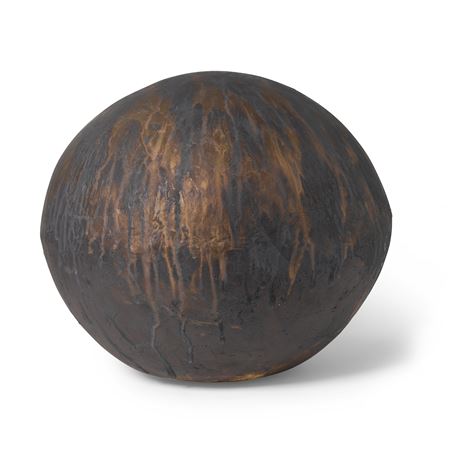
When she developed her signature “closed form” after sealing her pots, she found her identity as an artist. The ceramic forms resembled human hearts and torsos, closed cylindrical forms, and huge spheres she called “moons.” Before closing the forms, she dropped a bead of clay wrapped in paper inside, so that the pieces would rattle when moved.
She was once asked by Chobyo Yara what the most important part of her ceramic pieces is. She replied that it is the hollow space of air within, because it cannot be seen but is still part of the pot. She relates this to the idea that what's inside a person is the most important.
Takaezu died on March 9, 2011 in Honolulu, following a stroke she suffered in May 2010. The Toshiko Takaezu Foundation was established in 2015, to support the legacy of the artist Toshiko Takaezu.
Exhibitions:
1955: University of Wisconsin, Madison, Wisconsin
1959, 1961: Cleveland Institute of Art, Cleveland, Ohio
1961: Peabody College for Teachers, Nashville, Tennessee
1965: Gallery 100, Princeton, New Jersey
1971: Lewis and Clark College, Portland, Oregon
1975, 1985: Florida Junior College, Jacksonville, Florida
1987: Hale Pulamamau, Kuakini Hospital, Honolulu, Hawaii
1989: Montclair Art Museum, Montclair, New Jersey
1989: University of Bridgeport, Bridgeport, Connecticut
2006: Hunterdon Art Museum, Clinton, New Jersey
She has also been in several group exhibitions throughout the United States and internationally in countries including Belgium, Czechoslovakia, Japan, and Switzerland.
Honors and awards:
Takaezu won many honors and awards for her work:
1952: McInerny Foundation grant
1964: Tiffany Foundation grant
1980: National Endowment for the Arts fellowship
1983: Dickinson College Arts Award
1987: Living Treasure Award (Honolulu, HI)
Source: Wikipedia (October 2021)
Submitted by: Andres HarnischBiography from the Archives of askART
 Following is the obituary of the artist, The New York Times, March 19, 2011
"Toshiko Takaezu, Ceramic Artist, Dies at 88" By WILLIAM GRIMES
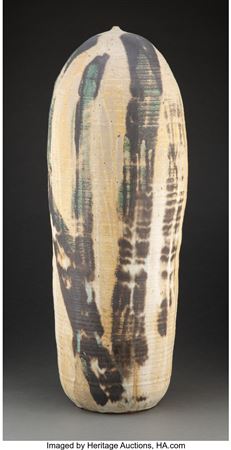
Toshiko Takaezu, a Japanese-American ceramist whose closed pots and torpedolike cylinders, derived from natural forms, helped to elevate ceramics from the production of functional vessels to a fine art, died on March 9 in Honolulu. She was 88.
Her death was confirmed by Scott Ashley, the associate director of the Perimeter Gallery in Chicago.
In her stoneware and porcelain works, some small enough to fit in the palm of one hand, others monoliths more than six feet tall, Ms. Takaezu blended the expressive bravura of painters like Jackson Pollock and Franz Kline with the calm, meditative quality of traditional Japanese pottery in forms suggestive of acorns, melons or tree trunks.
Her work is in the collections of the Smithsonian American Art Museum; the Museum of Fine Arts, Boston; and the Los Angeles County Museum of Art.
Early in her career she made traditional vessels but in the late 1950s, strongly influenced by the Finnish ceramist Maija Grotell, she embraced the notion of ceramic pieces as artworks meant to be seen rather than used. She closed off the top of her vessels, leaving a vestigial nipple-like opening and creating, in effect, a clay canvas for glazing of all kinds: brushing, dripping, pouring and dipping.
She became known for the squat balls she called moon pots; the vertical "closed forms," which grew sharply in height in the 1990s; and thin ceramic trunks inspired by the scorched trees she had seen along the Devastation Trail in Hawaii's Volcanoes National Park. At times Ms. Takaezu exhibited the moon pots in hammocks, an allusion to her method of drying the pots in nets. She also cast bronze bells and wove rugs.
Strongly influenced by her study of Zen Buddhism, she regarded her ceramic work as an outgrowth of nature and seamlessly interconnected with the rest of her life. "I see no difference between making pots, cooking and growing vegetables," she was fond of saying. Indeed, she often used her kilns to bake chicken in clay, and dry mushrooms, apples and zucchinis.
Toshiko Takaezu (pronounced Toe-SHEE-ko Taka-YAY-zoo) was born on June 17, 1922, in Pepeekeo, Hawaii, the middle child of 11. Her parents were Japanese immigrants from Okinawa. She studied art at the University of Hawaii at Manoa, but in 1951 enrolled in the Cranbrook Academy of Art in Bloomfield Hills, Michigan to study with Ms. Grotell, a strong believer in experimentation and in allowing students to find their own way.
During a visit to Japan with one of her sisters in 1955, Ms. Takaezu spent time in a Zen monastery and with some of Japan's most eminent traditional potters.
"You are not an artist simply because you paint or sculpt or make pots that cannot be used," she told a writer from Ceramics Monthly in 1975. "An artist is a poet in his or her own medium. And when an artist produces a good piece, that work has mystery, an unsaid quality; it is alive."
Ms. Takaezu was an influential teacher, both in the classroom — where she insisted on the high calling of the ceramist by repeating the mantra "no ashtrays, no souvenirs" — and in the studio, where she took on apprentices throughout her career. She taught at the Cleveland Institute of Art for nearly a decade after returning from Japan and for 25 years at Princeton, where she helped to develop the visual art program. She retired from Princeton in 1992.
She is survived by two brothers and four sisters.
Her work was the subject of a traveling retrospective that originated at the National Museum of Modern Art in Kyoto in 1995 and the exhibition "The Poetry of Clay: The Art of Toshiko Takaezu" at the Philadelphia Museum of Art in 2004. "The Art of Toshiko Takaezu: In the Language of Silence," edited by Peter Held, is scheduled to be published by the University of North Carolina Press in April.
Source:
http://www.nytimes.com/2011/03/20/arts/design/toshiko-takaezu-ceramic-artist-dies-at-88.html?_r=1&ref=obituaries
* For more in-depth information about these terms and others, see AskART.com Glossary http://www.askart.com/AskART/lists/Art_Definition.aspx