Page loaded successfully. Showing biography for Victor Brauner.
Victor Brauner BIOGRAPHY
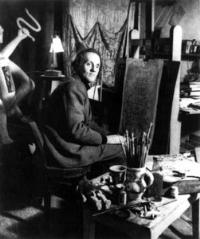
1903 Piatra Neamtz, Romania - 1966 Paris, France. Known for: Surrealist painting.
Victor Brauner (June 15, 1903 - March 12, 1966) was a Romanian Jewish painter, the brother of Harry Brauner (a known folklorist who was a political prisoner in Communist Romania, and who later... Read full biography
Victor Brauner (June 15, 1903 - March 12, 1966) was a Romanian Jewish painter, the brother of Harry Brauner (a known folklorist who was a political prisoner in Communist Romania, and who later married Lena Constante). He was born in Piatra Neamt, the son of a timber manufacturer who subsequently... Read full biography
Victor Brauner (June 15, 1903 - March 12, 1966) was a Romanian Jewish painter, the brother of Harry Brauner (a known folklorist who was a political prisoner in Communist Romania, and who later married Lena Constante). He was born in Piatra Neamt, the son of a timber manufacturer who subsequently settled in Vienna with his family for a few years. It is there that young Victor attended elementary school. When his family returned to the country in 1914, he continued his studies at the Evangelical... Read full biography
Victor Brauner (June 15, 1903 - March 12, 1966) was a Romanian Jewish painter, the brother of Harry Brauner (a known folklorist who was a political prisoner in Communist Romania, and who later married Lena Constante). He was born in Piatra Neamt, the son of a timber manufacturer who subsequently settled in Vienna with his family for a few years. It is there that young Victor attended elementary school. When his family returned to the country in 1914, he continued his studies at the Evangelical school in Braila; he began to be interested in zoology in that period. He attended the National School of Fine Arts in Bucharest (1919-1921) and Horia Igirosanu's private school of painting. He visited Falticeni and Balcic, and started painting... Read full biography
Victor Brauner (June 15, 1903 - March 12, 1966) was a Romanian Jewish painter, the brother of Harry Brauner (a known folklorist who was a political prisoner in Communist Romania, and who later married Lena Constante). He was born in Piatra Neamt, the son of a timber manufacturer who subsequently settled in Vienna with his family for a few years. It is there that young Victor attended elementary school. When his family returned to the country in 1914, he continued his studies at the Evangelical school in Braila; he began to be interested in zoology in that period. He attended the National School of Fine Arts in Bucharest (1919-1921) and Horia Igirosanu's private school of painting. He visited Falticeni and Balcic, and started painting landscapes in the manner of Paul Cézanne. Then, as he testified himself, he went through all the stages: "Dadaist, Abstractionist, Expression... Read full biography
Artist Biography
Biography page for Victor Brauner ((1903 - 1966)), known for Surrealist painting. Showing 4 biographical entries and 0 sample artworks.
Victor Brauner - Artist Info
About Victor Brauner
Biography from the Archives of askART
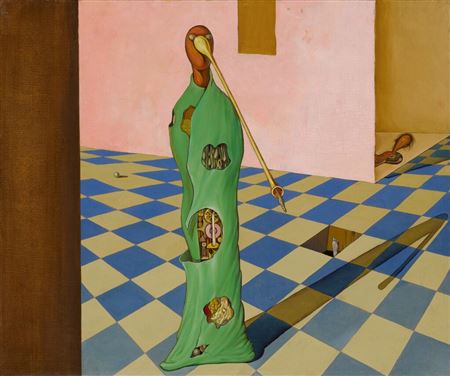 Victor Brauner (June 15, 1903 - March 12, 1966) was a Romanian Jewish painter, the brother of Harry Brauner (a known folklorist who was a political prisoner in Communist Romania, and who later married Lena Constante).
He was born in Piatra Neamt, the son of a timber manufacturer who subsequently settled in Vienna with his family for a few years. It is there that young Victor attended elementary school. When his family returned to the country in 1914, he continued his studies at the Evangelical school in Braila; he began to be interested in zoology in that period.
He attended the National School of Fine Arts in Bucharest (1919-1921) and Horia Igirosanu's private school of painting. He visited Falticeni and Balcic, and started painting landscapes in the manner of Paul Cézanne. Then, as he testified himself, he went through all the stages: "Dadaist, Abstractionist, Expressionist".
On September 26 1924, the Mozart Galleries in Bucharest hosted his first personal exhibition. In that period he met poet Ilarie Voronca, together with whom he founded the 75HP magazine. It was in this magazine that Brauner published the manifesto "The Pictopoetry" and the article "The Surrationalism." He painted and exhibited Christ at the Cabaret (in the manner of George Grosz) and The Girl in the Factory (in the manner of Hodler). He participated to the Contimporanul exhibition in November 1924.
In 1925 he undertook his first journey to Paris, from where he returned in 1927. In the period 1928-1931 he was a contributor of the Unu magazine (an avant-garde periodical with Dadaist and Surrealist tendencies), which published reproductions of most of his paintings and graphic works: "clear drawings and portraits made by Victor Brauner to his friends, poets and writers" (Jaques Lessaigne - Painters I Knew).
In 1930 he settled in Paris, where he met Constantin Brancusi, who instructed him in methods of art photography. In that same period he became a friend of the Romanian poet Benjamin Fondane and met Yves Tanguy, who would later introduce him to the circle of the Surrealists. He lived on Moulin Vert Street, in the same building as Alberto Giacometti and Tanguy. He painted Self-portrait with enucleated eye, a premonitory theme.
In 1933, André Breton opened Brauner's first personal exhibition in Paris, at the Pierre Gallery. The theme of the eye was omnipresent: Mr. K's power of concentration and The strange case of Mr. K are paintings that Breton compared with Alfred Jarry’s play Ubu Roi, "a huge, caricature-like satire of the bourgeoisie."
In 1935 Brauner returned to Bucharest. He joined the ranks of the Romanian Communist Party for a short while, without a very firm conviction. On April 7, 1935, he opened a new personal exhibition at the Mozart Galleries. Sasa Pana wrote about it in his autobiographical novel Born in 02:
"April 7, 1935... An exhibition surrealist in character.
The catalogue shows 16 paintings; they are accompanied by verse, surrealist images that are exquisite by their bizarreness - they are perhaps the creations of automatic dictation and they certainly bear no connection to the painting itself. They are written in French, but their colorful taste is kept in their Romanian language translation. The exhibition brought about many interesting articles and takings of position regarding Surrealism in arts and literature".
Another remark about Brauner’s participation to Surrealist exhibitions: "Despite its appearance of abstract formula,… this trend is a point a transition to the art that is to come." (Dolfi Trost, in Rampa of April 14, 1935). In Cuvantul liber of April 20, 1935, Miron Radu Paraschivescu wrote in the article Victor Brauner’s exhibition: "In contrast to what one may see, for instance, in the neighboring exhibition halls, Victor Brauner’s painting means integration, an attitude that is a social one, as far as art allows it. For V. Brauner takes attitude through the very character and ideology of his art". On April 27, he created the illustrations for Gellu Naum’s poetry collections - The Incendiary Traveler and The Freedom to Sleep on the Forehead.
In 1938 he returned to France. On August 28 he lost his left eye in a violent argument between Oscar Domínguez and Esteban Frances. Brauner attempted to protect Esteban and was hit by a glass thrown by Domínguez: the premonition became true.
That same year, he met Jaqueline Abraham, who was to become his wife. He created a series of paintings called lycanthropic or sometimes chimeras.
He left Paris during Nazi Germany's invasion of France in 1940, together with Pierre Malbille. He lived for a while in Perpignan, at Robert Rius', then at Cant-Blage, in the Eastern Pyrenees and at Saint Feliu d'Amont, where he was forcibly secluded. However, he kept in touch with the Surrealists that had taken refuge in Marseille. In 1941, he was granted the permission to settle in Marseille. Seriously ill, he was hospitalized at the "Paradis" clinic.
He painted Prelude to a civilization (now in New York's Metropolitan Museum of Art). After the war, he took part to the Venice Biennale; he traveled to Italy.
In 1959, he settled in the workshop on Lepic St. In 1961 he traveled to Italy again. In the same year, New York City's Bodley Gallery mounted a solo exhibition of Brauner's work. He settled in Varengeville in Normandy, where he spent most of his time working.
In 1965 he created an ensemble of object-paintings full of inventiveness and vivacity, grouped under the titles Mythologie and Fêtes des mères. The themes are connected to the mythology of the modern world, where man is depicted with humor, tenderness and pessimism, alienated by his new "mothers" - L’automoma and L'aeroplapa. Criticism or acceptance of this world, that once seemed "so terrifying" and in which "reality became an extremely harmful thing", but which actual life made more acceptable. It is undeniable that these paintings, made in Varengeville and in Athanor (1964), where Brauner retreated, are the visions full of humor and imagination of a future world that he wanted to leave to us as a gift.
This Mythology includes the last foretelling painting, La fin et le debut (made in 1965), which reminds us that "when the painter's life ends, his work starts living" (Dominique Bozo in Le petit journal des grandes Expositions - Victor Brauner - au Musée National de l'Art moderne - Paris du 2 juin au 28 septembre 1977).
In 1966 he was chosen to represent France at the biannual exhibition in Venice, where an entire hall was dedicated to him.
He died in Paris as a result of a prolonged illness. The epitaph on his tomb from the Montmartre cemetery is a phrase from his notebooks: "Peindre, c'est la vie, la vraie vie, ma vie" ("Painting is life, the real life, my life").
The painter’s notebooks with private notes, which he handed to Max Pol Fouchet, partly enclose the "key" of his creation: "Each painting that I make is projected from the deepest sources of my anxiety..."
Source:
"Victor Brauner," Prodan Romanian Cultural Foundation, Web, May 2016Biography from the Archives of askART
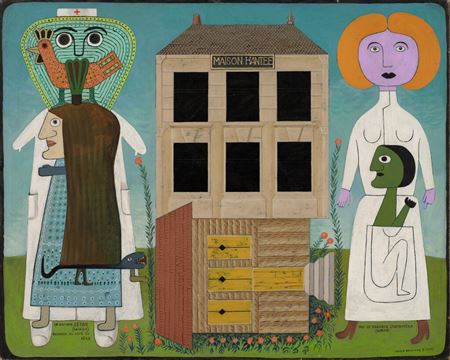 Victor Brauner was born in Piatra Neamtz, Romania on June 15, 1903. His family settled in Vienna in 1912; he was brought up in an atmosphere of spiritualism with which his father was obsessed. He returned to Romania and attended the Evangelistic School at Braily from 1916 through 1918. He studied briefly at the School of Fine Arts in Bucharest in 1921. He summered on the Black Sea coast. In 1925 he visited Paris and became associated with the Dadaist and Surrealist Review at the University of Bucharest in 1929.
Brauner settled in Paris in 1930; he met Brancusi, Tanguy and Giacometti. He returned to Bucharest sometime between 1935 and 1938, then settled again in Paris in 1938. He and Jacqueline Abraham were married in 1939. He had many physical problems: he lost his left eye in the course of a dispute between Dominguez and Estaban Frances in Paris in 1938 and he became gravely ill in Marseilles in 1941 and again in Switzerland in 1941 and 1945. Brauner broke with the Surrealists im 1948. He died in Paris on March 12, 1966.
Written and compiled by Jean Ershler Schatz, artist and researcher from Laguna Woods, California.
Source:
Contemporary Artists, 2nd EditionBiography from Christie's London, King Street
Victor Brauner started experimenting with the encaustic technique during the Second World War, probably out of necessity due to the scarcity of materials available to him during his self-imposed exile in a small village in the Pyrenees during the conflict. This ancient artistic process, in which wax and pigment are combined, melted and then fused to their support, pushed Brauner to explore a new hermetic mythology. ‘While I was executing my wax paintings,’ the artist wrote, ‘I felt I was performing the great spagyric art,’ invoking the term that the fifteenth-century occultist Paracelsus used to refer to alchemy (quoted in Victor Brauner, Miti, presagi, simboli, exh. cat., Musei e Cultura, Lugano, 1985, p. 24).
Brauner took a strong interest in Paracelsus’s writings, as well as those by Cornelius Agrippa, and kept a selection of books on the occult in his personal library. ‘Painting,’ Brauner declared in 1956, ‘is an initiatory technique that pushes me into my secret and interior zones and makes me discover important things about myself’ (quoted in ibid., p. 84).Biography from Auctionata
Victor Brauner (1903-1966). Just as Constantin Brancusi and Eugène Ionesco, Victor Brauner was a member or the significant circle of Parisian exile Romanians in the first half of the 20th century. Brauner studied at the Academy of Fine Arts in Bucharest.
In 1924, he became known as the founder of the Dadaist ‘Journal 75 HP’. In 1930, he moved to Paris and was influenced by the surrealist movement. In 1940, he fled to the Pyrenees and later to the Alps. After World War II, he returned to Paris.
Today, works by Brauner are in collections of important museums, including the Musée National d'Art Moderne and the Musée d'Art Moderne de la Ville de Paris. In 1959, Brauner was represented at the documenta in Kassel. (cko)