Page loaded successfully. Showing biography for Victor Dubreuil.
Victor Dubreuil BIOGRAPHY
1846 France - 1946. Known for: Trompe still life, genre, landscape.
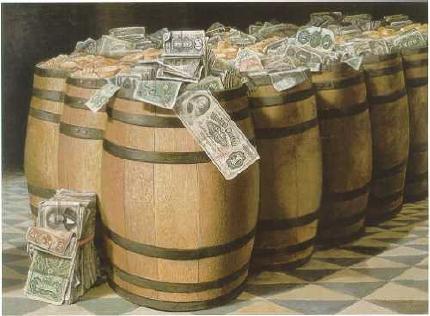
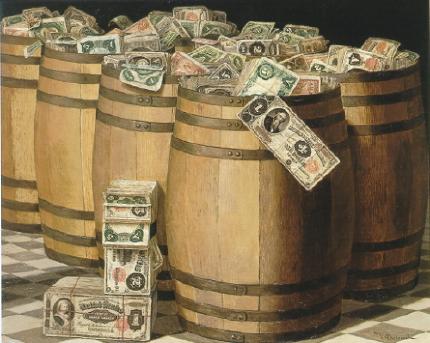
Very little is known about his life, but his trompe l'oeil (fool-the-eye) still lifes indicates that a primary interest was money, which he painted in numerous ways--in barrels, piles, tidy stacks,... Read full biography
Very little is known about his life, but his trompe l'oeil (fool-the-eye) still lifes indicates that a primary interest was money, which he painted in numerous ways--in barrels, piles, tidy stacks, and even nose gays and garlands. An explanation for this ever reoccurring subject has been offered by... Read full biography
Very little is known about his life, but his trompe l'oeil (fool-the-eye) still lifes indicates that a primary interest was money, which he painted in numerous ways--in barrels, piles, tidy stacks, and even nose gays and garlands. An explanation for this ever reoccurring subject has been offered by Alfred Frankenstein in his book, "The Reality of Appearance": "He was obsessed with money, doubtless, because he never had any." . In fact, he painted money so accurately, that he was suspected by... Read full biography
Very little is known about his life, but his trompe l'oeil (fool-the-eye) still lifes indicates that a primary interest was money, which he painted in numerous ways--in barrels, piles, tidy stacks, and even nose gays and garlands. An explanation for this ever reoccurring subject has been offered by Alfred Frankenstein in his book, "The Reality of Appearance": "He was obsessed with money, doubtless, because he never had any." . In fact, he painted money so accurately, that he was suspected by government officials of counterfeiting the U.S. dollar bill. One of his paintings, "Barrels of Money," a copy of an earlier version, was confiscated by the government and kept in security for several years with a mandate that the original be destroyed.... Read full biography
Very little is known about his life, but his trompe l'oeil (fool-the-eye) still lifes indicates that a primary interest was money, which he painted in numerous ways--in barrels, piles, tidy stacks, and even nose gays and garlands. An explanation for this ever reoccurring subject has been offered by Alfred Frankenstein in his book, "The Reality of Appearance": "He was obsessed with money, doubtless, because he never had any." . In fact, he painted money so accurately, that he was suspected by government officials of counterfeiting the U.S. dollar bill. One of his paintings, "Barrels of Money," a copy of an earlier version, was confiscated by the government and kept in security for several years with a mandate that the original be destroyed. He lived on Seventh Street in New York City between 1886 and 1888 and on West 44th Street between 1895 and 1896. He is known to have fre... Read full biography
Artist Biography
Biography page for Victor Dubreuil ((1846 - 1946)), known for Trompe still life, genre, landscape. Showing 2 biographical entries and 0 sample artworks.
Victor Dubreuil - Artist Info
About Victor Dubreuil
Name variants
Victor Debreuil
Biography from the Archives of askART
 Very little is known about his life, but his trompe l'oeil (fool-the-eye) still lifes indicates that a primary interest was money, which he painted in numerous ways--in barrels, piles, tidy stacks, and even nose gays and garlands. An explanation for this ever reoccurring subject has been offered by Alfred Frankenstein in his book, "The Reality of Appearance": "He was obsessed with money, doubtless, because he never had any."
In fact, he painted money so accurately, that he was suspected by government officials of counterfeiting the U.S. dollar bill. One of his paintings, "Barrels of Money," a copy of an earlier version, was confiscated by the government and kept in security for several years with a mandate that the original be destroyed.
He lived on Seventh Street in New York City between 1886 and 1888 and on West 44th Street between 1895 and 1896. He is known to have frequented a saloon, Dickens House, at 38th Street and Seventh Avenue and traded his paintings for food and drink. He also drifted around the Times Square neighborhood, a circumstance that may explain the element of brutality that sometimes appeared in his work such as a painting of Bonnie and Clyde.Biography from Doyle New York
Born in France, Victor Dubreuil was living in New York City by 1886. He is best known for trompe l'oeil images of money tacked to a wall or spilling from barrels, in which he suggested the temptations of fortune, playing on viewers' desires for wealth and better lives. Here he portrayed a more readily available enticement; in the late nineteenth century, peanuts were sold by street vendors and at circuses. Portraying the stacked nuts, in a framed niche behind a glass enclosure (of which we are made aware by cracks in its surface), he entices the viewer with this "snack food" of its era while playfully making it out of our reach. He may have created his image in response to De Scott Evans's Free Samples: Take One (circa 1890, Museum of Fine Arts Boston), of a similar subject. The varied textures of the elements in this image reveal Dubreuil's skill as a trompe l'oeilist.