Page loaded successfully. Showing biography for William Dole.
William Dole BIOGRAPHY
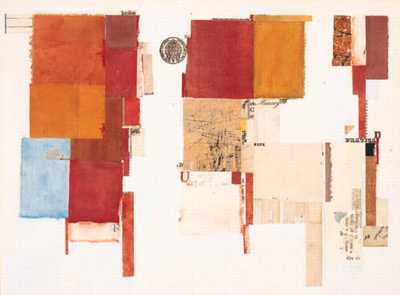
1917 Angola, Indiana - 1983 Santa Barbara, California. Known for: Collage-landscape abstraction.
A painter in abstract style and teacher, William Dole was born in Angola, Indiana, and moved to California where he taught in Indiana, Washington state, Mills College, and the Universities of... Read full biography
A painter in abstract style and teacher, William Dole was born in Angola, Indiana, and moved to California where he taught in Indiana, Washington state, Mills College, and the Universities of California at Berkeley and Santa Barbara, where from 1962 he was Chairman of the Art Department. He studied... Read full biography
A painter in abstract style and teacher, William Dole was born in Angola, Indiana, and moved to California where he taught in Indiana, Washington state, Mills College, and the Universities of California at Berkeley and Santa Barbara, where from 1962 he was Chairman of the Art Department. He studied at Olivet College in Michigan and the University of California at Berkeley. He was a member of the California Water Color Society and exhibited with them from the late 1940s and also had solo shows... Read full biography
A painter in abstract style and teacher, William Dole was born in Angola, Indiana, and moved to California where he taught in Indiana, Washington state, Mills College, and the Universities of California at Berkeley and Santa Barbara, where from 1962 he was Chairman of the Art Department. He studied at Olivet College in Michigan and the University of California at Berkeley. He was a member of the California Water Color Society and exhibited with them from the late 1940s and also had solo shows at the De Young Memorial Museum, the La Jolla Museum, and the Pennsylvania Academy of Fine Art. Working primarily in watercolor abstraction, he added collage to his work later in his career. Source:. Peter Hastings Falk, Editor, Who Was Who in... Read full biography
A painter in abstract style and teacher, William Dole was born in Angola, Indiana, and moved to California where he taught in Indiana, Washington state, Mills College, and the Universities of California at Berkeley and Santa Barbara, where from 1962 he was Chairman of the Art Department. He studied at Olivet College in Michigan and the University of California at Berkeley. He was a member of the California Water Color Society and exhibited with them from the late 1940s and also had solo shows at the De Young Memorial Museum, the La Jolla Museum, and the Pennsylvania Academy of Fine Art. Working primarily in watercolor abstraction, he added collage to his work later in his career. Source:. Peter Hastings Falk, Editor, Who Was Who in American Art. Gordon McClelland and Jay Last, California Watercolors, 1850-1970... Read full biography
Artist Biography
Biography page for William Dole ((1917 - 1983)), known for Collage-landscape abstraction. Showing 2 biographical entries and 0 sample artworks.
William Dole - Artist Info
About William Dole
Biography from the Archives of askART
 A painter in abstract style and teacher, William Dole was born in Angola, Indiana, and moved to California where he taught in Indiana, Washington state, Mills College, and the Universities of California at Berkeley and Santa Barbara, where from 1962 he was Chairman of the Art Department.
He studied at Olivet College in Michigan and the University of California at Berkeley. He was a member of the California Water Color Society and exhibited with them from the late 1940s and also had solo shows at the De Young Memorial Museum, the La Jolla Museum, and the Pennsylvania Academy of Fine Art.
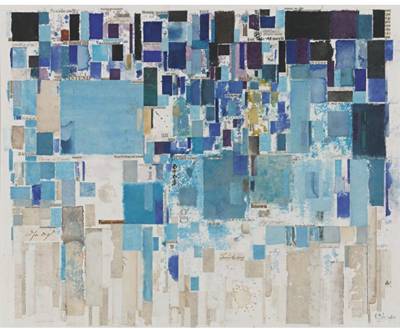
Working primarily in watercolor abstraction, he added collage to his work later in his career.
Source:
Peter Hastings Falk, Editor, Who Was Who in American Art
Gordon McClelland and Jay Last, California Watercolors, 1850-1970Biography from Tobey C. Moss Gallery
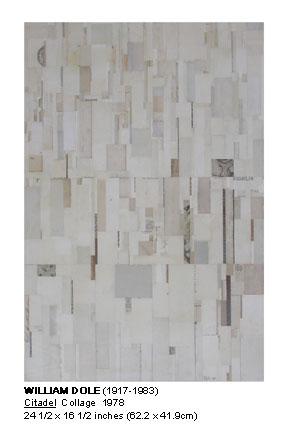 WILLIAM DOLE
Angola, Indiana 1917 - 1983 Santa Barbara, California
William Dole immersed himself in art from a young age. A visit to see 'real art works' at the Chicago Art Institute further increased his appetite for the arts. Following his studies at the University of California, Berkeley and army service during World War II, he balanced creative work in drawing, painting and printmaking with teaching at University of California, Santa Barbara and other institutions.
During a vacation in Florence, Italy in the late 1950s, Dole purchased a portfolio of old papers; together with a cache of 19th century Japanese paper given to him by a colleague. Using these materials, 'collage' as an aesthetic technique became his focus. His collages brought Dole to international prominence. Asian painting aesthetics and the incorporation of foreign text on unique papers became hallmarks of his work.
Dole's early collages often referenced the European landscape he came to know from his travels but he would later abandon in favor of abstract composition. Working cyclically, he use typography, magazine images, manuscript fragments and an architectonic complexity to create patterns, thoughts, narratives, mysteries and... timelessness.