Page loaded successfully. Showing biography for William Henry Holmes.
William Henry Holmes BIOGRAPHY
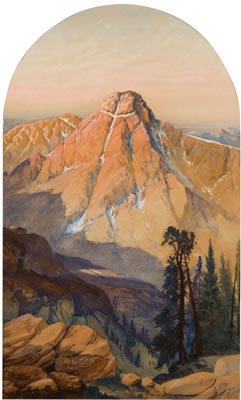
1846 Cadiz, Ohio - 1933 Royal Oak, Michigan. Known for: Southwest survey artist, panoramic painting.
Born near Cadiz, Ohio, William Henry Holmes was a survey-field artist, who earned a reputation as a skilled panoramic landscape painter of the Grand Canyon. He also did delicate watercolors in... Read full biography
Born near Cadiz, Ohio, William Henry Holmes was a survey-field artist, who earned a reputation as a skilled panoramic landscape painter of the Grand Canyon. He also did delicate watercolors in traditional style, and was a writer, archaeologist, teacher and illustrator. He lived in Washington DC,... Read full biography
Born near Cadiz, Ohio, William Henry Holmes was a survey-field artist, who earned a reputation as a skilled panoramic landscape painter of the Grand Canyon. He also did delicate watercolors in traditional style, and was a writer, archaeologist, teacher and illustrator. He lived in Washington DC, Chicago and Royal Oak, Michigan. Holmes was educated in the public schools of Georgetown, Ohio, and was a teacher until 1872. He then moved to Washington D.C. where he studied art with Theodore... Read full biography
Born near Cadiz, Ohio, William Henry Holmes was a survey-field artist, who earned a reputation as a skilled panoramic landscape painter of the Grand Canyon. He also did delicate watercolors in traditional style, and was a writer, archaeologist, teacher and illustrator. He lived in Washington DC, Chicago and Royal Oak, Michigan. Holmes was educated in the public schools of Georgetown, Ohio, and was a teacher until 1872. He then moved to Washington D.C. where he studied art with Theodore Kaufmann, and did sketching of specimens for the Smithsonian Institution. He also studied in Germany at the Munich Art Academy. In 1872, succeeding Thomas Moran, he became field artist for the United States Geological Survey, called the Hayden Expedition, of... Read full biography
Born near Cadiz, Ohio, William Henry Holmes was a survey-field artist, who earned a reputation as a skilled panoramic landscape painter of the Grand Canyon. He also did delicate watercolors in traditional style, and was a writer, archaeologist, teacher and illustrator. He lived in Washington DC, Chicago and Royal Oak, Michigan. Holmes was educated in the public schools of Georgetown, Ohio, and was a teacher until 1872. He then moved to Washington D.C. where he studied art with Theodore Kaufmann, and did sketching of specimens for the Smithsonian Institution. He also studied in Germany at the Munich Art Academy. In 1872, succeeding Thomas Moran, he became field artist for the United States Geological Survey, called the Hayden Expedition, of what became Yellowstone Park. The leader was Ferdinand Hayden, and from him, Holmes learned about much abo... Read full biography
Artist Biography
Biography page for William Henry Holmes ((1846 - 1933)), known for Southwest survey artist, panoramic painting. Showing 2 biographical entries and 0 sample artworks.
William Henry Holmes - Artist Info
About William Henry Holmes
Biography from the Archives of askART
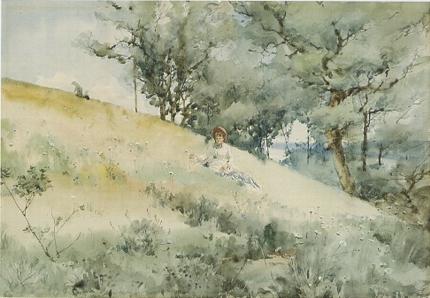 Born near Cadiz, Ohio, William Henry Holmes was a survey-field artist, who earned a reputation as a skilled panoramic landscape painter of the Grand Canyon. He also did delicate watercolors in traditional style, and was a writer, archaeologist, teacher and illustrator. He lived in Washington DC, Chicago and Royal Oak, Michigan.
Holmes was educated in the public schools of Georgetown, Ohio, and was a teacher until 1872. He then moved to Washington D.C. where he studied art with Theodore Kaufmann, and did sketching of specimens for the Smithsonian Institution. He also studied in Germany at the Munich Art Academy.
In 1872, succeeding Thomas Moran, he became field artist for the United States Geological Survey, called the Hayden Expedition, of what became Yellowstone Park. The leader was Ferdinand Hayden, and from him, Holmes learned about much about geology. Holmes was with Hayden in 1874 on a Colorado survey, and in 1875, led the survey party in Arizona and New Mexico. By 1876, he was a full-fledged geologist.
In 1879, he went to Europe, and the next year he accompanied Clarence Dutton on a Grand Canyon geological exploration, doing "double page" panoramas, nine of them, that led viewers breathlessly to the Canyon edge. It was said that these views were the highest point ever reached in topographical illustration.
In 1884 to 1886, he did a study of Pueblo Indians in Mexico, and from that time, held positions as Head Curator of Chicago's Field Museum and Chief of the Bureau of American Ethnology from 1902 to 1920, when he became director of the National Gallery of Art.
Memberships included the Washington Watercolor Club, Washington Landscape Club, Washington Society of Fine Art, Society of Washington Artists, and the Cosmos Club. Among his exhibition venues were the Corcoran Gallery from 1919 to 1926, with the first one being a solo exhibition; National Academy of Design; Art Institute of Chicago; Boston Art Club; and the Brooklyn Art Association. The National Portrait Gallery in Washington D.C. has a collection of watercolors by William Henry Holmes.
Sources:
Peggy and Harold Samuels, Encyclopedia of Artists of the American West
Peter Hastings Falk, Editor, Who Was Who in American ArtBiography from the Archives of askART
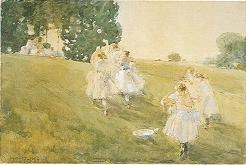 Born near Cadiz, Ohio on December 1, 1846, William Henry Holmes was a teacher early in life. He studied art briefly with Theodore Kauffmann and at the Munich Academy.
While a field artist with the Hayden Survey of Yellowstone in 1872, he sketched in the Rocky Mountains. He was a geologist for the U.S. Geological Survey of the Grand Canyon in 1880, and participated in a study of the Pueblo Indians in 1886.
From 1898-1906 he taught geology at the University of Chicago; he then was with the Smithsonian Institution as Director of the National Collection of Fine Arts. While in southern California in 1899, he painted on Santa Catalina Island.
He died in Royal Oak, Michigan on April 20, 1933.
Exhibitions:
Washington Water Color Club, 1900-02 (prizes).
Collection:
National Park Service (Washington, DC);
CGA; Museum of New Mexico; Amon Carter Museum; NMAA.