Page loaded successfully. Showing biography for William Shayer I.
William Shayer I BIOGRAPHY
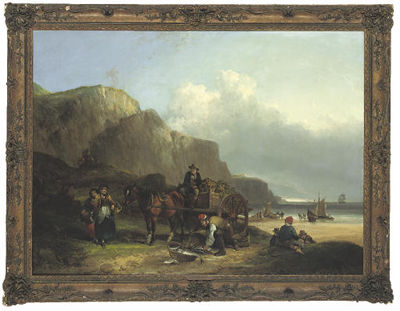
1787 or 1788 Southampton, England - 1879 Shirley, England. Known for: Woodland scene and animal painting.
William Shayer, Senior was born at Southampton and after spells at Guildford and Chichester had settled permanently in his native city by 1820. He is principally known for his Hampshire landscapes... Read full biography
William Shayer, Senior was born at Southampton and after spells at Guildford and Chichester had settled permanently in his native city by 1820. He is principally known for his Hampshire landscapes and animal painting, and his work is most closely associated with the New Forest. His work falls into... Read full biography
William Shayer, Senior was born at Southampton and after spells at Guildford and Chichester had settled permanently in his native city by 1820. He is principally known for his Hampshire landscapes and animal painting, and his work is most closely associated with the New Forest. His work falls into two main categories: woodland scenes, populated with gypsies, animals and cheerful rustics and coastal scenes based around small boats, fishermen and their families. The death of Shayer's first wife... Read full biography
William Shayer, Senior was born at Southampton and after spells at Guildford and Chichester had settled permanently in his native city by 1820. He is principally known for his Hampshire landscapes and animal painting, and his work is most closely associated with the New Forest. His work falls into two main categories: woodland scenes, populated with gypsies, animals and cheerful rustics and coastal scenes based around small boats, fishermen and their families. The death of Shayer's first wife in 1823 left him with five children to raise and made establishing himself as an artist all the more difficult. He was helped by the establishment of the Society of British Artists (with whom he went on to exhibit 388 works) and the opening of the... Read full biography
William Shayer, Senior was born at Southampton and after spells at Guildford and Chichester had settled permanently in his native city by 1820. He is principally known for his Hampshire landscapes and animal painting, and his work is most closely associated with the New Forest. His work falls into two main categories: woodland scenes, populated with gypsies, animals and cheerful rustics and coastal scenes based around small boats, fishermen and their families. The death of Shayer's first wife in 1823 left him with five children to raise and made establishing himself as an artist all the more difficult. He was helped by the establishment of the Society of British Artists (with whom he went on to exhibit 388 works) and the opening of the Hampshire Picture Gallery in Southampton in 1827 and by the end of the decade his career was beginning to flourish.... Read full biography
Artist Biography
Biography page for William Shayer I ((1787 or 1788 - 1879)), known for Woodland scene and animal painting. Showing 2 biographical entries and 0 sample artworks.
William Shayer I - Artist Info
About William Shayer I
Biography from the Archives of askART
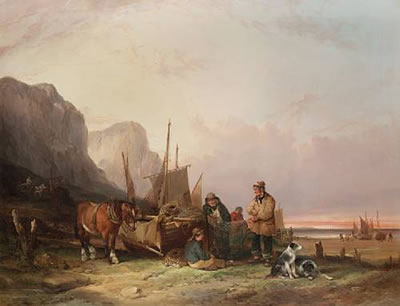 William Shayer, Senior was born at Southampton and after spells at Guildford and Chichester had settled permanently in his native city by 1820. He is principally known for his Hampshire landscapes and animal painting, and his work is most closely associated with the New Forest. His work falls into two main categories: woodland scenes, populated with gypsies, animals and cheerful rustics and coastal scenes based around small boats, fishermen and their families.
The death of Shayer's first wife in 1823 left him with five children to raise and made establishing himself as an artist all the more difficult. He was helped by the establishment of the Society of British Artists (with whom he went on to exhibit 388 works) and the opening of the Hampshire Picture Gallery in Southampton in 1827 and by the end of the decade his career was beginning to flourish.
He also exhibited at the Royal Academy between and 1820 and 1843, and at the British Institution. He was certainly prolific and examples of his work can be found in many provincial museums. Four of his sons are known to have worked as artists the two most successful being William Joseph Shayer (1811 - 1892) and Henry Thring Shayer (1825 - 1894).
Collections:
William Shayer is represented in the following collections: Fitzwilliam Museum, Cambridge; Tate Gallery, London; amongst others.
Source:
Sphinx Fine Art
http://www.sphinxfineart.com/Shayer-Senior-William-DesktopDefault.aspx?tabid=45&tabindex=44&artistid=29508Biography from Odon Wagner Gallery
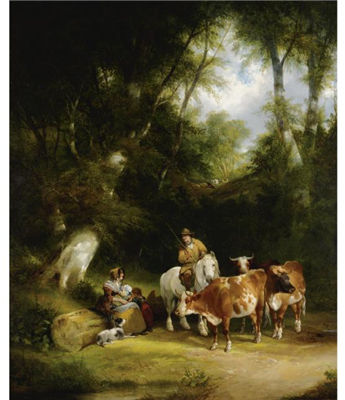 William Shayer first earned his living in Southampton painting decorations on rush bottom chairs, then set off for Guildford where he settled himself as a carriage painter. His representations of heraldry soon came to be known through all of South England, and he was chosen to create the prestigious funerary badge of the fourth Duke of Richmond. In 1814, Shayer was commissioned to chalk a design on the floor for a ball held by the officers of the Queen's Royal Regiment to celebrate the overthrow of Napoleon Bonaparte and the restoration of the Bourbons. While continuing his work of heraldic painting, Shayer devoted his free time to landscape painting. He was an extremely versatile artist, and employed his skills as a scenepainter for theatrical productions, as a copyist, and as a painter of signs for inns and other establishments.
Shayer experienced a period of financial difficulty, when after the death of his wife Sarah, he was left to support and care for five children. Shortly after her death, he married a woman named Elizabeth, with whom he produced five more children, increasing his family to a most overwhelming number. In 1827, the artist's financial situation began to improve, with the opening of the Hampshire Picture Gallery. During the first season, when three separate exhibitions were held, thirty paintings were sold, and the most popular works with the buyers proved to be those by William Shayer.
Shayer settled himself in Bladon Lodge, close to Southampton, in 1843, declining the offer of his peers to go to London. Bladon Lodge was an area renowned for the beauty of its skies. With John Frederick Herring and Thomas Sidney Cooper, William Shayer gave his letters of nobility to the English landscape of the 19th century. Shayer would paint genre scenes, guards, hunts, Bohemians, and shepherds. The skill Shayer acquired in the lesser genres provided him with a thorough technical grounding that proved of use to him in his now chosen profession of landscape art. His career was helped considerably by the patronage of Michael Hoy, a popular and wealthy Southampton merchant. His scenes of country life were amongst his most popular subjects with his Victorian patrons and remain so today.