Page loaded successfully. Showing biography for William Theophilus Brown.
William Theophilus Brown BIOGRAPHY
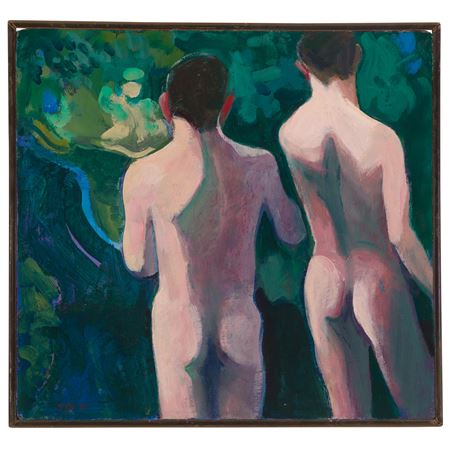
1919 Moline, Illinois - 2012 San Francisco, California. Known for: Modernist-real figure, genre.
William Theophilus Brown (1919-2012). SAN FRANCISCO (Thursday, February 9, 2012)- William Theophilus Brown, a painter who enjoyed success for more than half-a-century and was closely associated with... Read full biography
William Theophilus Brown (1919-2012). SAN FRANCISCO (Thursday, February 9, 2012)- William Theophilus Brown, a painter who enjoyed success for more than half-a-century and was closely associated with the San Francisco Bay area's "figurative" movement, has died. He was 92. Brown died Wednesday in his... Read full biography
William Theophilus Brown (1919-2012). SAN FRANCISCO (Thursday, February 9, 2012)- William Theophilus Brown, a painter who enjoyed success for more than half-a-century and was closely associated with the San Francisco Bay area's "figurative" movement, has died. He was 92. Brown died Wednesday in his apartment at a San Francisco high-rise retirement community, gallery owner Thomas Reynolds told the San Francisco Chronicle. He said Brown painted and took art classes until the end of his life.... Read full biography
William Theophilus Brown (1919-2012). SAN FRANCISCO (Thursday, February 9, 2012)- William Theophilus Brown, a painter who enjoyed success for more than half-a-century and was closely associated with the San Francisco Bay area's "figurative" movement, has died. He was 92. Brown died Wednesday in his apartment at a San Francisco high-rise retirement community, gallery owner Thomas Reynolds told the San Francisco Chronicle. He said Brown painted and took art classes until the end of his life. Brown's partner of nearly 50 years, the celebrated artist Paul Wonner, died in 2008. Brown was part of the figurative movement that art historians recognize as a period during the mid-20th century when artists moved away from extreme abstractionism and... Read full biography
William Theophilus Brown (1919-2012). SAN FRANCISCO (Thursday, February 9, 2012)- William Theophilus Brown, a painter who enjoyed success for more than half-a-century and was closely associated with the San Francisco Bay area's "figurative" movement, has died. He was 92. Brown died Wednesday in his apartment at a San Francisco high-rise retirement community, gallery owner Thomas Reynolds told the San Francisco Chronicle. He said Brown painted and took art classes until the end of his life. Brown's partner of nearly 50 years, the celebrated artist Paul Wonner, died in 2008. Brown was part of the figurative movement that art historians recognize as a period during the mid-20th century when artists moved away from extreme abstractionism and included some realism in their portraits, landscapes and still-lives. The Metropolitan Museum of Ar... Read full biography
Artist Biography
Biography page for William Theophilus Brown ((1919 - 2012)), known for Modernist-real figure, genre. Showing 3 biographical entries and 0 sample artworks.
William Theophilus Brown - Artist Info
About William Theophilus Brown
Name variants
Theophilus Brown
Biography from the Archives of askART
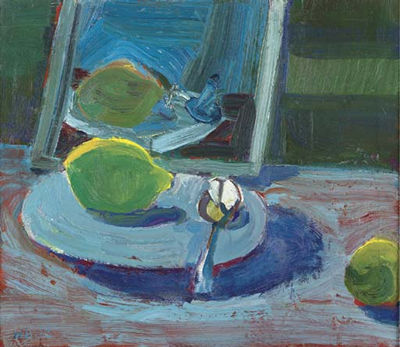 William Theophilus Brown (1919-2012)
SAN FRANCISCO (Thursday, February 9, 2012)- William Theophilus Brown, a painter who enjoyed success for more than half-a-century and was closely associated with the San Francisco Bay area's "figurative" movement, has died. He was 92.
Brown died Wednesday in his apartment at a San Francisco high-rise retirement community, gallery owner Thomas Reynolds told the San Francisco Chronicle. He said Brown painted and took art classes until the end of his life.
Brown's partner of nearly 50 years, the celebrated artist Paul Wonner, died in 2008.
Brown was part of the figurative movement that art historians recognize as a period during the mid-20th century when artists moved away from extreme abstractionism and included some realism in their portraits, landscapes and still-lives. The Metropolitan Museum of Art in New York, the Hirshhorn Museum in Washington, D.C., and the M.H. de Young Memorial Museum in San Francisco are among the institutions that exhibit his paintings.
He was born in Illinois and trained at Yale University and the University of California, Berkeley.
Brown had his first solo exhibition at the Felix Landau Gallery in 1957. A year earlier, he had attracted national attention when Life magazine published three of his paintings featuring football players in motion.
Brown, who professionally went by the name Theophilus, told the Chronicle in October that he moved to the Bay area during the 1950s in part because he needed to separate himself from artistic luminaries such as Pablo Picasso, Alberto Giacometti, and Willem de Kooning, with whom he socialized after World War II.
"I moved here because I was orbiting around all of these famous people, and I needed to find out who I was," he said.
He befriended younger artists and poked fun at himself. Attorney Matt Gonzalez, a former city supervisor who had a ritual of spending weekends with Brown, working in the artist's studio and then going out to eat oysters and drink fine whiskey, said he last saw his friend on Saturday.
"I took him 36 oysters Saturday night and we shared dinner," Gonzalez said. "He had a good appetite and was in good spirits. But he couldn't leave the apartment, and he was clear that if he couldn't go to his studio and make art anymore, he didn't want to live. So it was time."
A private memorial was being planned.
Information from: San Francisco Chronicle, http://www.sfgate.comBiography from the Archives of askART
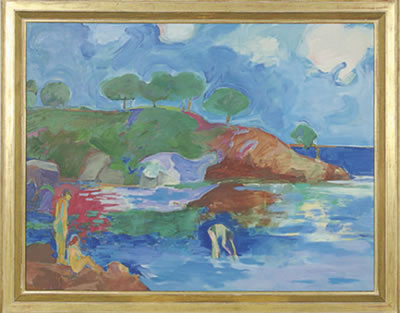 William Theophilus Brown, a long-standing and distinguished figure in the history of Bay Area art, was born in Moline, Illinois in 1919. He studied music and painting at Yale University, from which he graduated in 1941. Upon completion of WWII military service, the artist relocated to Paris, where he worked under Fernand Leger and Amedee Ozenfant.
In 1950, Brown moved to New York. There, he became deeply immersed in the nascent school of Abstract Expressionism. He befriended fellow West coast artist Mark Tobey, as well as Phillip Guston, Mark Rothko, and Willem de Kooning (who became a strong influence on the artist's work). As his painting matured and he began to find a unique voice, however, Brown realized that Abstract Expressionism posed an ideology with which he was not comfortable.
Thus, Brown left New York in 1952 to begin graduate study in painting at the University of California, Berkeley. There, he met young painters Paul Wonner and Richard Diebenkorn, who—along with Elmer Bischoff and James Weeks—followed painter David Park's example in the re-introduction of the human figure into their paintings. The group's artistic exchange evolved into what is now known as the highly influential San Francisco Bay Area Figurative Movement, the first nationally recognized West Coast style.
Source: Elins Eagles-Smith Gallery
Submitted by: Adam BeckBiography from the Archives of askART
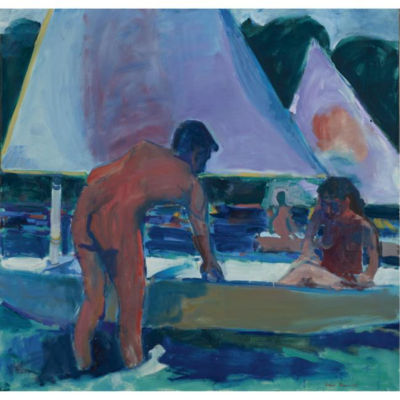 Born in Illinois, William Theo Brown developed a series of paintings based on photographs from sports magazines. He translated the images into boldly outlined, abstractions that conveyed figures in motion--"a kind of gestural Cubism."
He spent much of the 1960s and 1970s in Santa Barbara with Paul Wonner and in the 1970s, returned to the Bay Area.
His later work is likened to that of Matisse and simplified contain allegorical figures that are thinly painted and "frozen in strange interiors or engaged in dance-like motion."
Source: "Art in the San Francisco Bay Area" by Thomas Albright