Edward Reginald Frampton PRICE CHARTS
1872 - 1923. Known for: Painting.
Frampton's art, which embraced not only easel pictures but mural painting and stained glass, was the product of many a love-affair with 'primitive' styles. As a young man he had traveled in Italy and... Read full biography
Frampton's art, which embraced not only easel pictures but mural painting and stained glass, was the product of many a love-affair with 'primitive' styles. As a young man he had traveled in Italy and studied the work of Puvis de Chavannes and Burne-Jones, whose retrospective exhibition at the New... Read full biography
Frampton's art, which embraced not only easel pictures but mural painting and stained glass, was the product of many a love-affair with 'primitive' styles. As a young man he had traveled in Italy and studied the work of Puvis de Chavannes and Burne-Jones, whose retrospective exhibition at the New Gallery in 1892-3 struck him, according to Vallance, 'with the force of a revelation'. In later life he was moved not only by early Flemish painting but by the ethos of Brittany. His landscapes tell us... Read full biography
Frampton's art, which embraced not only easel pictures but mural painting and stained glass, was the product of many a love-affair with 'primitive' styles. As a young man he had traveled in Italy and studied the work of Puvis de Chavannes and Burne-Jones, whose retrospective exhibition at the New Gallery in 1892-3 struck him, according to Vallance, 'with the force of a revelation'. In later life he was moved not only by early Flemish painting but by the ethos of Brittany. His landscapes tell us that he traveled in this region, and it is clear that, like Gauguin and his followers a generation earlier, he responded both to its deeply religious character and to the local artistic tradition. Just as his Flemish sympathies are embodied in the... Read full biography
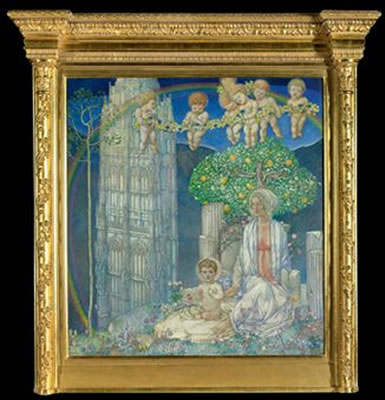
Frampton's art, which embraced not only easel pictures but mural painting and stained glass, was the product of many a love-affair with 'primitive' styles. As a young man he had traveled in Italy and studied the work of Puvis de Chavannes and Burne-Jones, whose retrospective exhibition at the New Gallery in 1892-3 struck him, according to Vallance, 'with the force of a revelation'. In later life he was moved not only by early Flemish painting but by the ethos of Brittany. His landscapes tell us that he traveled in this region, and it is clear that, like Gauguin and his followers a generation earlier, he responded both to its deeply religious character and to the local artistic tradition. Just as his Flemish sympathies are embodied in the two 'tower' pictures and A Maid of Bruges, so the Breton influence emerges in A Madon... Read full biography