Elisabeth Faure PRICE CHARTS
1906 - 1964. Known for: Painting.
Élisabeth Faure was born in 1906, in Ferryville under the French protectorate of Tunisia. She entered the Ecole des Beaux-Arts in Toulon in 1910, and continued her training with Lucien Simon... Read full biography
Élisabeth Faure was born in 1906, in Ferryville under the French protectorate of Tunisia. She entered the Ecole des Beaux-Arts in Toulon in 1910, and continued her training with Lucien Simon Paul Baudouin from 1928. An avid traveler, she visited Italy and Spain in the 1930s, then Madagascar... Read full biography
Élisabeth Faure was born in 1906, in Ferryville under the French protectorate of Tunisia. She entered the Ecole des Beaux-Arts in Toulon in 1910, and continued her training with Lucien Simon Paul Baudouin from 1928. An avid traveler, she visited Italy and Spain in the 1930s, then Madagascar and the Comoros in the early 1950s. At the end of the decade, Faure left for Congo-Brazzaville, Libreville and Chad. She made a living from selling her work, and took part in numerous shows... Read full biography
Élisabeth Faure was born in 1906, in Ferryville under the French protectorate of Tunisia. She entered the Ecole des Beaux-Arts in Toulon in 1910, and continued her training with Lucien Simon Paul Baudouin from 1928. An avid traveler, she visited Italy and Spain in the 1930s, then Madagascar and the Comoros in the early 1950s. At the end of the decade, Faure left for Congo-Brazzaville, Libreville and Chad. She made a living from selling her work, and took part in numerous shows and exhibitions, winning several prizes. Faure's spontaneous style, characterized by vivid strokes, transcribes the emotions of everyday scenes and the landscapes she encounters. Her work can be found in many French museums, including the Musée... Read full biography
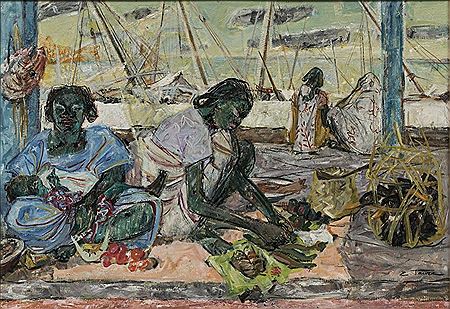
Élisabeth Faure was born in 1906, in Ferryville under the French protectorate of Tunisia. She entered the Ecole des Beaux-Arts in Toulon in 1910, and continued her training with Lucien Simon Paul Baudouin from 1928. An avid traveler, she visited Italy and Spain in the 1930s, then Madagascar and the Comoros in the early 1950s. At the end of the decade, Faure left for Congo-Brazzaville, Libreville and Chad. She made a living from selling her work, and took part in numerous shows and exhibitions, winning several prizes. Faure's spontaneous style, characterized by vivid strokes, transcribes the emotions of everyday scenes and the landscapes she encounters. Her work can be found in many French museums, including the Musée Cantini in Marseille and the Centre Pompidou.