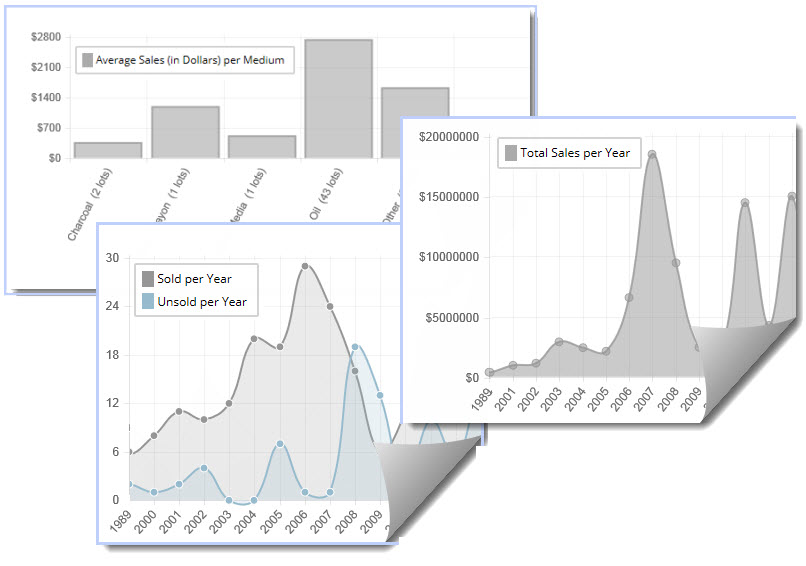
Konstantin Fedorovich Yuon PRICE CHARTS
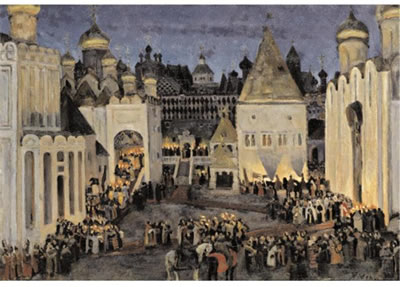
1875 Moscow, Russia - 1958 Moscow, Russia. Known for: Landscape, figure, genre painting.
Juon studied from 1892 to 1898 at the Moscow School of Art, among others with Konstantin Savitsky, Konstantin Korovin and Abram Arkhipov. In several trips to Western Europe and Paris he came into... Read full biography
Juon studied from 1892 to 1898 at the Moscow School of Art, among others with Konstantin Savitsky, Konstantin Korovin and Abram Arkhipov. In several trips to Western Europe and Paris he came into contact with the works of Impressionists such as Camille Pissarro, but retained his own characteristic... Read full biography
Juon studied from 1892 to 1898 at the Moscow School of Art, among others with Konstantin Savitsky, Konstantin Korovin and Abram Arkhipov. In several trips to Western Europe and Paris he came into contact with the works of Impressionists such as Camille Pissarro, but retained his own characteristic style. In Soviet times, Juon was director of the art theoretical research at the Institute of the Academy of Arts from 1948 to 1950. From 1956-1958 he was First Secretary of the Soviet Artists' Union.... Read full biography
Juon studied from 1892 to 1898 at the Moscow School of Art, among others with Konstantin Savitsky, Konstantin Korovin and Abram Arkhipov. In several trips to Western Europe and Paris he came into contact with the works of Impressionists such as Camille Pissarro, but retained his own characteristic style. In Soviet times, Juon was director of the art theoretical research at the Institute of the Academy of Arts from 1948 to 1950. From 1956-1958 he was First Secretary of the Soviet Artists' Union. In 1943 he was awarded the Stalin Prize. Juon began his artistic work as an Impressionist landscape and genre painter with a Symbolist coloring. He also mixed in his landscape paintings elements of Palech- and icon painting.... Read full biography
Juon studied from 1892 to 1898 at the Moscow School of Art, among others with Konstantin Savitsky, Konstantin Korovin and Abram Arkhipov. In several trips to Western Europe and Paris he came into contact with the works of Impressionists such as Camille Pissarro, but retained his own characteristic style. In Soviet times, Juon was director of the art theoretical research at the Institute of the Academy of Arts from 1948 to 1950. From 1956-1958 he was First Secretary of the Soviet Artists' Union. In 1943 he was awarded the Stalin Prize. Juon began his artistic work as an Impressionist landscape and genre painter with a Symbolist coloring. He also mixed in his landscape paintings elements of Palech- and icon painting.