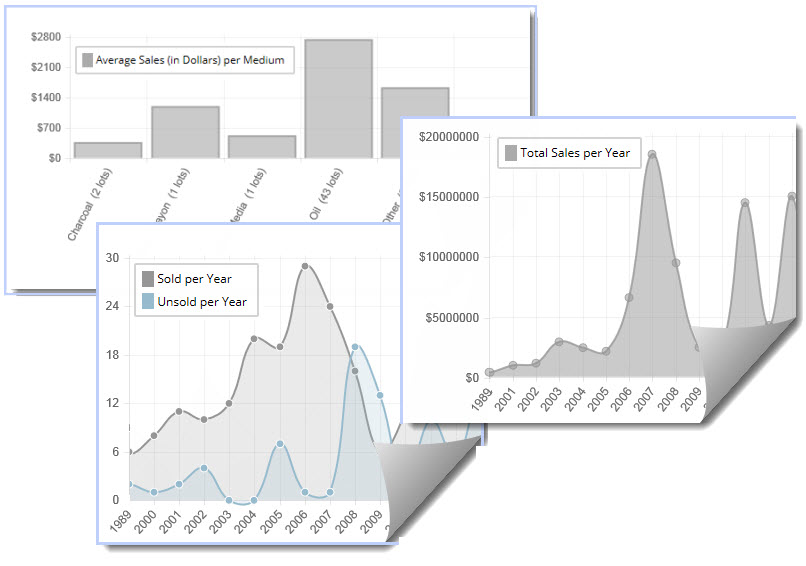
Thomas Allom PRICE CHARTS
1804 London, England - 1872 London, England. Known for: Landscape and marine painting, topography, illustration, architecture.
Thomas Allom was an English artist, topographical illustrator and architect, and one of the founder members of what eventually became the Royal Institute of British Architects (RIBA). He was born in... Read full biography
Thomas Allom was an English artist, topographical illustrator and architect, and one of the founder members of what eventually became the Royal Institute of British Architects (RIBA). He was born in Lambeth, south London, the son of a coachman from Suffolk. In 1819, he was apprenticed to architect... Read full biography
Thomas Allom was an English artist, topographical illustrator and architect, and one of the founder members of what eventually became the Royal Institute of British Architects (RIBA). He was born in Lambeth, south London, the son of a coachman from Suffolk. In 1819, he was apprenticed to architect Francis Goodwin for whom he worked until 1826. He then studied at the Royal Academy School. His designs for churches shown at exhibitions in 1824 and 1827 aroused considerable interest, and he later... Read full biography
Thomas Allom was an English artist, topographical illustrator and architect, and one of the founder members of what eventually became the Royal Institute of British Architects (RIBA). He was born in Lambeth, south London, the son of a coachman from Suffolk. In 1819, he was apprenticed to architect Francis Goodwin for whom he worked until 1826. He then studied at the Royal Academy School. His designs for churches shown at exhibitions in 1824 and 1827 aroused considerable interest, and he later designed many buildings in London (including a workhouse in Marloes Road, Kensington (1847), the Church of Christ in Highbury in 1850, the Church of St Peter in Notting Hill in 1856, and the elegant Ladbroke Estate in west London). Further afield his... Read full biography
Thomas Allom was an English artist, topographical illustrator and architect, and one of the founder members of what eventually became the Royal Institute of British Architects (RIBA). He was born in Lambeth, south London, the son of a coachman from Suffolk. In 1819, he was apprenticed to architect Francis Goodwin for whom he worked until 1826. He then studied at the Royal Academy School. His designs for churches shown at exhibitions in 1824 and 1827 aroused considerable interest, and he later designed many buildings in London (including a workhouse in Marloes Road, Kensington (1847), the Church of Christ in Highbury in 1850, the Church of St Peter in Notting Hill in 1856, and the elegant Ladbroke Estate in west London). Further afield his works included workhouses at Calne, Wiltshire (1847) and in Liverpool, design of the William Brown Library, also in Liverpool, (1857-1860), and... Read full biography