Paul Schultz-Liebisch PRICE CHARTS
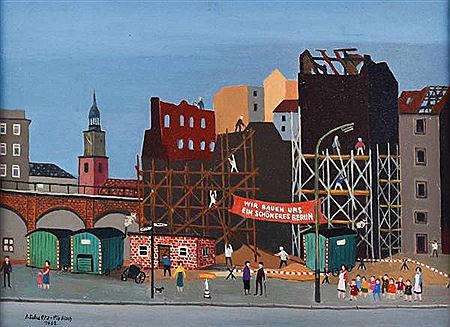
1905 Reinickendorf, Germany - 1996 Berlin, Germany. Known for: City scene painting.
Paul Schultz-Liebisch 1905 Reinickendorf - 1996 Berlin-Pankow German painter and graphic artist. Trained as a decorative painter. Pursued his artistic career as an autodidact on the advice of the... Read full biography
Paul Schultz-Liebisch 1905 Reinickendorf - 1996 Berlin-Pankow German painter and graphic artist. Trained as a decorative painter. Pursued his artistic career as an autodidact on the advice of the German painter Hans Baluschek, a member of the Berlin Secession. Joined the KPD at the age of 21.... Read full biography
Paul Schultz-Liebisch 1905 Reinickendorf - 1996 Berlin-Pankow German painter and graphic artist. Trained as a decorative painter. Pursued his artistic career as an autodidact on the advice of the German painter Hans Baluschek, a member of the Berlin Secession. Joined the KPD at the age of 21. Worked as a stage painter in the Ufa film studio in Berlin-Tempelhof. Banned from painting by the National Socialist regime. Lives in Berlin-Wedding and Reinickendorf until 1944, almost complete loss of... Read full biography
Paul Schultz-Liebisch 1905 Reinickendorf - 1996 Berlin-Pankow German painter and graphic artist. Trained as a decorative painter. Pursued his artistic career as an autodidact on the advice of the German painter Hans Baluschek, a member of the Berlin Secession. Joined the KPD at the age of 21. Worked as a stage painter in the Ufa film studio in Berlin-Tempelhof. Banned from painting by the National Socialist regime. Lives in Berlin-Wedding and Reinickendorf until 1944, almost complete loss of his oeuvre due to bombing. Political activity in the resistance group around Robert Uhrig. 1944 Enlisted in the Wehrmacht, whereupon he soon deserted and remained in hiding until the end of the war. 1946 Moves to Berlin-Pankow and resumes his artistic... Read full biography
Paul Schultz-Liebisch 1905 Reinickendorf - 1996 Berlin-Pankow German painter and graphic artist. Trained as a decorative painter. Pursued his artistic career as an autodidact on the advice of the German painter Hans Baluschek, a member of the Berlin Secession. Joined the KPD at the age of 21. Worked as a stage painter in the Ufa film studio in Berlin-Tempelhof. Banned from painting by the National Socialist regime. Lives in Berlin-Wedding and Reinickendorf until 1944, almost complete loss of his oeuvre due to bombing. Political activity in the resistance group around Robert Uhrig. 1944 Enlisted in the Wehrmacht, whereupon he soon deserted and remained in hiding until the end of the war. 1946 Moves to Berlin-Pankow and resumes his artistic work. 1945-49 Creation of the cycle ''Des Wahnsinns Ende'', in which he processes his war experiences. 1951 Resigns from the SED due to r... Read full biography