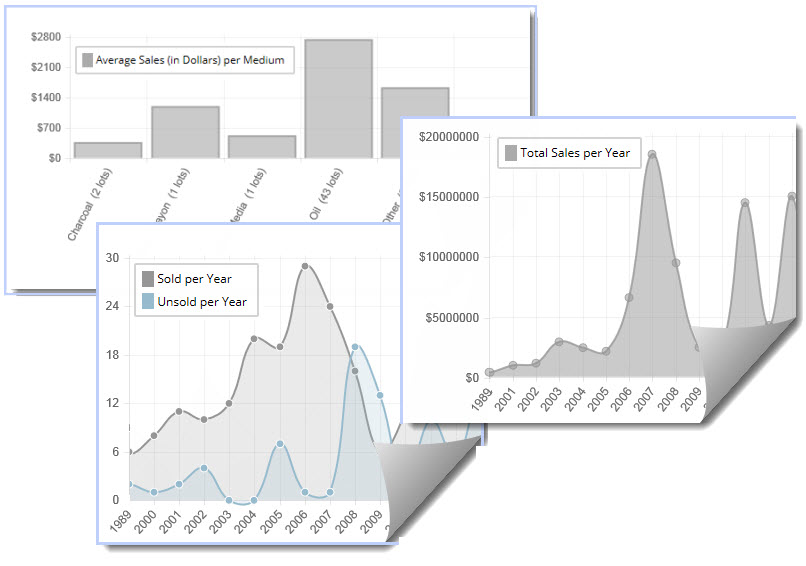
Faustino Bocchi PRICE CHARTS
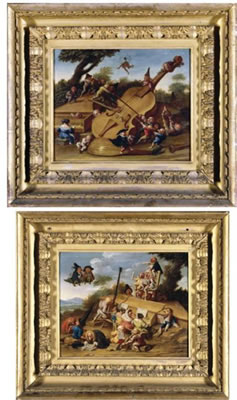
1659 - 1742. Known for: Painting.
Faustino Bocchi, born 1659 in Italy, was probably a pupil of the Flemish painter Angiolo Everardi. In addition to committing himself to the creation of humorous bambocciate, Bocchi was also a... Read full biography
Faustino Bocchi, born 1659 in Italy, was probably a pupil of the Flemish painter Angiolo Everardi. In addition to committing himself to the creation of humorous bambocciate, Bocchi was also a botanical and animal painter as well as a specialist of battle paintings. Faustino Bocchi absorbed the... Read full biography
Faustino Bocchi, born 1659 in Italy, was probably a pupil of the Flemish painter Angiolo Everardi. In addition to committing himself to the creation of humorous bambocciate, Bocchi was also a botanical and animal painter as well as a specialist of battle paintings. Faustino Bocchi absorbed the so-called maniera fiamminga, or Flemish style, from his master, and this dominated in Brescia during the seventeenth and eighteenth centuries to such an extent that the area became identified as the... Read full biography
Faustino Bocchi, born 1659 in Italy, was probably a pupil of the Flemish painter Angiolo Everardi. In addition to committing himself to the creation of humorous bambocciate, Bocchi was also a botanical and animal painter as well as a specialist of battle paintings. Faustino Bocchi absorbed the so-called maniera fiamminga, or Flemish style, from his master, and this dominated in Brescia during the seventeenth and eighteenth centuries to such an extent that the area became identified as the capital of Italian-Flemish art. With the exception of a journey to Florence which it is thought Bocchi undertook, he spent his entire career in Brescia, where, over time, he freed his work of the darker overtones of seventeenth century Flemish derivation,... Read full biography
Faustino Bocchi, born 1659 in Italy, was probably a pupil of the Flemish painter Angiolo Everardi. In addition to committing himself to the creation of humorous bambocciate, Bocchi was also a botanical and animal painter as well as a specialist of battle paintings. Faustino Bocchi absorbed the so-called maniera fiamminga, or Flemish style, from his master, and this dominated in Brescia during the seventeenth and eighteenth centuries to such an extent that the area became identified as the capital of Italian-Flemish art. With the exception of a journey to Florence which it is thought Bocchi undertook, he spent his entire career in Brescia, where, over time, he freed his work of the darker overtones of seventeenth century Flemish derivation, in favour of a more bucolic vein, characterized by a lighter palette that in Lombardy characterizes the transition into the eighteenth centu... Read full biography