Geoffrey Clarke PRICE CHARTS
1924 - 2014. Known for: Symbolic linear sculpture with iron, wire and plaster.
Judith LeGrove, Geoffrey Clarke's biographer, has written about this sculpture, describing it as '. a work in bronze: a rectilinear construction, with walls and a mast, cast in summer 1958. He... Read full biography
Judith LeGrove, Geoffrey Clarke's biographer, has written about this sculpture, describing it as '. a work in bronze: a rectilinear construction, with walls and a mast, cast in summer 1958. He constructed sections from wax sheet, from which moulds were made, casts taken, and the components welded... Read full biography
Judith LeGrove, Geoffrey Clarke's biographer, has written about this sculpture, describing it as '. a work in bronze: a rectilinear construction, with walls and a mast, cast in summer 1958. He constructed sections from wax sheet, from which moulds were made, casts taken, and the components welded as a potential edition of four. Some casts were smoother and more regular than others indicating a degree of variation. welcomed by Clarke. Despite its apparent abstraction, the sculpture literally had... Read full biography
Judith LeGrove, Geoffrey Clarke's biographer, has written about this sculpture, describing it as '. a work in bronze: a rectilinear construction, with walls and a mast, cast in summer 1958. He constructed sections from wax sheet, from which moulds were made, casts taken, and the components welded as a potential edition of four. Some casts were smoother and more regular than others indicating a degree of variation. welcomed by Clarke. Despite its apparent abstraction, the sculpture literally had a heart: a cut-out barely concealed behind its protective spike. Clarke circled the issue of naming ('I think that the actual association of the word 'Man' in the title may lead to the spout shape being misunderstood!! How about 'Façade', 'Barrier'... Read full biography
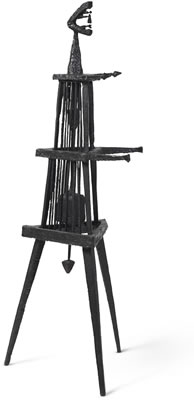
Judith LeGrove, Geoffrey Clarke's biographer, has written about this sculpture, describing it as '. a work in bronze: a rectilinear construction, with walls and a mast, cast in summer 1958. He constructed sections from wax sheet, from which moulds were made, casts taken, and the components welded as a potential edition of four. Some casts were smoother and more regular than others indicating a degree of variation. welcomed by Clarke. Despite its apparent abstraction, the sculpture literally had a heart: a cut-out barely concealed behind its protective spike. Clarke circled the issue of naming ('I think that the actual association of the word 'Man' in the title may lead to the spout shape being misunderstood!! How about 'Façade', 'Barrier' or 'Shield'?'). He clearly envisaged the work as a 'symbol for man'. In so doing he was radically rethinking the figure.' (Judith... Read full biography