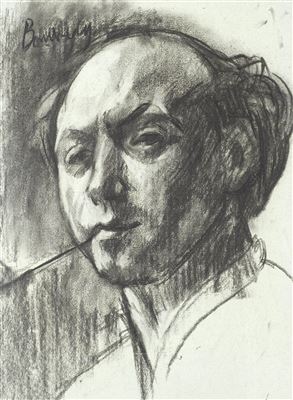
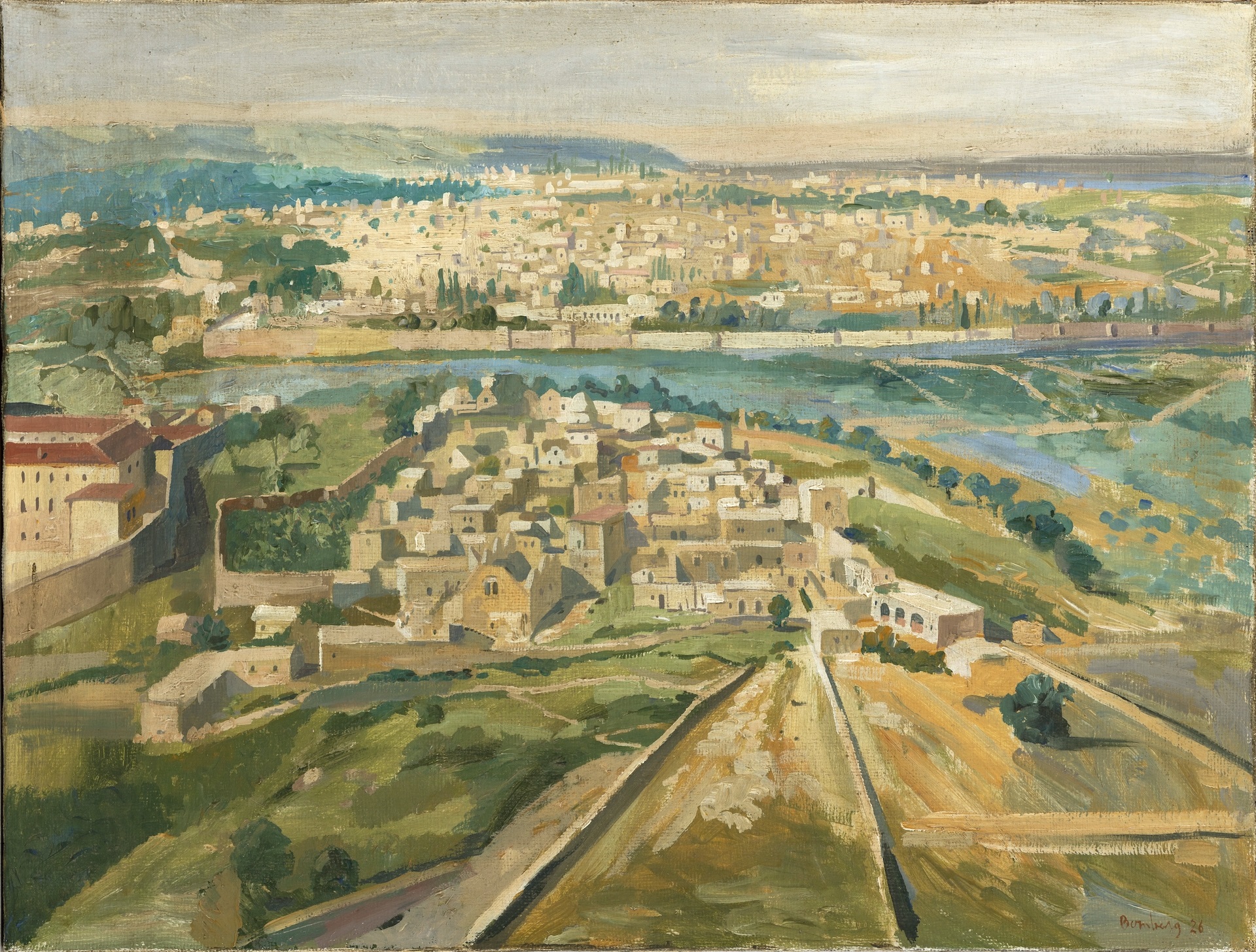
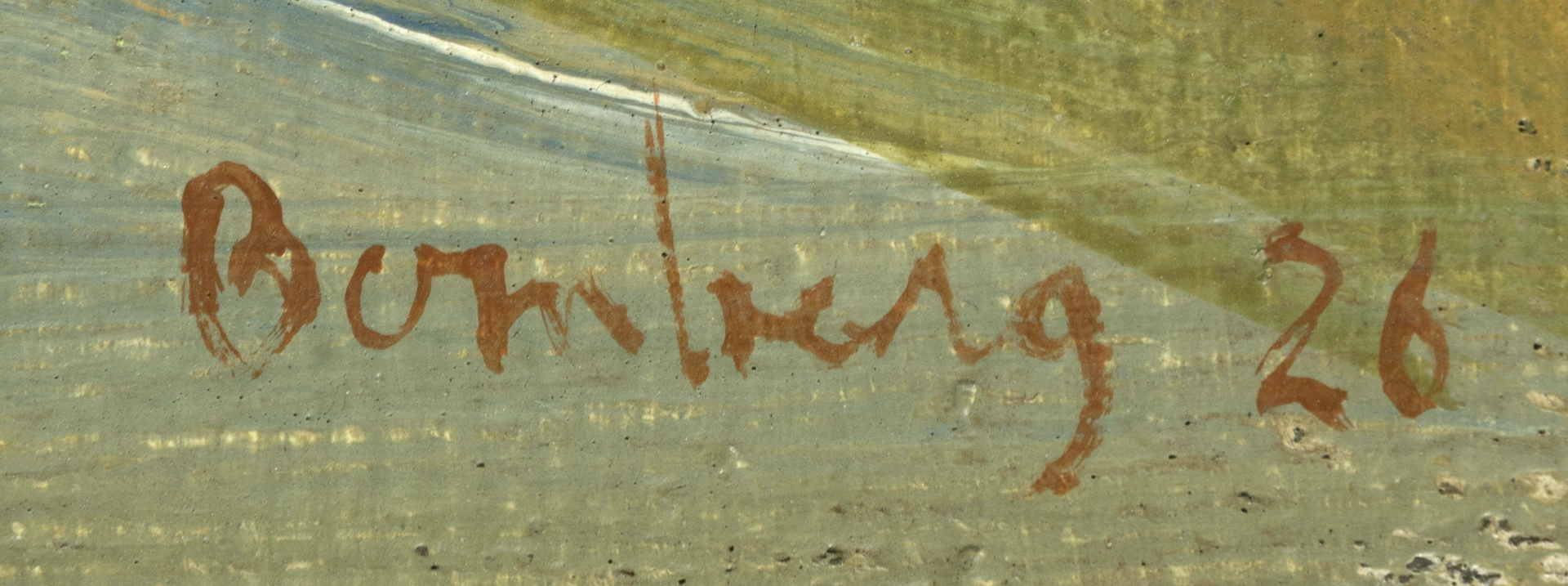
David Bomberg (1890 - 1957). David Bomberg was born in the Lee Bank area of Birmingham, the seventh of eleven children of a Polish-Jewish immigrant leatherworker. In 1895 his family moved to... Read full biography
David Bomberg (1890 - 1957). David Bomberg was born in the Lee Bank area of Birmingham, the seventh of eleven children of a Polish-Jewish immigrant leatherworker. In 1895 his family moved to Whitechapel in the East End of London where he was to spend the rest of his childhood. After studying art at... Read full biography
David Bomberg (1890 - 1957). David Bomberg was born in the Lee Bank area of Birmingham, the seventh of eleven children of a Polish-Jewish immigrant leatherworker. In 1895 his family moved to Whitechapel in the East End of London where he was to spend the rest of his childhood. After studying art at City and Guilds, Bomberg returned to Birmingham to train as a lithographer* but quit to study under Walter Sickert at Westminster School of Art* from 1908 to 1910. Sickert's emphasis on the study of... Read full biography
David Bomberg (1890 - 1957). David Bomberg was born in the Lee Bank area of Birmingham, the seventh of eleven children of a Polish-Jewish immigrant leatherworker. In 1895 his family moved to Whitechapel in the East End of London where he was to spend the rest of his childhood. After studying art at City and Guilds, Bomberg returned to Birmingham to train as a lithographer* but quit to study under Walter Sickert at Westminster School of Art* from 1908 to 1910. Sickert's emphasis on the study of form and the representation of the "gross material facts" of urban life were an important early influence on Bomberg, alongside Roger Fry's 1910 exhibition Manet and the Post-Impressionists*, where he first saw the work of Cézanne. Bomberg's artistic... Read full biography
David Bomberg (1890 - 1957). David Bomberg was born in the Lee Bank area of Birmingham, the seventh of eleven children of a Polish-Jewish immigrant leatherworker. In 1895 his family moved to Whitechapel in the East End of London where he was to spend the rest of his childhood. After studying art at City and Guilds, Bomberg returned to Birmingham to train as a lithographer* but quit to study under Walter Sickert at Westminster School of Art* from 1908 to 1910. Sickert's emphasis on the study of form and the representation of the "gross material facts" of urban life were an important early influence on Bomberg, alongside Roger Fry's 1910 exhibition Manet and the Post-Impressionists*, where he first saw the work of Cézanne. Bomberg's artistic studies had involved considerable financial hardship, but in 1911 he was able to attain a place at the Slade School of... Read full biography