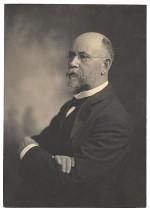
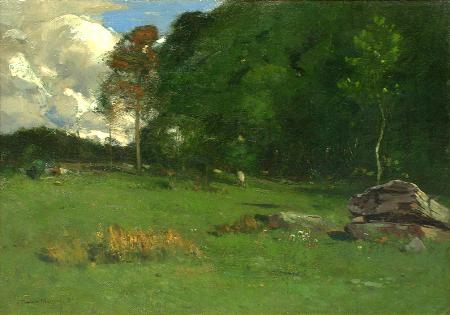
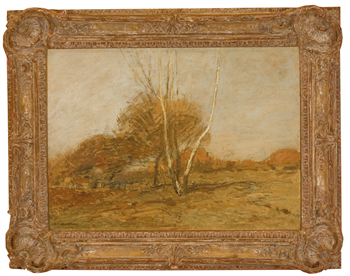
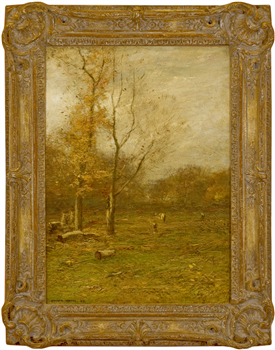
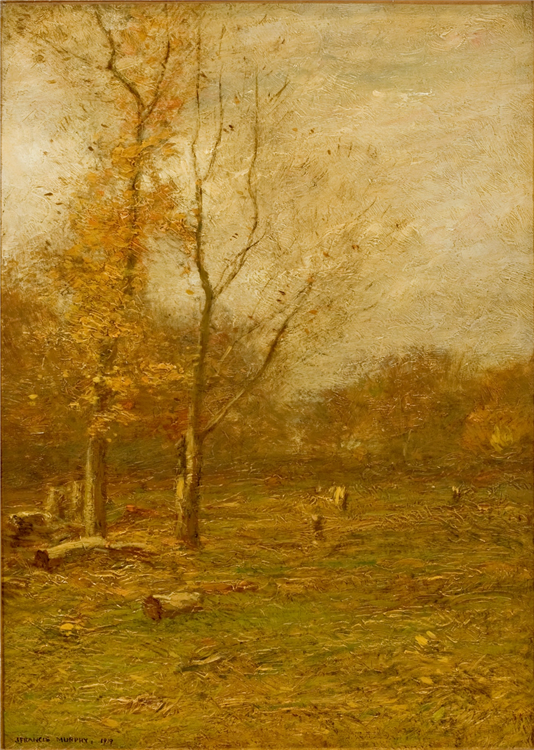
John Francis Murphy is increasingly recognized today as one of the leading American Tonalist painters of the nineteenth and early twentieth centuries. Over a productive career of some fifty years, he... Read full biography
John Francis Murphy is increasingly recognized today as one of the leading American Tonalist painters of the nineteenth and early twentieth centuries. Over a productive career of some fifty years, he developed a highly individual aesthetic that was notable for its expressive and poetic nuance. His... Read full biography
John Francis Murphy is increasingly recognized today as one of the leading American Tonalist painters of the nineteenth and early twentieth centuries. Over a productive career of some fifty years, he developed a highly individual aesthetic that was notable for its expressive and poetic nuance. His art attracted a wide following, and was avidly collected by individuals and museums both during his lifetime and in the period following his death. Murphy was born in Oswego, New York, near Lake... Read full biography
John Francis Murphy is increasingly recognized today as one of the leading American Tonalist painters of the nineteenth and early twentieth centuries. Over a productive career of some fifty years, he developed a highly individual aesthetic that was notable for its expressive and poetic nuance. His art attracted a wide following, and was avidly collected by individuals and museums both during his lifetime and in the period following his death. Murphy was born in Oswego, New York, near Lake Ontario. With his family he moved to Chicago in 1868, where his father was employed in the shipping industry. In Chicago, Murphy began working as a scene painter in a local theatre and was quickly promoted to lead his co-workers. Largely self-taught, his... Read full biography
John Francis Murphy is increasingly recognized today as one of the leading American Tonalist painters of the nineteenth and early twentieth centuries. Over a productive career of some fifty years, he developed a highly individual aesthetic that was notable for its expressive and poetic nuance. His art attracted a wide following, and was avidly collected by individuals and museums both during his lifetime and in the period following his death. Murphy was born in Oswego, New York, near Lake Ontario. With his family he moved to Chicago in 1868, where his father was employed in the shipping industry. In Chicago, Murphy began working as a scene painter in a local theatre and was quickly promoted to lead his co-workers. Largely self-taught, his only training consisted of a few classes at the Chicago Academy of Design. There he became friends with Emil Carlsen and Theodore Robinson, and... Read full biography