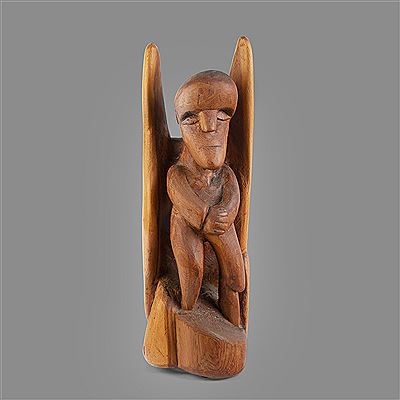
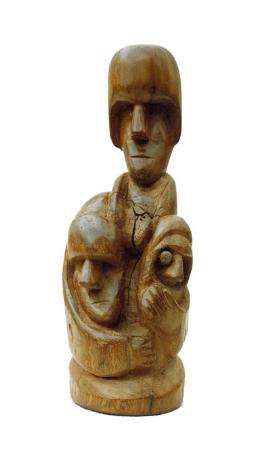
Patrociño Barela emerged in 1936 as one of America's most important artists when he was featured in a show of Federal Art Project artists in New York's Museum of Modern Art. He was the first... Read full biography
Patrociño Barela emerged in 1936 as one of America's most important artists when he was featured in a show of Federal Art Project artists in New York's Museum of Modern Art. He was the first Mexican-American artist to receive such a high degree of recognition. His carvings in native juniper wood... Read full biography
Patrociño Barela emerged in 1936 as one of America's most important artists when he was featured in a show of Federal Art Project artists in New York's Museum of Modern Art. He was the first Mexican-American artist to receive such a high degree of recognition. His carvings in native juniper wood depict deep psychological and mystical insights into the human condition. The poet William Carlos Williams wrote of Barela,". for wholehearted depth of purpose his figures have a comment to make on the... Read full biography
Patrociño Barela emerged in 1936 as one of America's most important artists when he was featured in a show of Federal Art Project artists in New York's Museum of Modern Art. He was the first Mexican-American artist to receive such a high degree of recognition. His carvings in native juniper wood depict deep psychological and mystical insights into the human condition. The poet William Carlos Williams wrote of Barela,". for wholehearted depth of purpose his figures have a comment to make on the age which is like a breath of fresh air." . When Barela made his debut on the national scene, he was hailed by "Time Magazine" as the "discovery of the year". The "New York Times" cited his work for showing "real force. there is crude, honest,... Read full biography
Patrociño Barela emerged in 1936 as one of America's most important artists when he was featured in a show of Federal Art Project artists in New York's Museum of Modern Art. He was the first Mexican-American artist to receive such a high degree of recognition. His carvings in native juniper wood depict deep psychological and mystical insights into the human condition. The poet William Carlos Williams wrote of Barela,". for wholehearted depth of purpose his figures have a comment to make on the age which is like a breath of fresh air." . When Barela made his debut on the national scene, he was hailed by "Time Magazine" as the "discovery of the year". The "New York Times" cited his work for showing "real force. there is crude, honest, personal expression in the small carvings". The Museum of Modern Art proclaimed h... Read full biography