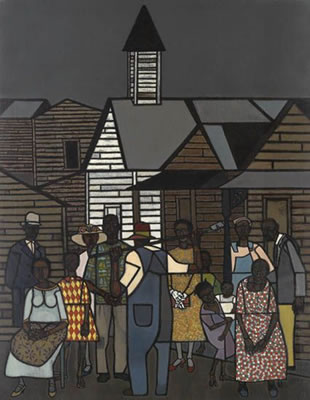
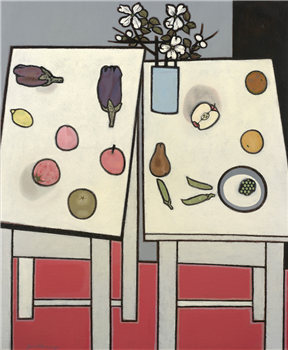
Born in Richmond, Virginia, Robert Gwathmey became an artist known for his Social Realist depictions of life in the rural South. He was one of the first white artists to create dignified images of... Read full biography
Born in Richmond, Virginia, Robert Gwathmey became an artist known for his Social Realist depictions of life in the rural South. He was one of the first white artists to create dignified images of African-American people and did so in a style that was modernist with many geometric forms and bold... Read full biography
Born in Richmond, Virginia, Robert Gwathmey became an artist known for his Social Realist depictions of life in the rural South. He was one of the first white artists to create dignified images of African-American people and did so in a style that was modernist with many geometric forms and bold colororation. Although he lived intermittently in Pennsylvania and in the South, he spent most of his forty-five year career in New York City where his studio was at 1 West 68th Street. Frequently he... Read full biography
Born in Richmond, Virginia, Robert Gwathmey became an artist known for his Social Realist depictions of life in the rural South. He was one of the first white artists to create dignified images of African-American people and did so in a style that was modernist with many geometric forms and bold colororation. Although he lived intermittently in Pennsylvania and in the South, he spent most of his forty-five year career in New York City where his studio was at 1 West 68th Street. Frequently he returned to the South where he became concerned about the problems dividing blacks and whites. At the start of his career, he traveled in Europe for two years, and then taught at Carnegie Institute of Technology in Pittsburgh, and for twenty-six years... Read full biography
Born in Richmond, Virginia, Robert Gwathmey became an artist known for his Social Realist depictions of life in the rural South. He was one of the first white artists to create dignified images of African-American people and did so in a style that was modernist with many geometric forms and bold colororation. Although he lived intermittently in Pennsylvania and in the South, he spent most of his forty-five year career in New York City where his studio was at 1 West 68th Street. Frequently he returned to the South where he became concerned about the problems dividing blacks and whites. At the start of his career, he traveled in Europe for two years, and then taught at Carnegie Institute of Technology in Pittsburgh, and for twenty-six years at Cooper Union in New York City where he established a studio at 1 West 68th Street. In 1944, he received a R... Read full biography