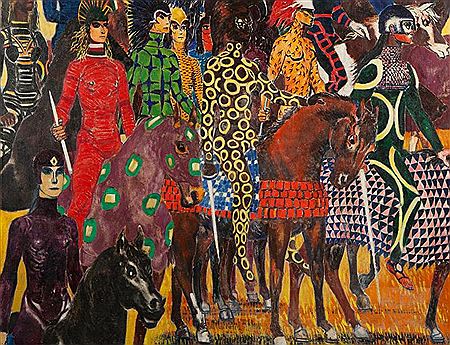
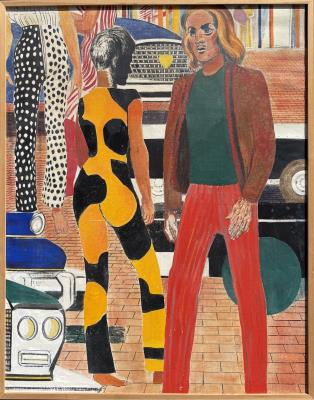
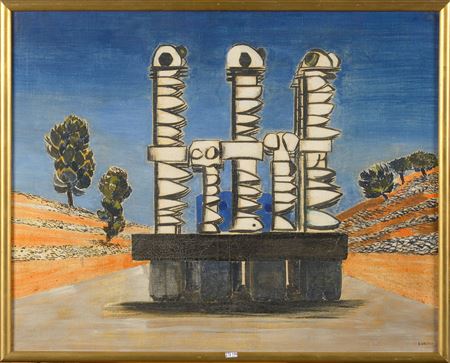
1900 - 1977. Known for: Skeleton studies, surrealism, painting on canvas.
Émile Salkin was an artist from Belgium who was known for his skeleton studies and surrealistic artwork. He had a close relationship with fellow artist Paul Delvaux, with whom he analyzed and drew...
Read full biography Émile Salkin was an artist from Belgium who was known for his skeleton studies and surrealistic artwork. He had a close relationship with fellow artist Paul Delvaux, with whom he analyzed and drew skeletons at the Museum of Natural History in Brussels. Salkin's work often featured skeletons in...
Read full biography Émile Salkin was an artist from Belgium who was known for his skeleton studies and surrealistic artwork. He had a close relationship with fellow artist Paul Delvaux, with whom he analyzed and drew skeletons at the Museum of Natural History in Brussels. Salkin's work often featured skeletons in large perspectives, set in surreal and magical environments. His art was characterized by a unique style that combined elements of surrealism with detailed studies of skeletons. The text mentions that...
Read full biography Émile Salkin was an artist from Belgium who was known for his skeleton studies and surrealistic artwork. He had a close relationship with fellow artist Paul Delvaux, with whom he analyzed and drew skeletons at the Museum of Natural History in Brussels. Salkin's work often featured skeletons in large perspectives, set in surreal and magical environments. His art was characterized by a unique style that combined elements of surrealism with detailed studies of skeletons. The text mentions that Salkin was a teacher who guided many artists throughout his career, with Paul Delvaux being one of the most important artists he influenced.
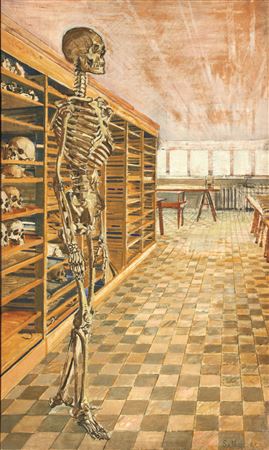
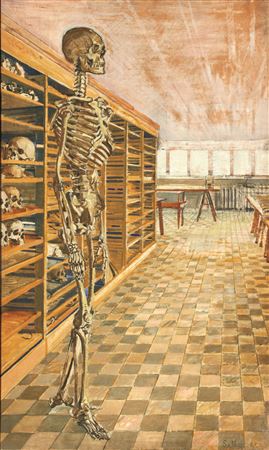
Émile Salkin was an artist from Belgium who was known for his skeleton studies and surrealistic artwork. He had a close relationship with fellow artist Paul Delvaux, with whom he analyzed and drew skeletons at the Museum of Natural History in Brussels. Salkin's work often featured skeletons in large perspectives, set in surreal and magical environments. His art was characterized by a unique style that combined elements of surrealism with detailed studies of skeletons. The text mentions that Salkin was a teacher who guided many artists throughout his career, with Paul Delvaux being one of the most important artists he influenced.