1629 - 1670. Known for: Painting and sculpture.
Abraham Teniers was the younger brother of David Teniers the Younger and was known for his genre scenes, particularly singerie. He often repeated compositions of his brother with small variations....
Read full biography Abraham Teniers was the younger brother of David Teniers the Younger and was known for his genre scenes, particularly singerie. He often repeated compositions of his brother with small variations. Abraham served as Captain of the local Schutterij and spent many raucous nights among his comrades in...
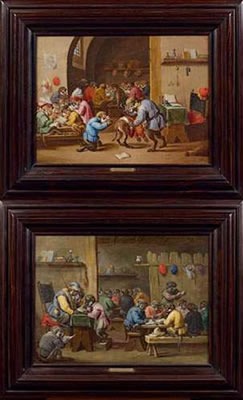
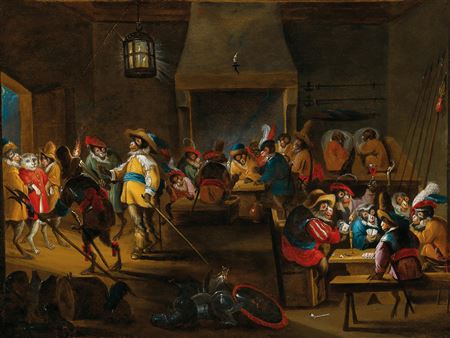
Read full biography Abraham Teniers was the younger brother of David Teniers the Younger and was known for his genre scenes, particularly singerie. He often repeated compositions of his brother with small variations. Abraham served as Captain of the local Schutterij and spent many raucous nights among his comrades in guardrooms, possibly similar to those depicted in his artwork. The substitution of men for monkeys in his singerie paintings reflected on vanity and human folly. There are three other known versions...
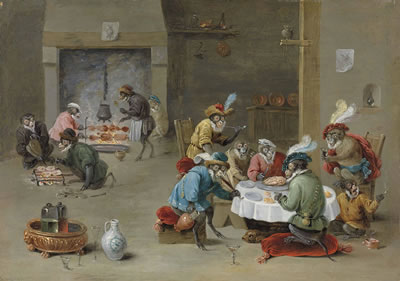
Read full biography Abraham Teniers was the younger brother of David Teniers the Younger and was known for his genre scenes, particularly singerie. He often repeated compositions of his brother with small variations. Abraham served as Captain of the local Schutterij and spent many raucous nights among his comrades in guardrooms, possibly similar to those depicted in his artwork. The substitution of men for monkeys in his singerie paintings reflected on vanity and human folly. There are three other known versions of the present composition, one of which was recently exhibited in the Kunstmuseum in Bern.
Abraham Teniers was the younger brother of David Teniers the Younger and was known for his genre scenes, particularly singerie. He often repeated compositions of his brother with small variations. Abraham served as Captain of the local Schutterij and spent many raucous nights among his comrades in guardrooms, possibly similar to those depicted in his artwork. The substitution of men for monkeys in his singerie paintings reflected on vanity and human folly. There are three other known versions of the present composition, one of which was recently exhibited in the Kunstmuseum in Bern.