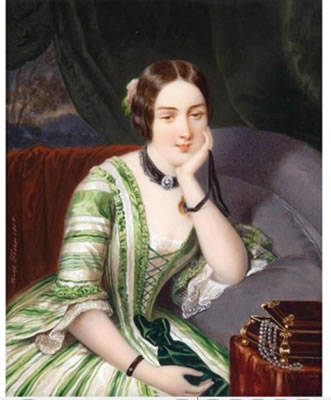
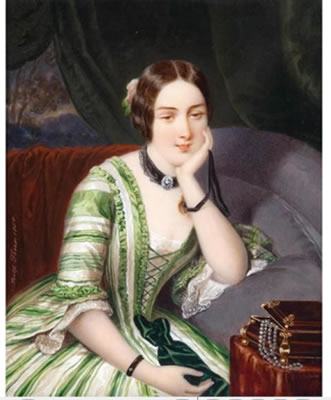
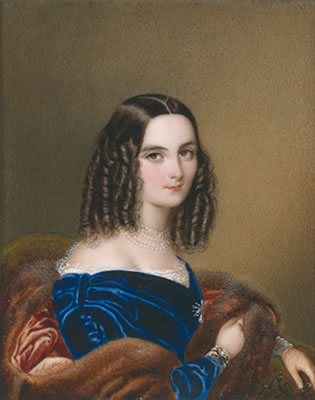
1811 - 1902. Known for: Portrait painting, miniatures.
Adolf Theer was the son of the gem cutter Joseph Theer and the brother of the painters Albert and Robert Theer. He was a pupil of the Vienna Academy, exhibited at St. Anna's the first time in 1832...
Read full biography Adolf Theer was the son of the gem cutter Joseph Theer and the brother of the painters Albert and Robert Theer. He was a pupil of the Vienna Academy, exhibited at St. Anna's the first time in 1832 and participated in exhibitions of the Austrian Kunstverein from 1852 onwards. He painted several...
Read full biography Adolf Theer was the son of the gem cutter Joseph Theer and the brother of the painters Albert and Robert Theer. He was a pupil of the Vienna Academy, exhibited at St. Anna's the first time in 1832 and participated in exhibitions of the Austrian Kunstverein from 1852 onwards. He painted several portrait miniatures and watercolor portraits, was occupied with numerous illustration tasks for almanacs and was also active as a lithograph. He portrayed several members of the Austrian Imperial family...
Read full biography Adolf Theer was the son of the gem cutter Joseph Theer and the brother of the painters Albert and Robert Theer. He was a pupil of the Vienna Academy, exhibited at St. Anna's the first time in 1832 and participated in exhibitions of the Austrian Kunstverein from 1852 onwards. He painted several portrait miniatures and watercolor portraits, was occupied with numerous illustration tasks for almanacs and was also active as a lithograph. He portrayed several members of the Austrian Imperial family and aristocrats, however, he received the majority of assignments from the bourgeois society. He executed his portraits with great precision and used warm colors for their faces, particularly in shade areas (Compare: Heinrich Fuchs, Die...
Read full biography Adolf Theer was the son of the gem cutter Joseph Theer and the brother of the painters Albert and Robert Theer. He was a pupil of the Vienna Academy, exhibited at St. Anna's the first time in 1832 and participated in exhibitions of the Austrian Kunstverein from 1852 onwards. He painted several portrait miniatures and watercolor portraits, was occupied with numerous illustration tasks for almanacs and was also active as a lithograph. He portrayed several members of the Austrian Imperial family and aristocrats, however, he received the majority of assignments from the bourgeois society. He executed his portraits with great precision and used warm colors for their faces, particularly in shade areas (Compare: Heinrich Fuchs, Die österreichischen Maler des 19. Jahrhunderts, Vol. 4, p. 90).