Golovin designed the set of Agamemnon's Palace in Mykonos for Richard Strauss' (1864-1949) one-act opera 'Elektra' based on new archaeological findings by Arthur Jones Evans (1851-1941) in Crete.... Read full biography
Golovin designed the set of Agamemnon's Palace in Mykonos for Richard Strauss' (1864-1949) one-act opera 'Elektra' based on new archaeological findings by Arthur Jones Evans (1851-1941) in Crete. Golovin's preparation for the creation of any new performance always included a search for new... Read full biography
Golovin designed the set of Agamemnon's Palace in Mykonos for Richard Strauss' (1864-1949) one-act opera 'Elektra' based on new archaeological findings by Arthur Jones Evans (1851-1941) in Crete. Golovin's preparation for the creation of any new performance always included a search for new materials and a thorough and comprehensive exploration of their possibilities. The artist stated: 'More than anything, knowledge is necessary to allow oneself complete freedom of fantasy'; knowledge of this... Read full biography
Golovin designed the set of Agamemnon's Palace in Mykonos for Richard Strauss' (1864-1949) one-act opera 'Elektra' based on new archaeological findings by Arthur Jones Evans (1851-1941) in Crete. Golovin's preparation for the creation of any new performance always included a search for new materials and a thorough and comprehensive exploration of their possibilities. The artist stated: 'More than anything, knowledge is necessary to allow oneself complete freedom of fantasy'; knowledge of this sort was critical to Golovin in his work on 'Elektra'. The opera's author, the composer Richard Strauss, took a lively interest in the staging of 'Elektra' at the Mariinsky Theatre. On 16 January 1913, he visited the Director of the Imperial Theatres,... Read full biography
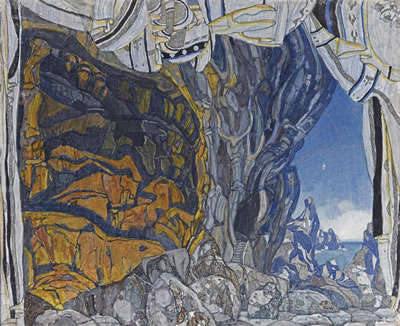
Golovin designed the set of Agamemnon's Palace in Mykonos for Richard Strauss' (1864-1949) one-act opera 'Elektra' based on new archaeological findings by Arthur Jones Evans (1851-1941) in Crete. Golovin's preparation for the creation of any new performance always included a search for new materials and a thorough and comprehensive exploration of their possibilities. The artist stated: 'More than anything, knowledge is necessary to allow oneself complete freedom of fantasy'; knowledge of this sort was critical to Golovin in his work on 'Elektra'. The opera's author, the composer Richard Strauss, took a lively interest in the staging of 'Elektra' at the Mariinsky Theatre. On 16 January 1913, he visited the Director of the Imperial Theatres, Vladimir Telyakovskii (1860-1924) and on 26 January led a rehearsal of the opera himself. As a result, accordi... Read full biography
Aleksandr Yakovlevich Golovin - Art Prices in Auction LotsAuction Lots