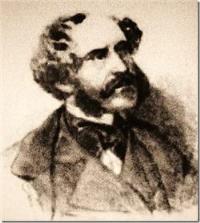
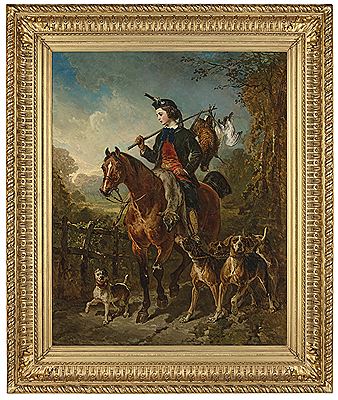
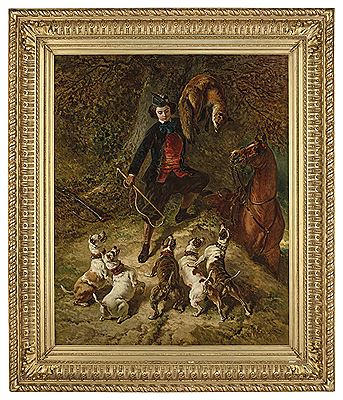
As a youth, Alfred De Dreux was taken by his uncle, the painter Pierre-Joseph Dedreux-Dorcy, on frequent visits to the studio of his friend Théodore Géricault. The important and formative influence... Read full biography
As a youth, Alfred De Dreux was taken by his uncle, the painter Pierre-Joseph Dedreux-Dorcy, on frequent visits to the studio of his friend Théodore Géricault. The important and formative influence of Géricault on the young De Dreux can be seen not only in the Romantic nature of his early... Read full biography
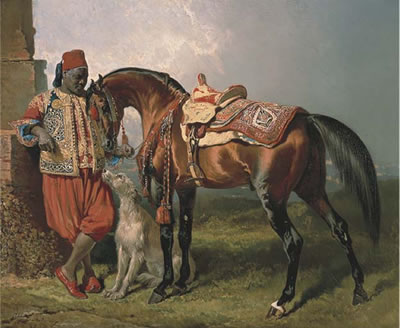
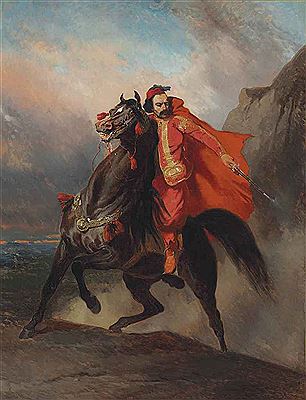
As a youth, Alfred De Dreux was taken by his uncle, the painter Pierre-Joseph Dedreux-Dorcy, on frequent visits to the studio of his friend Théodore Géricault. The important and formative influence of Géricault on the young De Dreux can be seen not only in the Romantic nature of his early paintings, such as the Nègre à cheval in the Vaudoyer collection, but also his lifelong fascination with equestrian subjects. After studying with Léon Cogniet, De Dreux exhibited two paintings – a Cheval... Read full biography
As a youth, Alfred De Dreux was taken by his uncle, the painter Pierre-Joseph Dedreux-Dorcy, on frequent visits to the studio of his friend Théodore Géricault. The important and formative influence of Géricault on the young De Dreux can be seen not only in the Romantic nature of his early paintings, such as the Nègre à cheval in the Vaudoyer collection, but also his lifelong fascination with equestrian subjects. After studying with Léon Cogniet, De Dreux exhibited two paintings – a Cheval sautant un fossé and an Intérieur d'écurie - at the Paris Salon* of 1831, to much acclaim. In 1833 he was commissioned to paint an equestrian portrait of the Duc d'Orléans, and by the following year was already being described by one critic as, together... Read full biography
As a youth, Alfred De Dreux was taken by his uncle, the painter Pierre-Joseph Dedreux-Dorcy, on frequent visits to the studio of his friend Théodore Géricault. The important and formative influence of Géricault on the young De Dreux can be seen not only in the Romantic nature of his early paintings, such as the Nègre à cheval in the Vaudoyer collection, but also his lifelong fascination with equestrian subjects. After studying with Léon Cogniet, De Dreux exhibited two paintings – a Cheval sautant un fossé and an Intérieur d'écurie - at the Paris Salon* of 1831, to much acclaim. In 1833 he was commissioned to paint an equestrian portrait of the Duc d'Orléans, and by the following year was already being described by one critic as, together with Carle Vernet, ‘le meilleur peintre de chevaux de l’époque romantique.’ In 1840 he began a series of paintings entitled Portra... Read full biography
Alfred De Dreux - Art Prices in Auction LotsAuction Lots