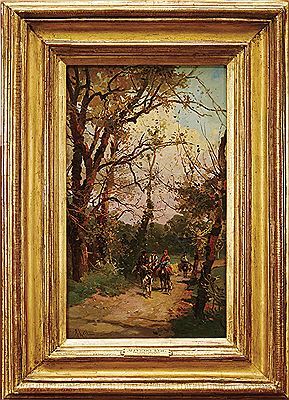
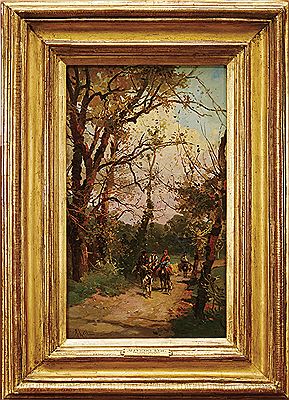
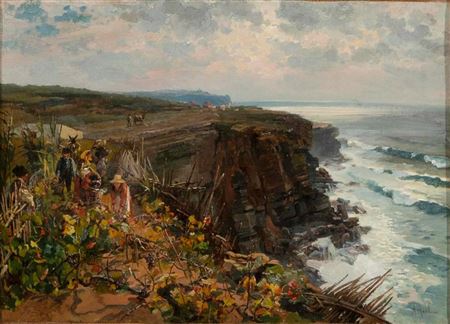
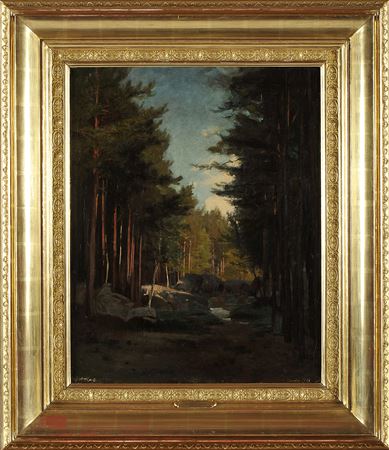
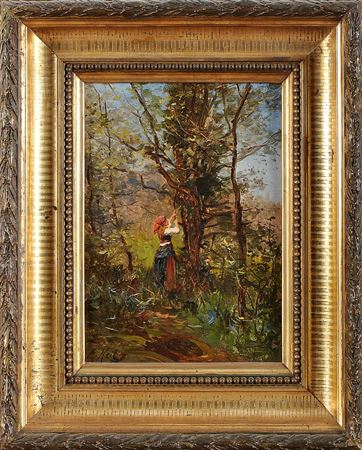
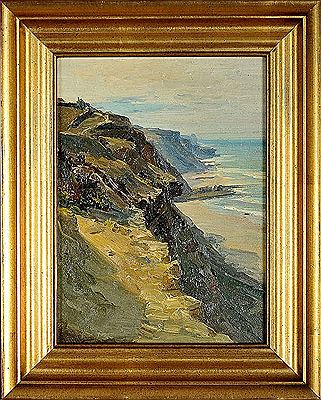
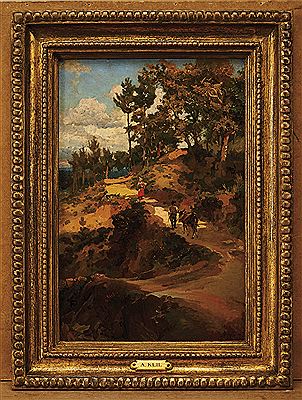
1851 - 1901. Known for: Landscape painting.
Of German origin, Alfredo Keil was born in 1851. Alfredo Keil studied in Germany from 1868 to 1870, in the studios of August Kreiling and W. Von Kaulbach and in Lisbon, with Joaquim Prieto and M.ª...
Read full biography Of German origin, Alfredo Keil was born in 1851. Alfredo Keil studied in Germany from 1868 to 1870, in the studios of August Kreiling and W. Von Kaulbach and in Lisbon, with Joaquim Prieto and M.ª Lupi. His painting oscillated between Sentimentalism and a view close to Naturalism. Portraitist,...
Read full biography Of German origin, Alfredo Keil was born in 1851. Alfredo Keil studied in Germany from 1868 to 1870, in the studios of August Kreiling and W. Von Kaulbach and in Lisbon, with Joaquim Prieto and M.ª Lupi. His painting oscillated between Sentimentalism and a view close to Naturalism. Portraitist, landscaper and costume painter, he is situated in a late Romanticism giving a modern treatment to nature, through the contrast of light and shadow that harmoniously deform the landscape. The author also...
Read full biography Of German origin, Alfredo Keil was born in 1851. Alfredo Keil studied in Germany from 1868 to 1870, in the studios of August Kreiling and W. Von Kaulbach and in Lisbon, with Joaquim Prieto and M.ª Lupi. His painting oscillated between Sentimentalism and a view close to Naturalism. Portraitist, landscaper and costume painter, he is situated in a late Romanticism giving a modern treatment to nature, through the contrast of light and shadow that harmoniously deform the landscape. The author also distinguished himself as a musical composer, one of his crowns of glory being the patriotic march «A Portuguesa», which became the National Anthem after the establishment of the Republic.
Of German origin, Alfredo Keil was born in 1851. Alfredo Keil studied in Germany from 1868 to 1870, in the studios of August Kreiling and W. Von Kaulbach and in Lisbon, with Joaquim Prieto and M.ª Lupi. His painting oscillated between Sentimentalism and a view close to Naturalism. Portraitist, landscaper and costume painter, he is situated in a late Romanticism giving a modern treatment to nature, through the contrast of light and shadow that harmoniously deform the landscape. The author also distinguished himself as a musical composer, one of his crowns of glory being the patriotic march «A Portuguesa», which became the National Anthem after the establishment of the Republic.