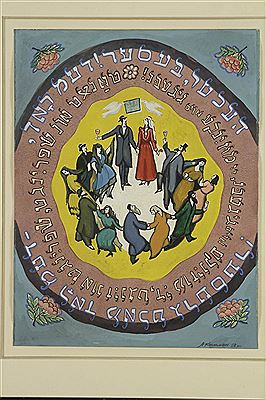
Anatoli Lvovich Kaplan was born in Rahachow, Belarus, one of six children; his father was a butcher in Rahachow which was at that time within the Jewish Pale of Settlement in Russia. His background... Read full biography
Anatoli Lvovich Kaplan was born in Rahachow, Belarus, one of six children; his father was a butcher in Rahachow which was at that time within the Jewish Pale of Settlement in Russia. His background was therefore not dissimilar to that of Marc Chagall, born a generation earlier in 1887, and although... Read full biography
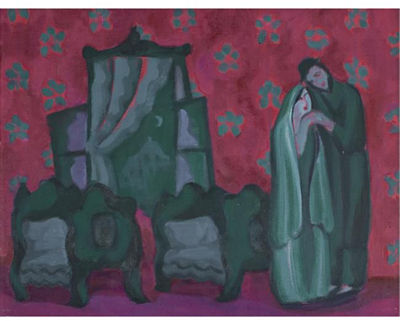
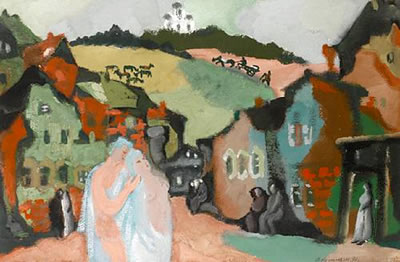
Anatoli Lvovich Kaplan was born in Rahachow, Belarus, one of six children; his father was a butcher in Rahachow which was at that time within the Jewish Pale of Settlement in Russia. His background was therefore not dissimilar to that of Marc Chagall, born a generation earlier in 1887, and although their lives were very different, their art has much in common. The shtetl figures in many of Kaplan's paintings - autobiographical references are very clear in The Butcher's Shop (1972) and Tailor's... Read full biography
Anatoli Lvovich Kaplan was born in Rahachow, Belarus, one of six children; his father was a butcher in Rahachow which was at that time within the Jewish Pale of Settlement in Russia. His background was therefore not dissimilar to that of Marc Chagall, born a generation earlier in 1887, and although their lives were very different, their art has much in common. The shtetl figures in many of Kaplan's paintings - autobiographical references are very clear in The Butcher's Shop (1972) and Tailor's Shops (1975) and in the many illustrations which he was to create to the works of Sholem Aleichem. Around 1922 Kaplan came to Leningrad (then named Petrograd), where he was to base his career for the rest of his life, although he often revisited the... Read full biography
Anatoli Lvovich Kaplan was born in Rahachow, Belarus, one of six children; his father was a butcher in Rahachow which was at that time within the Jewish Pale of Settlement in Russia. His background was therefore not dissimilar to that of Marc Chagall, born a generation earlier in 1887, and although their lives were very different, their art has much in common. The shtetl figures in many of Kaplan's paintings - autobiographical references are very clear in The Butcher's Shop (1972) and Tailor's Shops (1975) and in the many illustrations which he was to create to the works of Sholem Aleichem. Around 1922 Kaplan came to Leningrad (then named Petrograd), where he was to base his career for the rest of his life, although he often revisited the towns of his childhood. He graduated in 1927 from the Russian Academy of Arts in Leningrad. In the 1930s he became associ... Read full biography
Anatoli Lvovich Kaplan - Art Prices in Auction LotsAuction Lots