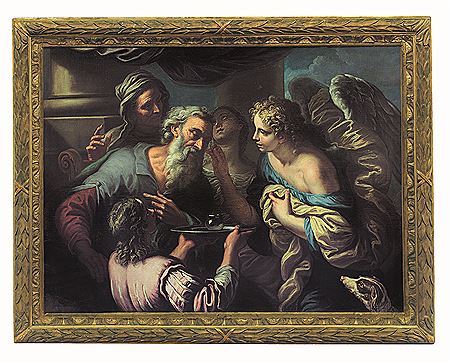
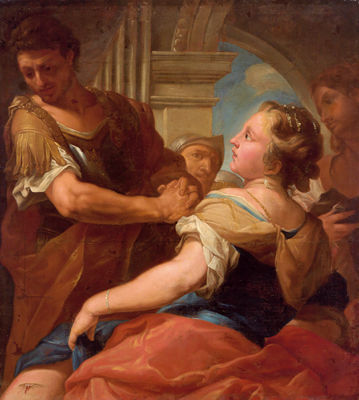
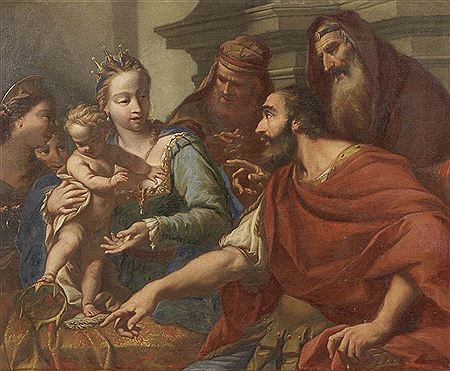
The 17th century Venetian artist Antonio Molinari was trained in the studio of Antonio Zanchi, and his early work is marked by the same tenebrism* as his master. He soon began to develop a lighter,... Read full biography
The 17th century Venetian artist Antonio Molinari was trained in the studio of Antonio Zanchi, and his early work is marked by the same tenebrism* as his master. He soon began to develop a lighter, more colourful style, however, and this can be seen in the much of the work of his mature career,... Read full biography
The 17th century Venetian artist Antonio Molinari was trained in the studio of Antonio Zanchi, and his early work is marked by the same tenebrism* as his master. He soon began to develop a lighter, more colourful style, however, and this can be seen in the much of the work of his mature career, which was marked by a series of important, large-scale commissions and altarpieces for churches in Venice and the Veneto. When he died in 1704, at the age of forty-nine, Molinari was at the height of his... Read full biography
The 17th century Venetian artist Antonio Molinari was trained in the studio of Antonio Zanchi, and his early work is marked by the same tenebrism* as his master. He soon began to develop a lighter, more colourful style, however, and this can be seen in the much of the work of his mature career, which was marked by a series of important, large-scale commissions and altarpieces for churches in Venice and the Veneto. When he died in 1704, at the age of forty-nine, Molinari was at the height of his success. Among his pupils were Federico Bencovich and Giambattista Piazzetta, as well as the young Giovanni Battista Piranesi. Although many of Molinari’s drawings were previously attributed to his Venetian contemporary Giovanni Antonio Pellegrini... Read full biography
The 17th century Venetian artist Antonio Molinari was trained in the studio of Antonio Zanchi, and his early work is marked by the same tenebrism* as his master. He soon began to develop a lighter, more colourful style, however, and this can be seen in the much of the work of his mature career, which was marked by a series of important, large-scale commissions and altarpieces for churches in Venice and the Veneto. When he died in 1704, at the age of forty-nine, Molinari was at the height of his success. Among his pupils were Federico Bencovich and Giambattista Piazzetta, as well as the young Giovanni Battista Piranesi. Although many of Molinari’s drawings were previously attributed to his Venetian contemporary Giovanni Antonio Pellegrini (1675-1741), a stylistically coherent corpus of his drawings has recently been established through connections with paintings by the artist.... Read full biography
Antonio Molinari - Art Prices in Auction LotsAuction Lots