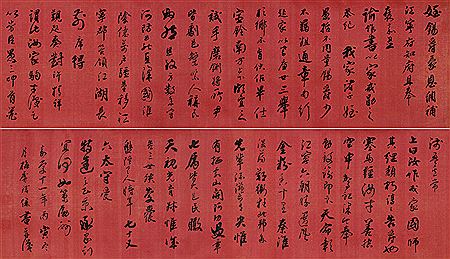
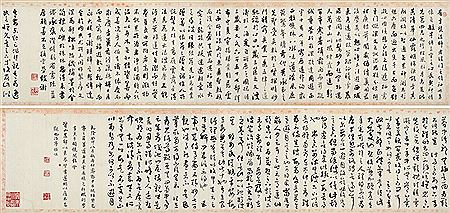
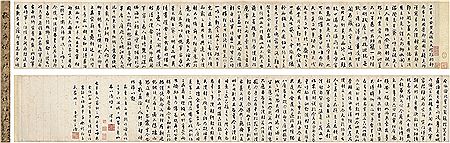
1752 - 1824. Known for: Court painting, calligraphy, ink on paper.
Tie Bao (1752-1824), also known as Yeting (courtesy name) and Mei'an (sobriquet), was a member of the Plain Yellow Banner and was a senior Imperial scholar who served at court for over fifty years....
Read full biography Tie Bao (1752-1824), also known as Yeting (courtesy name) and Mei'an (sobriquet), was a member of the Plain Yellow Banner and was a senior Imperial scholar who served at court for over fifty years. He was a prolific poet and an accomplished calligrapher. Tie Bao, Liu Yong (1719-1805), Weng Fanggang...
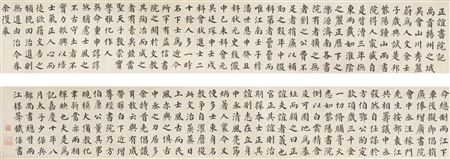
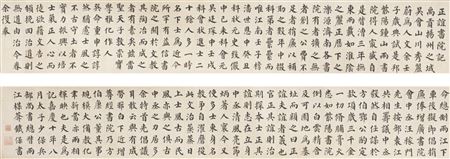
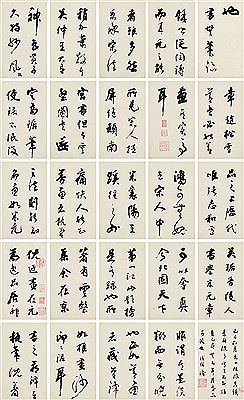
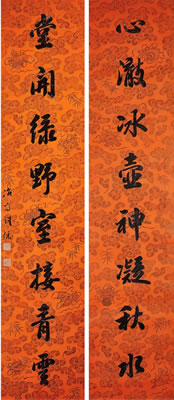
Read full biography Tie Bao (1752-1824), also known as Yeting (courtesy name) and Mei'an (sobriquet), was a member of the Plain Yellow Banner and was a senior Imperial scholar who served at court for over fifty years. He was a prolific poet and an accomplished calligrapher. Tie Bao, Liu Yong (1719-1805), Weng Fanggang (1733-1818), and Prince Cheng (1752-1823) were recognised as the most important four masters of calligraphy in the mid Qing dynasty.
Tie Bao (1752-1824), also known as Yeting (courtesy name) and Mei'an (sobriquet), was a member of the Plain Yellow Banner and was a senior Imperial scholar who served at court for over fifty years. He was a prolific poet and an accomplished calligrapher. Tie Bao, Liu Yong (1719-1805), Weng Fanggang (1733-1818), and Prince Cheng (1752-1823) were recognised as the most important four masters of calligraphy in the mid Qing dynasty.
Tie Bao (1752-1824), also known as Yeting (courtesy name) and Mei'an (sobriquet), was a member of the Plain Yellow Banner and was a senior Imperial scholar who served at court for over fifty years. He was a prolific poet and an accomplished calligrapher. Tie Bao, Liu Yong (1719-1805), Weng Fanggang (1733-1818), and Prince Cheng (1752-1823) were recognised as the most important four masters of calligraphy in the mid Qing dynasty.