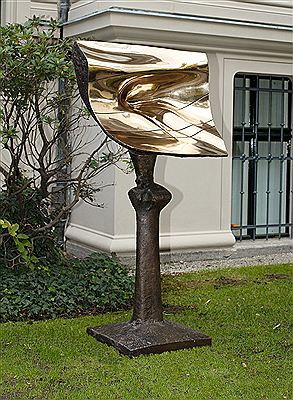
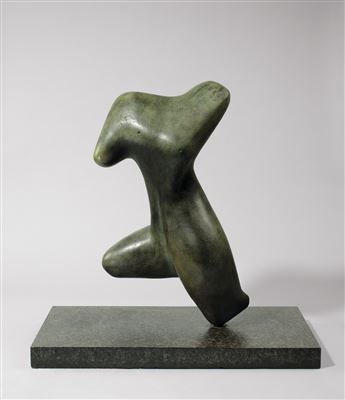
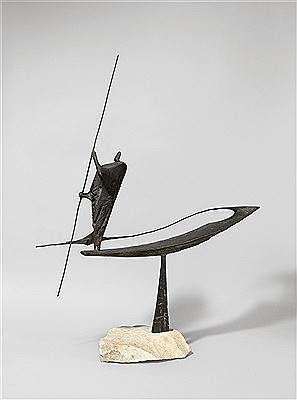
Bernhard Heiliger was a German sculptor who studied sculpture in Stettin and Berlin under the influence of the Nazi era and repression against modern tendencies in art. He briefly visited Paris in... Read full biography
Bernhard Heiliger was a German sculptor who studied sculpture in Stettin and Berlin under the influence of the Nazi era and repression against modern tendencies in art. He briefly visited Paris in 1939 where he met influential contemporaries such as Constantin Brâncu?i and Hans Arp. After the war,... Read full biography
Bernhard Heiliger was a German sculptor who studied sculpture in Stettin and Berlin under the influence of the Nazi era and repression against modern tendencies in art. He briefly visited Paris in 1939 where he met influential contemporaries such as Constantin Brâncu?i and Hans Arp. After the war, he returned to Berlin in 1945 and embarked on his own modern artistic path. Critics recognized in Heiliger's work a valuable synthesis of abstraction and figuration. He had a major solo exhibition in... Read full biography
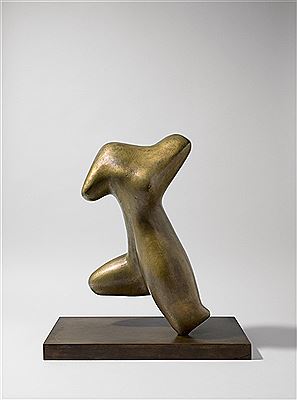
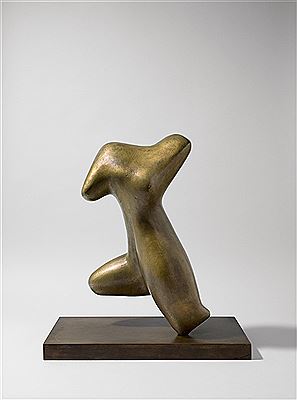
Bernhard Heiliger was a German sculptor who studied sculpture in Stettin and Berlin under the influence of the Nazi era and repression against modern tendencies in art. He briefly visited Paris in 1939 where he met influential contemporaries such as Constantin Brâncu?i and Hans Arp. After the war, he returned to Berlin in 1945 and embarked on his own modern artistic path. Critics recognized in Heiliger's work a valuable synthesis of abstraction and figuration. He had a major solo exhibition in Berlin in 1950 where a cast of his figure was exhibited. The swelling fullness of the reclining figure, strongly abstracted with a small head and amorphous curves, also brings him close to Henry Moore's sculptures. In our cast, the uniformly dark,... Read full biography
Bernhard Heiliger was a German sculptor who studied sculpture in Stettin and Berlin under the influence of the Nazi era and repression against modern tendencies in art. He briefly visited Paris in 1939 where he met influential contemporaries such as Constantin Brâncu?i and Hans Arp. After the war, he returned to Berlin in 1945 and embarked on his own modern artistic path. Critics recognized in Heiliger's work a valuable synthesis of abstraction and figuration. He had a major solo exhibition in Berlin in 1950 where a cast of his figure was exhibited. The swelling fullness of the reclining figure, strongly abstracted with a small head and amorphous curves, also brings him close to Henry Moore's sculptures. In our cast, the uniformly dark, golden-brown patina corresponds to the artist's ideas of the open reflection of the smooth surface. He died in 1995 and this cast is a posthumous cast al... Read full biography
Bernhard Heiliger - Art Prices in Auction LotsAuction Lots