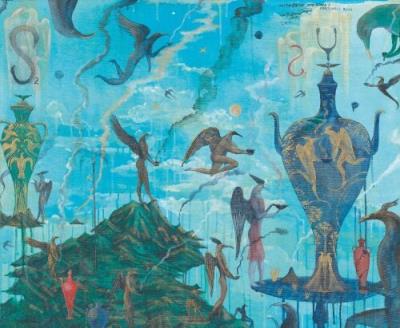
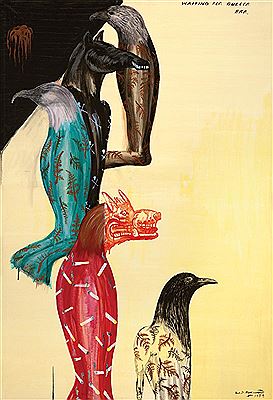
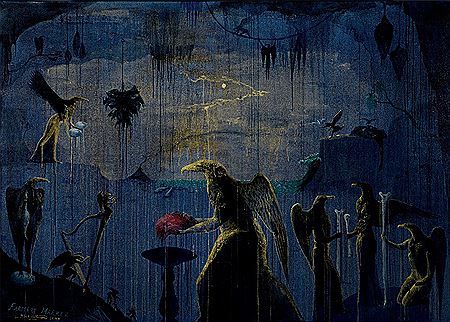
By the late 1990s, a distinctly unique pictorial language made up of zoomorphic creatures had taken up a dominant role in the painting practice of Bill Hammond. The artist's trip to the subantarctic... Read full biography
By the late 1990s, a distinctly unique pictorial language made up of zoomorphic creatures had taken up a dominant role in the painting practice of Bill Hammond. The artist's trip to the subantarctic Auckland Islands in 1989 has become something of folklore, for it was that journey that transformed... Read full biography
By the late 1990s, a distinctly unique pictorial language made up of zoomorphic creatures had taken up a dominant role in the painting practice of Bill Hammond. The artist's trip to the subantarctic Auckland Islands in 1989 has become something of folklore, for it was that journey that transformed Hammond's artistic vision and catapulted him to the forefront of New Zealand art history. The decade of the '90s saw Hammond forge, distill and refine his vision of the country's primordial past: a... Read full biography
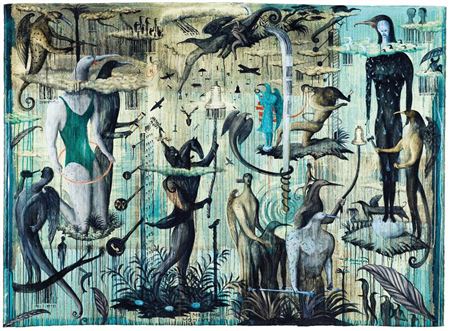
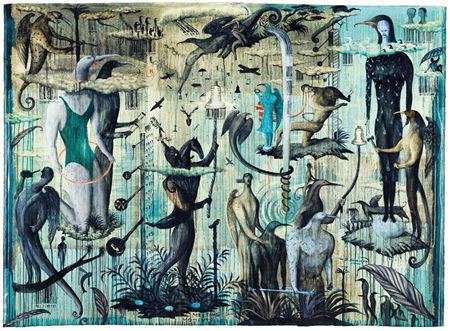
By the late 1990s, a distinctly unique pictorial language made up of zoomorphic creatures had taken up a dominant role in the painting practice of Bill Hammond. The artist's trip to the subantarctic Auckland Islands in 1989 has become something of folklore, for it was that journey that transformed Hammond's artistic vision and catapulted him to the forefront of New Zealand art history. The decade of the '90s saw Hammond forge, distill and refine his vision of the country's primordial past: a vision that is pictorially transcribed in Flight Recorder. True to the work's title, the six unstretched pieces of canvas that make up Hammond's Flight Recorder, from 1998, record a multiplicity of flight modes that encompass the natural, the man-made,... Read full biography
By the late 1990s, a distinctly unique pictorial language made up of zoomorphic creatures had taken up a dominant role in the painting practice of Bill Hammond. The artist's trip to the subantarctic Auckland Islands in 1989 has become something of folklore, for it was that journey that transformed Hammond's artistic vision and catapulted him to the forefront of New Zealand art history. The decade of the '90s saw Hammond forge, distill and refine his vision of the country's primordial past: a vision that is pictorially transcribed in Flight Recorder. True to the work's title, the six unstretched pieces of canvas that make up Hammond's Flight Recorder, from 1998, record a multiplicity of flight modes that encompass the natural, the man-made, the religious and the mythological. World War II-era light bombers and biplanes... Read full biography
Bill Hammond - Art Prices in Auction LotsAuction Lots