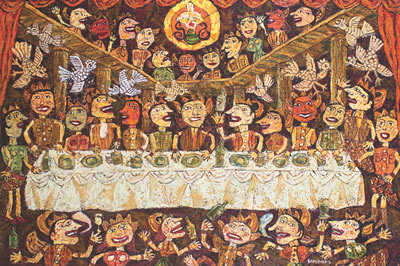
Born 1968 Wonogiri, C. Java. Known for: Depicting Javanese traditional symbols and culture in paintings using tertiary colors..
Bonny Setiawan is an Indonesian artist known for his paintings that often feature Javanese traditional symbols and culture such as Kebaya, Blangkon, and Jarik. He frequently uses tertiary colors such...
Read full biography Bonny Setiawan is an Indonesian artist known for his paintings that often feature Javanese traditional symbols and culture such as Kebaya, Blangkon, and Jarik. He frequently uses tertiary colors such as brown, green, and red blood in his artwork. In one of his paintings, he depicts a group of...
Read full biography Bonny Setiawan is an Indonesian artist known for his paintings that often feature Javanese traditional symbols and culture such as Kebaya, Blangkon, and Jarik. He frequently uses tertiary colors such as brown, green, and red blood in his artwork. In one of his paintings, he depicts a group of Javanese musicians performing Keroncong music with a female singer. Keroncong is an Indonesian musical style that usually uses a ukulele-like instrument of the same name. The roots of keroncong come from a...
Read full biography Bonny Setiawan is an Indonesian artist known for his paintings that often feature Javanese traditional symbols and culture such as Kebaya, Blangkon, and Jarik. He frequently uses tertiary colors such as brown, green, and red blood in his artwork. In one of his paintings, he depicts a group of Javanese musicians performing Keroncong music with a female singer. Keroncong is an Indonesian musical style that usually uses a ukulele-like instrument of the same name. The roots of keroncong come from a type of Portuguese music known as Fado, which was introduced by sailors in the 16th century. Thus, Keroncong music is a blend of Indonesian regional music and colonial music from the Portuguese colonial era.
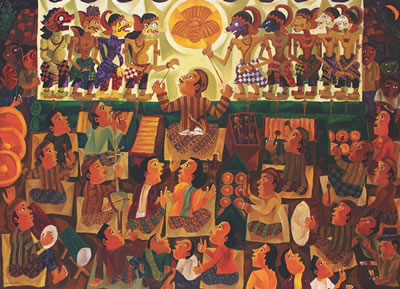
Bonny Setiawan is an Indonesian artist known for his paintings that often feature Javanese traditional symbols and culture such as Kebaya, Blangkon, and Jarik. He frequently uses tertiary colors such as brown, green, and red blood in his artwork. In one of his paintings, he depicts a group of Javanese musicians performing Keroncong music with a female singer. Keroncong is an Indonesian musical style that usually uses a ukulele-like instrument of the same name. The roots of keroncong come from a type of Portuguese music known as Fado, which was introduced by sailors in the 16th century. Thus, Keroncong music is a blend of Indonesian regional music and colonial music from the Portuguese colonial era.