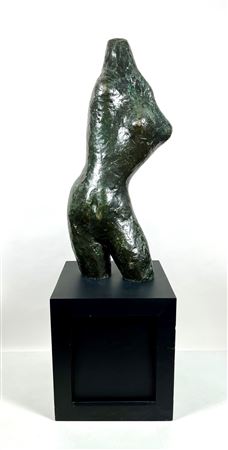
The son of Italian immigrants, Fernando and Pia Giorgi, Bruno Giorgi was born in a town near São Paulo. In 1911, when Giorgi was six years old, the family returned to Italy, where he spent much of... Read full biography
The son of Italian immigrants, Fernando and Pia Giorgi, Bruno Giorgi was born in a town near São Paulo. In 1911, when Giorgi was six years old, the family returned to Italy, where he spent much of his youth and received his early training in sculpture and design. Politically and socially active, in... Read full biography
The son of Italian immigrants, Fernando and Pia Giorgi, Bruno Giorgi was born in a town near São Paulo. In 1911, when Giorgi was six years old, the family returned to Italy, where he spent much of his youth and received his early training in sculpture and design. Politically and socially active, in 1931 Georgi was incarcerated for four years, for conspiring against the fascist regime of Mussolini. In 1936, following his release from prison, and the outbreak of the Spanish Civil War, Georgi... Read full biography
The son of Italian immigrants, Fernando and Pia Giorgi, Bruno Giorgi was born in a town near São Paulo. In 1911, when Giorgi was six years old, the family returned to Italy, where he spent much of his youth and received his early training in sculpture and design. Politically and socially active, in 1931 Georgi was incarcerated for four years, for conspiring against the fascist regime of Mussolini. In 1936, following his release from prison, and the outbreak of the Spanish Civil War, Georgi travelled to Paris with the intention of maintaining contacting with anti-fascist resistance groups and honing his talents as a sculptor. In Paris, Giorgi attended the Académie Ranson and the Académie de la Grande Chaumière, where he studied under the... Read full biography
The son of Italian immigrants, Fernando and Pia Giorgi, Bruno Giorgi was born in a town near São Paulo. In 1911, when Giorgi was six years old, the family returned to Italy, where he spent much of his youth and received his early training in sculpture and design. Politically and socially active, in 1931 Georgi was incarcerated for four years, for conspiring against the fascist regime of Mussolini. In 1936, following his release from prison, and the outbreak of the Spanish Civil War, Georgi travelled to Paris with the intention of maintaining contacting with anti-fascist resistance groups and honing his talents as a sculptor. In Paris, Giorgi attended the Académie Ranson and the Académie de la Grande Chaumière, where he studied under the French sculptor Aristide Maillol, and exhibited in several exhibitions, including the Salon d’Automne in 1938 and the Salon des T... Read full biography
Bruno Giorgi - Art Prices in Auction LotsAuction Lots