Carlo Maratta, Maratta also spelled Maratti was one of the leading painters of the Roman school in the later 17th century and one of the last great masters of Baroque classicism. His final works... Read full biography
Carlo Maratta, Maratta also spelled Maratti was one of the leading painters of the Roman school in the later 17th century and one of the last great masters of Baroque classicism. His final works offer an early example of "arcadian good taste" (named for the Academy of Arcadians, of which he was a... Read full biography
Carlo Maratta, Maratta also spelled Maratti was one of the leading painters of the Roman school in the later 17th century and one of the last great masters of Baroque classicism. His final works offer an early example of "arcadian good taste" (named for the Academy of Arcadians, of which he was a member), a style that was to dominate Roman art for the first half of the 18th century. Maratta went early to Rome, where he studied. His reputation was established with his first public work, the... Read full biography
Carlo Maratta, Maratta also spelled Maratti was one of the leading painters of the Roman school in the later 17th century and one of the last great masters of Baroque classicism. His final works offer an early example of "arcadian good taste" (named for the Academy of Arcadians, of which he was a member), a style that was to dominate Roman art for the first half of the 18th century. Maratta went early to Rome, where he studied. His reputation was established with his first public work, the Nativity (1650). A few years later he was noticed by Pope Alexander VII, and thereafter he secured an almost uninterrupted series of important commissions for altarpieces in Italian churches. Among these are The Mystery of the Trinity Revealed to St.... Read full biography
Carlo Maratta, Maratta also spelled Maratti was one of the leading painters of the Roman school in the later 17th century and one of the last great masters of Baroque classicism. His final works offer an early example of "arcadian good taste" (named for the Academy of Arcadians, of which he was a member), a style that was to dominate Roman art for the first half of the 18th century. Maratta went early to Rome, where he studied. His reputation was established with his first public work, the Nativity (1650). A few years later he was noticed by Pope Alexander VII, and thereafter he secured an almost uninterrupted series of important commissions for altarpieces in Italian churches. Among these are The Mystery of the Trinity Revealed to St. Augustine (c. 1655), The Appearance of the Virgin to St. Philip Neri (c. 1675), and The Virgin with SS. Charles... Read full biography
Carlo Maratti - Art Prices in Auction LotsAuction Lots
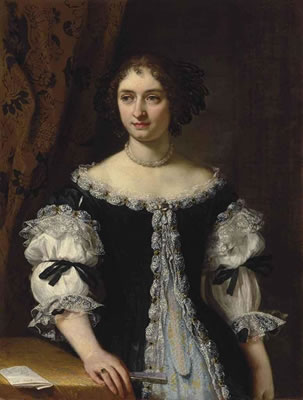
Portrait of Maria Maddalena Rospigliosi Panciatichi (1645-1695), half-length, in a black surcote trimmed with silver embroidery over a brocade gown, holding a fan, by a draped table with a letter