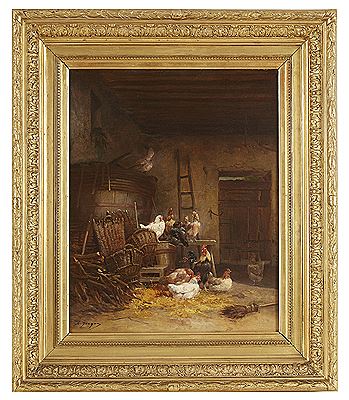
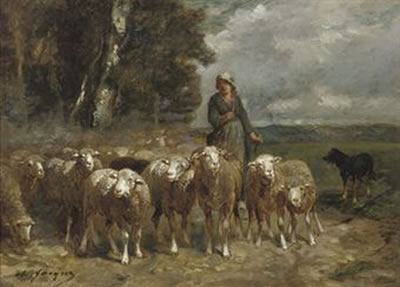
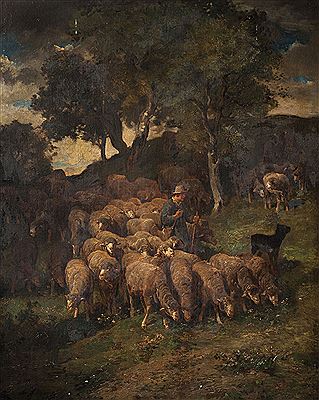
Charles Jacques' artistic training, informal and sporadic as it was, began at 17, when he was apprenticed to a map engraver in Paris. He then served seven years in the French army, an experience that... Read full biography
Charles Jacques' artistic training, informal and sporadic as it was, began at 17, when he was apprenticed to a map engraver in Paris. He then served seven years in the French army, an experience that inspired a series of drawings and engravings. In 1838, Jacque traveled to London to work on... Read full biography
Charles Jacques' artistic training, informal and sporadic as it was, began at 17, when he was apprenticed to a map engraver in Paris. He then served seven years in the French army, an experience that inspired a series of drawings and engravings. In 1838, Jacque traveled to London to work on literary and historical woodcarvings for a variety of books and journals. His return to Paris in 1840 saw the continued pursuit of a career in the graphic arts, as both an illustrator and a caricaturist. His... Read full biography
Charles Jacques' artistic training, informal and sporadic as it was, began at 17, when he was apprenticed to a map engraver in Paris. He then served seven years in the French army, an experience that inspired a series of drawings and engravings. In 1838, Jacque traveled to London to work on literary and historical woodcarvings for a variety of books and journals. His return to Paris in 1840 saw the continued pursuit of a career in the graphic arts, as both an illustrator and a caricaturist. His contributions to such satirical publications as Le Charivari were among many contemporary illustrated vignettes featuring medical and political institutions and personages that were censured by the government. By the mid-1840s, Jacques had turned... Read full biography
Charles Jacques' artistic training, informal and sporadic as it was, began at 17, when he was apprenticed to a map engraver in Paris. He then served seven years in the French army, an experience that inspired a series of drawings and engravings. In 1838, Jacque traveled to London to work on literary and historical woodcarvings for a variety of books and journals. His return to Paris in 1840 saw the continued pursuit of a career in the graphic arts, as both an illustrator and a caricaturist. His contributions to such satirical publications as Le Charivari were among many contemporary illustrated vignettes featuring medical and political institutions and personages that were censured by the government. By the mid-1840s, Jacques had turned from these controversial ventures to the production of original etchings inspired by Rembrandt and the Dutch masters, and to pictu... Read full biography
Charles Jacquemot - Art Prices in Auction LotsAuction Lots