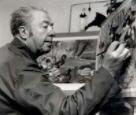
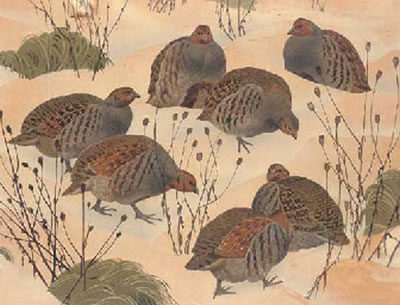
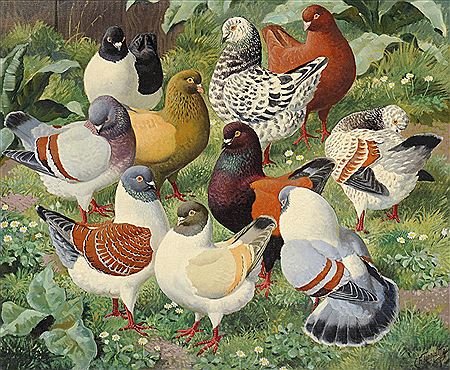
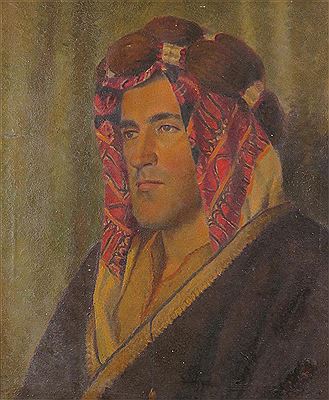
Charles Frederick Tunnicliffe was born and bred on the land and spent the first nineteen years of his life in the beautiful countryside of East Cheshire. After studying at the Macclesfield School of... Read full biography
Charles Frederick Tunnicliffe was born and bred on the land and spent the first nineteen years of his life in the beautiful countryside of East Cheshire. After studying at the Macclesfield School of Art he won a scholarship to the Royal College of Art in London, gaining his teaching diploma and a... Read full biography
Charles Frederick Tunnicliffe was born and bred on the land and spent the first nineteen years of his life in the beautiful countryside of East Cheshire. After studying at the Macclesfield School of Art he won a scholarship to the Royal College of Art in London, gaining his teaching diploma and a further scholarship to study in the RCA’s new Etching and Engraving School. His excellent work gained his diploma with distinction, in 1923. He stayed on in London to develop a career as an etcher and... Read full biography
Charles Frederick Tunnicliffe was born and bred on the land and spent the first nineteen years of his life in the beautiful countryside of East Cheshire. After studying at the Macclesfield School of Art he won a scholarship to the Royal College of Art in London, gaining his teaching diploma and a further scholarship to study in the RCA’s new Etching and Engraving School. His excellent work gained his diploma with distinction, in 1923. He stayed on in London to develop a career as an etcher and engraver, producing some of his finest work during this time. In 1928 he returned to Macclesfield, earning his living mainly from commercial artwork, much of it from the farming industry. Charles Tunnicliffe had a long association with Henry... Read full biography
Charles Frederick Tunnicliffe was born and bred on the land and spent the first nineteen years of his life in the beautiful countryside of East Cheshire. After studying at the Macclesfield School of Art he won a scholarship to the Royal College of Art in London, gaining his teaching diploma and a further scholarship to study in the RCA’s new Etching and Engraving School. His excellent work gained his diploma with distinction, in 1923. He stayed on in London to develop a career as an etcher and engraver, producing some of his finest work during this time. In 1928 he returned to Macclesfield, earning his living mainly from commercial artwork, much of it from the farming industry. Charles Tunnicliffe had a long association with Henry Williamson illustrating such famous novels as Tarka the Otter, Salar the Salmon and the Peregrine’s Saga, along with a further five other... Read full biography
Charles Frederick Tunnicliffe - Art Prices in Auction LotsAuction Lots