Charles William Wyllie was the younger brother of William Lionel Wyllie and, like his sibling his paintings often have a coastal setting. However, unlike his brother, Charles moved away from... Read full biography
Charles William Wyllie was the younger brother of William Lionel Wyllie and, like his sibling his paintings often have a coastal setting. However, unlike his brother, Charles moved away from straightforward representations of the British coastline and developed an interest in painting allegorical... Read full biography
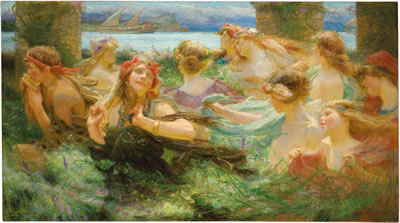
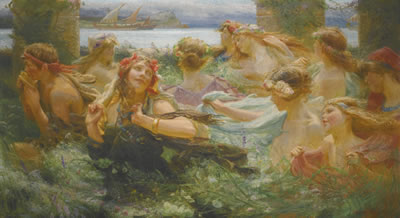
Charles William Wyllie was the younger brother of William Lionel Wyllie and, like his sibling his paintings often have a coastal setting. However, unlike his brother, Charles moved away from straightforward representations of the British coastline and developed an interest in painting allegorical and mythological subjects beside the sea. He favoured compositions with a crowd of young women or water-nymphs dancing or running through the foreground and the ocean in the background. In 1911 when On... Read full biography
Charles William Wyllie was the younger brother of William Lionel Wyllie and, like his sibling his paintings often have a coastal setting. However, unlike his brother, Charles moved away from straightforward representations of the British coastline and developed an interest in painting allegorical and mythological subjects beside the sea. He favoured compositions with a crowd of young women or water-nymphs dancing or running through the foreground and the ocean in the background. In 1911 when On the Way to the Festival was exhibited at the Royal Academy, Wyllie was living at Elm Tree Road in St John's Wood, close to the studios of several painters of Neo-classical subjects- including the greatest exponent Lawrence Alma-Tadema who died only... Read full biography
Charles William Wyllie was the younger brother of William Lionel Wyllie and, like his sibling his paintings often have a coastal setting. However, unlike his brother, Charles moved away from straightforward representations of the British coastline and developed an interest in painting allegorical and mythological subjects beside the sea. He favoured compositions with a crowd of young women or water-nymphs dancing or running through the foreground and the ocean in the background. In 1911 when On the Way to the Festival was exhibited at the Royal Academy, Wyllie was living at Elm Tree Road in St John's Wood, close to the studios of several painters of Neo-classical subjects- including the greatest exponent Lawrence Alma-Tadema who died only a year later. Close-by was the studio of Arthur Wardle, who combined his specialism in painting wild animals with clas... Read full biography
Charles William Wyllie - Art Prices in Auction LotsAuction Lots