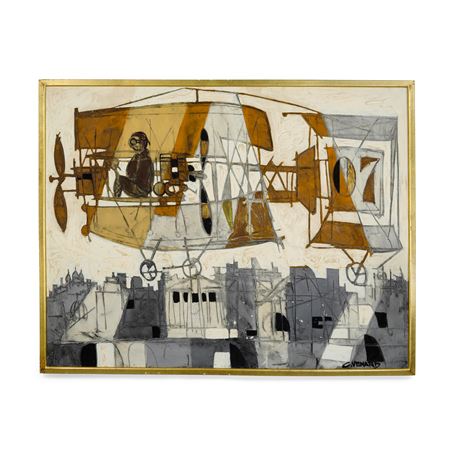
Claude Venard was a notable exponent of the French mid-century post-Cubist movement. He was born to bourgeois parents from Burgogne in Paris, on March 21, 1913. At the age of 17, he enrolled and... Read full biography
Claude Venard was a notable exponent of the French mid-century post-Cubist movement. He was born to bourgeois parents from Burgogne in Paris, on March 21, 1913. At the age of 17, he enrolled and attended the Ecole des Beaux-Arts, but remained for only two days, not adhering to the school's academic... Read full biography
Claude Venard was a notable exponent of the French mid-century post-Cubist movement. He was born to bourgeois parents from Burgogne in Paris, on March 21, 1913. At the age of 17, he enrolled and attended the Ecole des Beaux-Arts, but remained for only two days, not adhering to the school's academic style. Instead, he spent the following six years at the École des Arts Appliqués, taking evening classes and embracing the contemporary Parisian art scene, all the while becoming recognized in its... Read full biography
Claude Venard was a notable exponent of the French mid-century post-Cubist movement. He was born to bourgeois parents from Burgogne in Paris, on March 21, 1913. At the age of 17, he enrolled and attended the Ecole des Beaux-Arts, but remained for only two days, not adhering to the school's academic style. Instead, he spent the following six years at the École des Arts Appliqués, taking evening classes and embracing the contemporary Parisian art scene, all the while becoming recognized in its circles. Not able to support himself as an artist, by 1936 he found employment as a restorer at the Louvre, further honing his artistic skills. Paris of the period was dominated by an art trend that strongly favored abstraction. Following a group show... Read full biography
Claude Venard was a notable exponent of the French mid-century post-Cubist movement. He was born to bourgeois parents from Burgogne in Paris, on March 21, 1913. At the age of 17, he enrolled and attended the Ecole des Beaux-Arts, but remained for only two days, not adhering to the school's academic style. Instead, he spent the following six years at the École des Arts Appliqués, taking evening classes and embracing the contemporary Parisian art scene, all the while becoming recognized in its circles. Not able to support himself as an artist, by 1936 he found employment as a restorer at the Louvre, further honing his artistic skills. Paris of the period was dominated by an art trend that strongly favored abstraction. Following a group show at the Galerie Billet-Worms in 1935, art critic Waldemar George declared: "Let's be young again! Painting is no... Read full biography
Claude Venard - Art Prices in Auction LotsAuction Lots