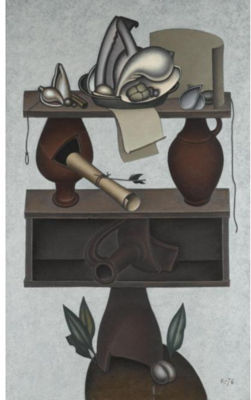
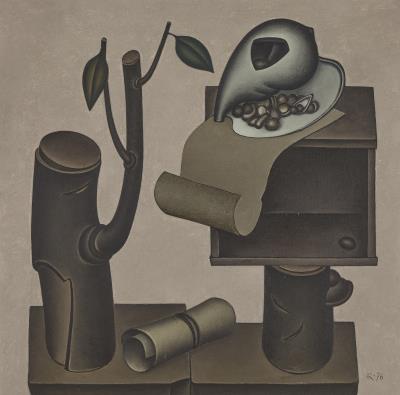
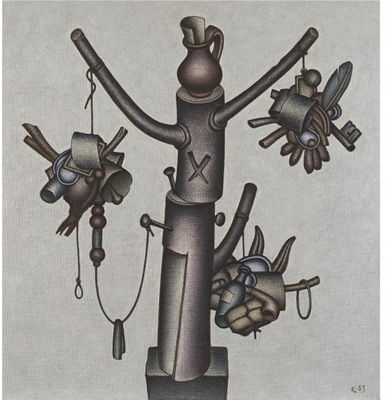
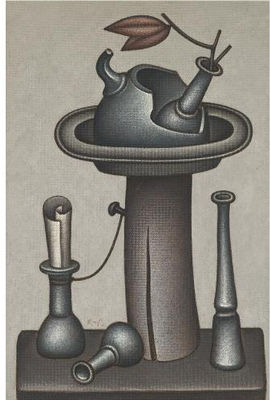
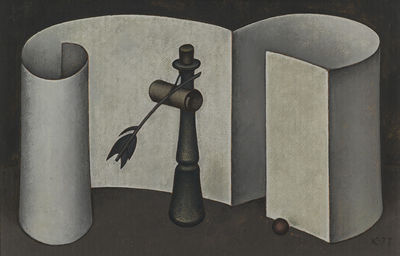
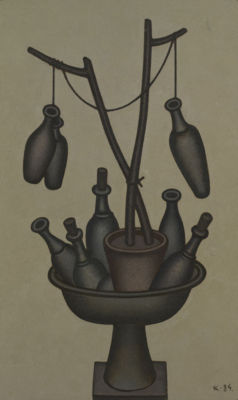
1925 Moscow - 1995. Known for: Still life, nature morte, cubist painting.
Dmitri Krasnopevtsev was born in Moscow and studied at the Academy of Art, from 1942 to 1946. In 1955 he also received a degree from the Surikov Art Institute. Since 1956, Krasnopevtsev exhibited his...
Read full biography Dmitri Krasnopevtsev was born in Moscow and studied at the Academy of Art, from 1942 to 1946. In 1955 he also received a degree from the Surikov Art Institute. Since 1956, Krasnopevtsev exhibited his works at home and abroad. AfterLife magazine published one of his still lifes, he was criticized in...
Read full biography Dmitri Krasnopevtsev was born in Moscow and studied at the Academy of Art, from 1942 to 1946. In 1955 he also received a degree from the Surikov Art Institute. Since 1956, Krasnopevtsev exhibited his works at home and abroad. AfterLife magazine published one of his still lifes, he was criticized in the Soviet press. It was not until the mid-1980s, when the Perestroika years under Gorbachev allowed Krasnopevtsev's 'rehabilitation'. His works were increasingly presented in museums and awarded...
Read full biography Dmitri Krasnopevtsev was born in Moscow and studied at the Academy of Art, from 1942 to 1946. In 1955 he also received a degree from the Surikov Art Institute. Since 1956, Krasnopevtsev exhibited his works at home and abroad. AfterLife magazine published one of his still lifes, he was criticized in the Soviet press. It was not until the mid-1980s, when the Perestroika years under Gorbachev allowed Krasnopevtsev's 'rehabilitation'. His works were increasingly presented in museums and awarded with prizes, such as the 'informal' Triumph Prize in 1993. Krasnopevtsev was a major representative of the 'Shestidesiatniki' artists active in 1960s. His works are still very sought after collectible items on the international art market and...
Read full biography Dmitri Krasnopevtsev was born in Moscow and studied at the Academy of Art, from 1942 to 1946. In 1955 he also received a degree from the Surikov Art Institute. Since 1956, Krasnopevtsev exhibited his works at home and abroad. AfterLife magazine published one of his still lifes, he was criticized in the Soviet press. It was not until the mid-1980s, when the Perestroika years under Gorbachev allowed Krasnopevtsev's 'rehabilitation'. His works were increasingly presented in museums and awarded with prizes, such as the 'informal' Triumph Prize in 1993. Krasnopevtsev was a major representative of the 'Shestidesiatniki' artists active in 1960s. His works are still very sought after collectible items on the international art market and occasionally fetch up high six-figure sums at auctions. (cbo)