1492 - 1527. Known for: Painting.
The painter initially studied under Ridolfo Ghirlandaio (1483-1561) and then worked as an assistant to Andrea del Sarto (1486-1530/31), with whom he was a close friend. The emphasis on color is a...
Read full biography The painter initially studied under Ridolfo Ghirlandaio (1483-1561) and then worked as an assistant to Andrea del Sarto (1486-1530/31), with whom he was a close friend. The emphasis on color is a result of the Mannerist influence of Jacopo da Carucci Pontormo (1494-1556/57) and Fiorentino Rosso...
Read full biography The painter initially studied under Ridolfo Ghirlandaio (1483-1561) and then worked as an assistant to Andrea del Sarto (1486-1530/31), with whom he was a close friend. The emphasis on color is a result of the Mannerist influence of Jacopo da Carucci Pontormo (1494-1556/57) and Fiorentino Rosso (1494-1540). It is noteworthy that numerous, perhaps even the majority, of his Madonna paintings exhibit this strong sfumato effect, which was intended to convey a certain aloofness to these saintly...
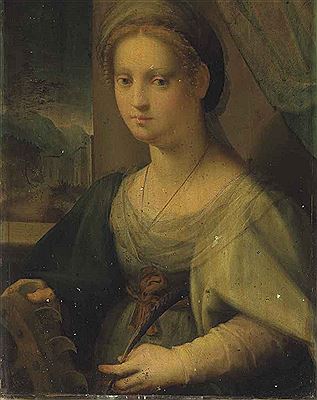
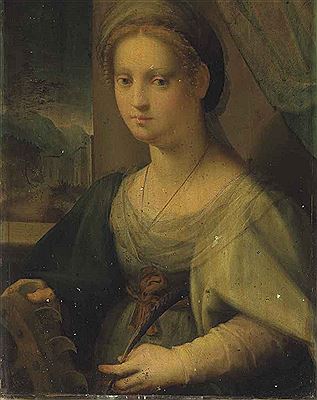
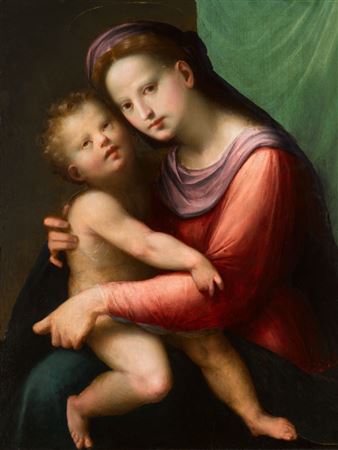
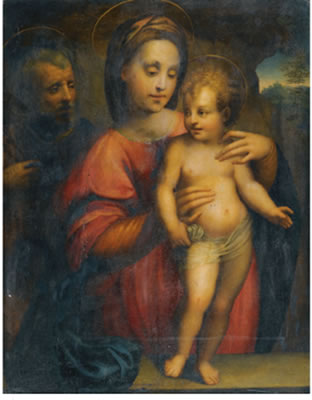
Read full biography The painter initially studied under Ridolfo Ghirlandaio (1483-1561) and then worked as an assistant to Andrea del Sarto (1486-1530/31), with whom he was a close friend. The emphasis on color is a result of the Mannerist influence of Jacopo da Carucci Pontormo (1494-1556/57) and Fiorentino Rosso (1494-1540). It is noteworthy that numerous, perhaps even the majority, of his Madonna paintings exhibit this strong sfumato effect, which was intended to convey a certain aloofness to these saintly figures, whereas the painter definitely preferred a hard contour style in secular portraits.
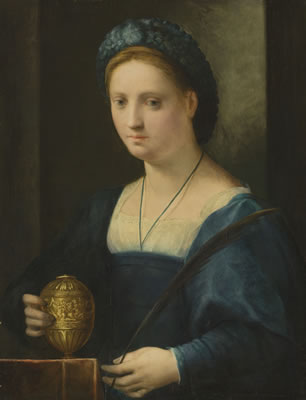
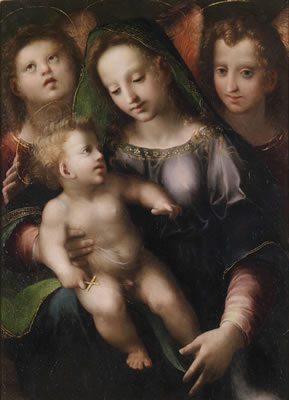
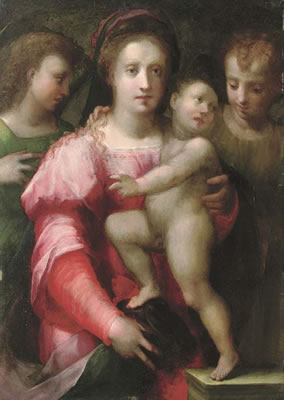
The painter initially studied under Ridolfo Ghirlandaio (1483-1561) and then worked as an assistant to Andrea del Sarto (1486-1530/31), with whom he was a close friend. The emphasis on color is a result of the Mannerist influence of Jacopo da Carucci Pontormo (1494-1556/57) and Fiorentino Rosso (1494-1540). It is noteworthy that numerous, perhaps even the majority, of his Madonna paintings exhibit this strong sfumato effect, which was intended to convey a certain aloofness to these saintly figures, whereas the painter definitely preferred a hard contour style in secular portraits.