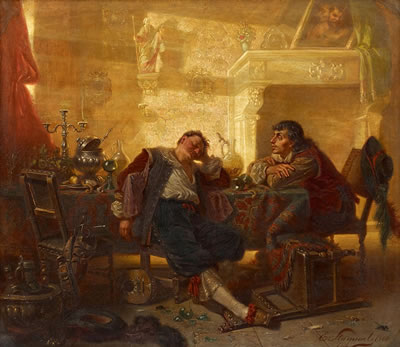
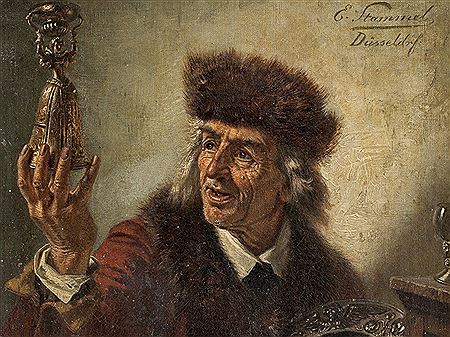
1833 - 1906. Known for: Painting.
Eberhard Stammel (1833-1906). From 1847 to 1852, Eberhard Stammel studied at the Dusseldorf Academy. There, he primarily trained with Carl Ferdinand Sohn as a portrait and history painter. He...
Read full biography Eberhard Stammel (1833-1906). From 1847 to 1852, Eberhard Stammel studied at the Dusseldorf Academy. There, he primarily trained with Carl Ferdinand Sohn as a portrait and history painter. He traveled through Germany, the Netherlands, and Paris. Stammel mainly painted genre scenes, in which he...
Read full biography Eberhard Stammel (1833-1906). From 1847 to 1852, Eberhard Stammel studied at the Dusseldorf Academy. There, he primarily trained with Carl Ferdinand Sohn as a portrait and history painter. He traveled through Germany, the Netherlands, and Paris. Stammel mainly painted genre scenes, in which he described the life of the middle class, bourgeois, and craftsmen, but also painted historical subjects. Stammel regularly exhibited in Berlin, Dusseldorf and Munich. Some of his works were purchased by...
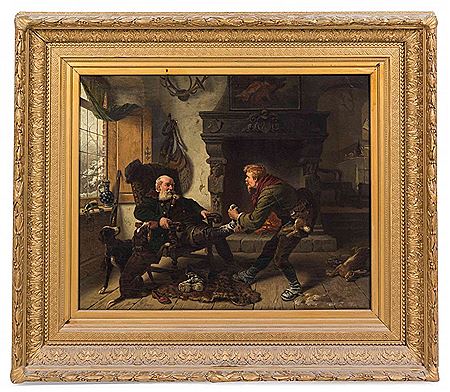
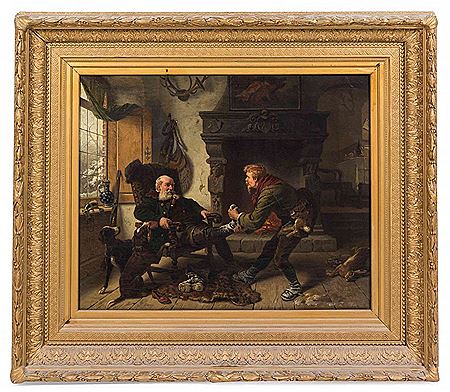
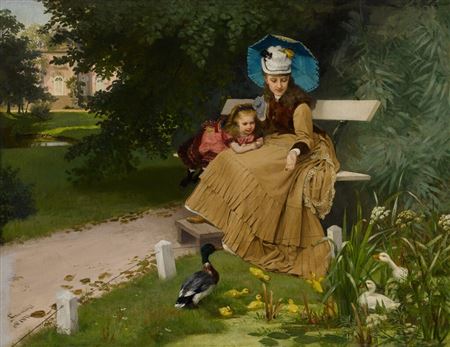
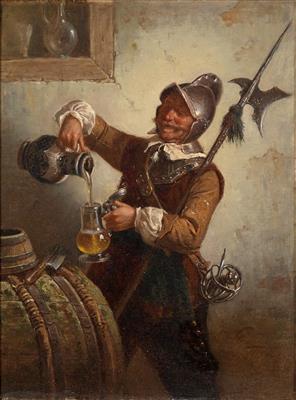
Read full biography Eberhard Stammel (1833-1906). From 1847 to 1852, Eberhard Stammel studied at the Dusseldorf Academy. There, he primarily trained with Carl Ferdinand Sohn as a portrait and history painter. He traveled through Germany, the Netherlands, and Paris. Stammel mainly painted genre scenes, in which he described the life of the middle class, bourgeois, and craftsmen, but also painted historical subjects. Stammel regularly exhibited in Berlin, Dusseldorf and Munich. Some of his works were purchased by prominent buyers, for example Kaiser Wilhelm I.
Eberhard Stammel (1833-1906). From 1847 to 1852, Eberhard Stammel studied at the Dusseldorf Academy. There, he primarily trained with Carl Ferdinand Sohn as a portrait and history painter. He traveled through Germany, the Netherlands, and Paris. Stammel mainly painted genre scenes, in which he described the life of the middle class, bourgeois, and craftsmen, but also painted historical subjects. Stammel regularly exhibited in Berlin, Dusseldorf and Munich. Some of his works were purchased by prominent buyers, for example Kaiser Wilhelm I.