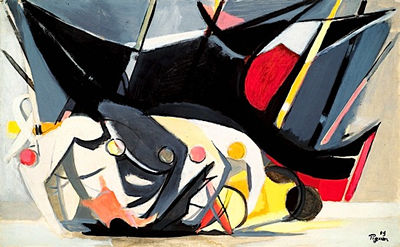
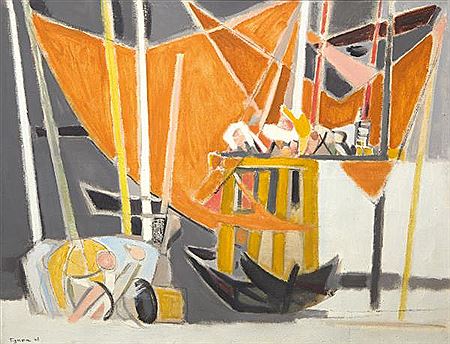
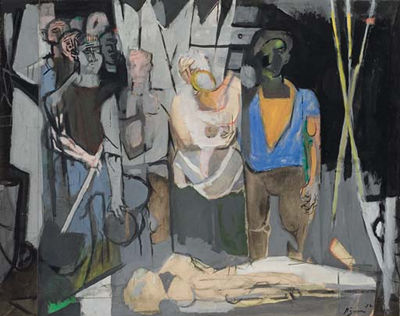
Born in 1905, the son of a militant miner in Bully-les-Mines, near Lens, Edouard Pignon had humble origins that stood him in good stead at the height of the French Communist Party's prestige in the... Read full biography
Born in 1905, the son of a militant miner in Bully-les-Mines, near Lens, Edouard Pignon had humble origins that stood him in good stead at the height of the French Communist Party's prestige in the 1950s. He left his village for Paris in 1927, and worked in the Renault and Citroen car factories,... Read full biography
Born in 1905, the son of a militant miner in Bully-les-Mines, near Lens, Edouard Pignon had humble origins that stood him in good stead at the height of the French Communist Party's prestige in the 1950s. He left his village for Paris in 1927, and worked in the Renault and Citroen car factories, attending evening classes at the Universite Ouvriere in painting and sculpture. In 1931, when the effects of the Wall Street Crash were taking their toll on the French art market and depression loomed,... Read full biography
Born in 1905, the son of a militant miner in Bully-les-Mines, near Lens, Edouard Pignon had humble origins that stood him in good stead at the height of the French Communist Party's prestige in the 1950s. He left his village for Paris in 1927, and worked in the Renault and Citroen car factories, attending evening classes at the Universite Ouvriere in painting and sculpture. In 1931, when the effects of the Wall Street Crash were taking their toll on the French art market and depression loomed, he joined the Association des Ecrivains et des Artistes Revolutionnaires. Here, in the politicised climate of the Popular Front, which inspired Pignon's 1936 Portrait of Robespierre, young autodidacts such he and his friend Boris Taslitzky rubbed... Read full biography
Born in 1905, the son of a militant miner in Bully-les-Mines, near Lens, Edouard Pignon had humble origins that stood him in good stead at the height of the French Communist Party's prestige in the 1950s. He left his village for Paris in 1927, and worked in the Renault and Citroen car factories, attending evening classes at the Universite Ouvriere in painting and sculpture. In 1931, when the effects of the Wall Street Crash were taking their toll on the French art market and depression loomed, he joined the Association des Ecrivains et des Artistes Revolutionnaires. Here, in the politicised climate of the Popular Front, which inspired Pignon's 1936 Portrait of Robespierre, young autodidacts such he and his friend Boris Taslitzky rubbed shoulders with the leading intellectuals of the day, Louis Aragon, Andre Malraux, Walter Benjamin. By this time Pignon earned his li... Read full biography
Edouard Pignon - Art Prices in Auction LotsAuction Lots