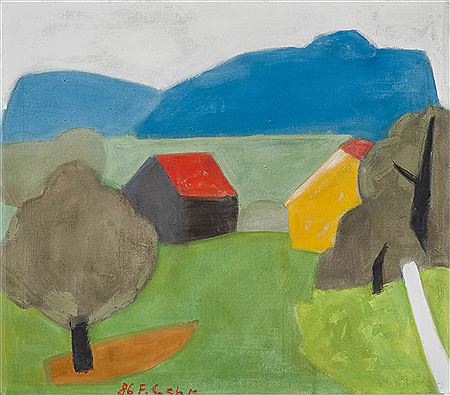
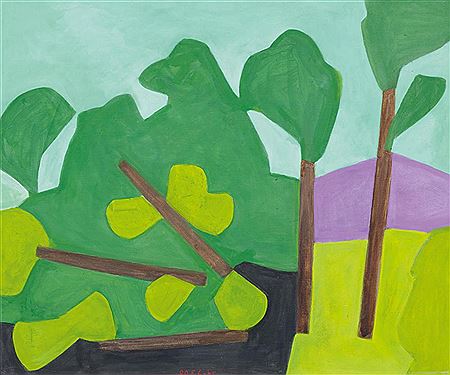
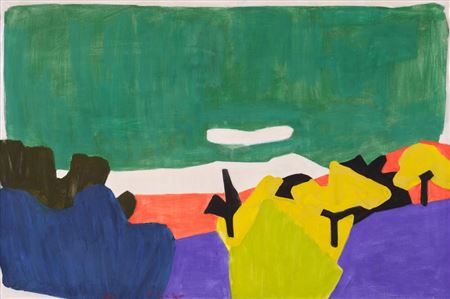
Ferdinand Gehr was born in Niederglatt in 1896. Ferdinand Gehr, the son of a handsticker, first took up the profession of embroidery designer, which he practiced until 1922 in the industrial sector.... Read full biography
Ferdinand Gehr was born in Niederglatt in 1896. Ferdinand Gehr, the son of a handsticker, first took up the profession of embroidery designer, which he practiced until 1922 in the industrial sector. Later he worked on an independent basis. After studying the work of Emil Nolde, he turned to... Read full biography
Ferdinand Gehr was born in Niederglatt in 1896. Ferdinand Gehr, the son of a handsticker, first took up the profession of embroidery designer, which he practiced until 1922 in the industrial sector. Later he worked on an independent basis. After studying the work of Emil Nolde, he turned to painting, followed by a study of fresco technique in Florence from 1922 to 1923. Then he studied at André Lhote in Paris. Between 1924 and 1927 he maintained his first studio in Niederglatt. Starting in... Read full biography
Ferdinand Gehr was born in Niederglatt in 1896. Ferdinand Gehr, the son of a handsticker, first took up the profession of embroidery designer, which he practiced until 1922 in the industrial sector. Later he worked on an independent basis. After studying the work of Emil Nolde, he turned to painting, followed by a study of fresco technique in Florence from 1922 to 1923. Then he studied at André Lhote in Paris. Between 1924 and 1927 he maintained his first studio in Niederglatt. Starting in 1930, he received numerous orders for wall and glass paintings, mostly for newly erected Catholic sacred buildings. In the treatment of Christian subjects, Ferdinand Gehr developed his own, symbolic, abstract style, which did not always meet with... Read full biography
Ferdinand Gehr was born in Niederglatt in 1896. Ferdinand Gehr, the son of a handsticker, first took up the profession of embroidery designer, which he practiced until 1922 in the industrial sector. Later he worked on an independent basis. After studying the work of Emil Nolde, he turned to painting, followed by a study of fresco technique in Florence from 1922 to 1923. Then he studied at André Lhote in Paris. Between 1924 and 1927 he maintained his first studio in Niederglatt. Starting in 1930, he received numerous orders for wall and glass paintings, mostly for newly erected Catholic sacred buildings. In the treatment of Christian subjects, Ferdinand Gehr developed his own, symbolic, abstract style, which did not always meet with approval in the public sphere. His frescoes created in 1957 for the Bruderklausenkirche in Oberwil, near Zug, had to be covered for prolong... Read full biography
Ferdinand Gehr - Art Prices in Auction LotsAuction Lots